Exterior paint rarely fails on an exact anniversary. One Cleveland home may need attention after a few years, while another can stay in good shape much longer. The difference often comes down to siding material, preparation, paint quality, sun exposure, moisture, and how well the house has been maintained.
So, how often should you repaint a house? A broad planning window is about five to ten years for many painted exteriors, but that average hides major differences between wood, aluminum, vinyl, stucco, fiber cement, and other siding. Current national cost and maintenance data puts wood closer to three to seven years in many cases, while some painted masonry and factory-finished products can go considerably longer.
For Cleveland homeowners, the better strategy is to know your siding type, inspect it each spring, and repaint before the coating reaches widespread failure. If you’re already seeing peeling, exposed siding, or widespread fading, Knapp Painting’s exterior house painting services cover preparation and repainting for residential exteriors.
How Often Should Exterior House Paint Be Replaced?
There is no single correct repaint interval for every house.
For early planning, these ranges are more useful:
| Siding Type | Practical Repaint Planning Window |
| Wood siding | About 3–7 years |
| Painted vinyl siding | About 5–10 years |
| Aluminum siding | Often around 5 years, but well-prepared coatings can last longer |
| Stucco | About 5–10 years |
| Fiber cement | Often around 10+ years depending on finish |
| Engineered/composite wood | Follow coating condition and manufacturer guidance |
| Painted brick | Often 15–20 years |
| Unpainted brick | Normally not placed on a repaint schedule |
Current HomeAdvisor data uses three to seven years for wood, about five years for aluminum, and 15–20 years for painted brick. Its current vinyl guidance uses roughly five to ten years, while its stucco guidance also gives a broad five-to-ten-year repaint window.
Those numbers are planning ranges, not expiration dates.
If the coating is sound at year seven, you do not need to repaint simply because a chart says so. If boards are peeling at year four, waiting until year seven makes little sense either.
How Often Should Wood Siding Be Repainted?
Wood usually needs the closest attention.
A wood siding repainting schedule often falls somewhere around three to seven years, according to current national exterior-painting guidance. Other siding guidance places regular wood treatment around four to six years depending on sun and snow exposure.
Why the shorter range?
Wood reacts strongly to its environment. Poor drainage, failed caulk, exposed end grain, peeling coating, or prolonged moisture can leave the substrate vulnerable.
Sun exposure changes the schedule too.
A west-facing wall that takes strong afternoon sun may fade or weather before a protected side of the same Cleveland home. Areas under roof overhangs may remain in much better shape.
Rather than repainting every elevation just because one wall looks tired, inspect each side separately.
Knapp Painting’s wood and cedar siding painting guide goes deeper into preparation, moisture, weathering, and coating choices for exterior wood.
Watch the Bottom Edges and Joints
The most useful inspection points are often not in the middle of a large wall.
Look closely around:
- Window trim
- Door trim
- Siding joints
- Bottom board edges
- Gutters
- Downspouts
- Roof-to-wall areas
- Porch connections
- Areas close to landscaping
If water repeatedly reaches the same area, repainting alone will not solve the problem. Correct the moisture source as part of the repair.
How Often Should Painted Vinyl Siding Be Repainted?
Vinyl is different because new vinyl siding generally does not require paint as routine maintenance.
The Polymeric Exterior Products Association says vinyl siding normally needs periodic cleaning rather than routine repainting.
Once vinyl has already been painted, however, the paint becomes part of the maintenance cycle.
A reasonable vinyl siding repaint timeline is roughly five to ten years for planning purposes, but fading, adhesion, color choice, prep, and exposure can shorten or extend that period.
Do not repaint vinyl only because the color looks slightly dull.
First check for:
- Uneven fading
- Poor adhesion
- Peeling
- Warped siding
- Chalking
- Mildew
- Loose panels
- Cracks
A repaint can refresh sound vinyl. It cannot correct siding that has warped or failed.
For homeowners dealing specifically with this material, our guide to painting vinyl siding in Cleveland explains cleaning, vinyl-safe colors, paint selection, temperature, and application in more detail.
How Often Should Aluminum Siding Be Painted?
Aluminum siding often tells you when it needs attention.
Its most common warning sign is chalking—a powdery residue that develops as an older coating weathers.
Sherwin-Williams recommends thoroughly washing aluminum siding to remove chalk, dirt, oil, and other contamination before repainting.
For homeowners researching aluminum siding how often to paint, five years is a conservative planning number used in current broad exterior-cost guidance. Other current data shows that a well-prepared aluminum repaint can perform substantially longer.
That difference tells you something important:
Preparation can matter more than the calendar.
Painting over heavy oxidation or chalk can leave the new coating attached to loose residue instead of the siding itself.
If your aluminum is faded or chalky but still sound, read our aluminum siding painting guide for Cleveland before assuming replacement is necessary.
How Often Should Stucco Be Repainted?
A practical stucco repainting frequency is often around five to ten years. Current 2026 national guidance uses that range for maintaining appearance and moisture protection.
Stucco needs a different inspection than smooth siding.
Look for:
- Hairline cracks
- Larger structural-looking cracks
- Water stains
- Efflorescence
- Peeling coating
- Dark moisture areas
- Failed repairs
- Mildew
Do not use paint as a shortcut for active cracking or water problems.
The texture also matters when repainting. Rough stucco requires more coating than smooth siding, and preparation can involve crack repair and other surface work before painting begins. Current exterior cost data identifies stucco as one of the more paint-intensive siding surfaces for this reason.
How Often Should Fiber Cement Siding Be Painted?
Fiber cement generally needs less frequent repainting than wood, but the finish type matters.
Field-painted fiber cement and factory-finished fiber cement should not automatically be given the same timeline.
Current homeowner guidance commonly places repainting around ten to fifteen years, depending on product and coating.
Factory finishes can be different again. James Hardie, for example, offers ColorPlus factory-finished products backed by a 15-year limited finish warranty. A warranty length is not the same thing as a guaranteed repaint date, but it shows why saying every fiber-cement house must be painted at year ten would be inaccurate.
For a fiber cement board repainting schedule, inspect:
- Coating condition
- Caulked joints
- Exposed edges
- Chips
- Fading
- Mildew
- Water drainage around the wall
Do not repaint a good factory finish just because a generic maintenance chart says the material has reached a certain age.
What About Composite and Engineered Wood Siding?
This category needs even more care because “composite siding” can mean several different products.
A blanket 10-year repaint rule is not reliable.
For example, LP SmartSide’s current care instructions tell owners to repaint before the existing coating fails and note that local weather affects paint longevity. LP also calls for an annual inspection of paint, joints, caulk, flashing, gutters, and mildew.
That is much better advice than choosing a random anniversary.
LP’s guidance for repainting ExpertFinish siding calls for a high-quality 100% acrylic exterior paint designed for wood or engineered wood and recommends following the paint manufacturer’s application requirements.
So for engineered siding, identify the manufacturer first.
Then follow its maintenance instructions.
Does Painted Brick Need Regular Repainting?
Painted brick can stay coated much longer than wood siding.
Current national guidance uses roughly 15–20 years as a broad repaint planning range.
But once brick is painted, the coating becomes part of the wall’s maintenance.
You need to watch for:
- Peeling
- Flaking
- Moisture staining
- Failed mortar
- Efflorescence
- Cracks
- Blistering
Unpainted brick is different.
It does not need to be placed on a paint schedule just because other siding materials are. Mortar, water entry, and masonry condition matter more.
Think carefully before painting previously unpainted brick because future repainting becomes an ongoing maintenance responsibility.
Does Cleveland Weather Shorten Exterior Paint Life?
It can.
The exterior paint longevity by climate depends on the wall’s exposure as much as the city name itself.
Cleveland’s 1991–2020 climate normals show average January temperatures around 35.8°F during the day and 22.3°F at night. Summer normal highs reach the low 80s, while measurable precipitation occurs throughout the year.
That creates very different conditions across a single year.
Exterior surfaces around Northeast Ohio deal with:
- Rain
- Snow
- Freezing temperatures
- Thaw periods
- Summer heat
- Strong sun
- Humid periods
- Morning dew
Lake-effect snow can also add winter moisture in communities affected by snow bands off Lake Erie.
This does not mean every home in Lakewood, Bay Village, or Cleveland Heights deteriorates at the same rate.
A shaded north-facing wall may stay damp longer.
A west wall can take more afternoon sun.
A lower section beside a salted road may collect more winter road spray than the protected back of the house.
The wall itself is the evidence that matters.
Does Freeze-Thaw Weather Damage Exterior Paint?
Freeze-thaw weather is more of a concern when moisture is already getting into cracks, joints, exposed wood, or damaged masonry.
The paint itself is only one part of the system.
Cleveland’s winter climate regularly moves through temperatures above and below freezing, so keeping exposed substrates, joints, caulk, flashing, and other water-entry points in good condition matters.
A coating cannot protect a wall well if water is repeatedly getting behind it.
That is why spring is a useful time for exterior inspection after Northeast Ohio winter weather.
What Are the Signs Your Exterior Needs Repainting?
Do not wait for large sheets of paint to fall off.
The early signs exterior paint needs repainting are often easier and cheaper to deal with.
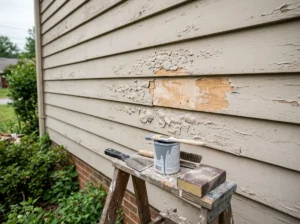
Peeling, Cracking, or Blistering
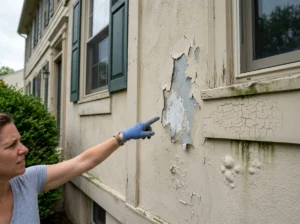
These are clear signs that the paint film is losing integrity.
Sherwin-Williams describes blistering as a loss of adhesion that lifts the paint film away from the surface.
A few isolated spots may need repair.
Widespread failure usually points toward a larger repaint.
Chalking
Run your hand across the siding.
If it leaves a noticeable powder, the old coating may be chalking.
Some chalking can occur as exterior coatings age, but heavy residue must be removed before repainting. Sherwin-Williams recommends washing chalk away and allowing the surface to dry fully before recoating.
Fading
Faded paint when to repaint is less clear-cut.
Fading alone may be cosmetic. If the paint is still firmly bonded and the substrate remains protected, you may have time to plan rather than react immediately.
Uneven fading often shows first on walls with heavier UV exposure.
Mildew or Algae
Mildew growth on house paint does not automatically mean the entire house needs repainting.
Sometimes cleaning solves the appearance issue.
But repeated biological growth can point to shaded, damp areas that deserve closer inspection.
Bare Wood or Exposed Substrate
Do not ignore this.
Once bare wood, metal, or other vulnerable material is exposed, the surface has lost part of its coating protection.
That is a stronger repaint signal than slight fading.
Our guide to common exterior paint problems in Cleveland covers peeling, cracking, mildew, fading, and other failures in more detail.
Does Paint Quality Affect How Often You Repaint?
Yes, but expensive paint cannot rescue poor preparation.
Current exterior-paint guidance consistently identifies paint quality, preparation, climate, and surface condition as factors in coating life.
A good exterior system starts before the finish coat.
The contractor may need to:
- Wash the siding
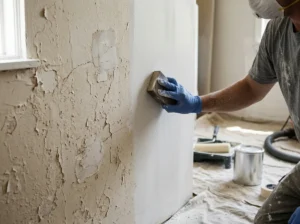
- Remove loose coating
- Scrape or sand where appropriate
- Repair damaged siding
- Replace failed caulk
- Treat rust
- Prime bare surfaces
- Allow surfaces to dry
Skipping those steps may shorten the useful life of the repaint regardless of the brand on the can.
Touch Up or Repaint the Whole House?
Not every defect justifies a full repaint.
Touch-ups make sense when damage is limited and the surrounding paint is still in good condition.
Examples include:
- A small scraped area
- Minor trim damage
- A repaired siding board
- A localized chip
- One small peeling section
A full repaint makes more sense when fading, chalking, cracking, or peeling appears across large portions of the exterior.
Color matching is another issue. Older paint may have faded enough that a fresh touch-up stands out even when the original paint color is technically the same.
Look at the entire elevation before deciding.
What Exterior Maintenance Can Extend the Time Between Repaints?
A simple house paint maintenance schedule can help you catch trouble early.
Once a year, walk around the property and inspect:
- Siding
- Trim
- Caulk joints
- Gutters
- Downspouts
- Window edges
- Doors
- Areas near the roof
- Lower siding near soil or mulch
- Previously repaired spots
Keep gutters working and direct water away from the siding.
Engineered-siding manufacturers such as LP specifically recommend controlling sprinkler contact, maintaining gutters and drainage, watching for mildew, and checking painted surfaces every year.
For Cleveland, spring is a practical inspection period because you can identify problems left after winter and still have time to plan exterior work during the warmer months.
If the coating is approaching the end of its useful cycle, our Cleveland exterior painting season guide explains how temperature, rain, and seasonal conditions affect scheduling.
How Much Does Exterior Repainting Cost?
There is no useful Cleveland-wide fixed price because siding type, home size, height, trim, repairs, and preparation vary.
Current national 2026 data puts professional exterior painting around $1.50–$4 per square foot of paintable exterior area, with a typical project range of roughly $1,819–$4,551. Those are national planning figures, not Knapp Painting quotes.
Siding type also changes the estimate.
The same current source lists broad national ranges around:
- Vinyl: $1.25–$3 per square foot
- Wood: $1–$3
- Fiber cement: $1.20–$3.20
- Aluminum: $1.50–$2.50
- Stucco: $1.50–$4
- Brick: $1.50–$4.50
Again, these are budgeting numbers rather than guaranteed Cleveland pricing.
The amount of scraping, caulking, repairs, access work, and trim can change the total quickly.
For a deeper local breakdown, see our house painting cost guide for Cleveland.
A Better Cleveland Repainting Schedule
Instead of putting one date on your calendar for every exterior, use this approach:
Every spring: Inspect paint, caulk, siding, trim, and drainage.
During the year: Clean dirt or mildew when needed and correct water problems.
At the first isolated failures: Repair and touch up if the surrounding coating is still healthy.
As widespread fading or chalking develops: Start planning the next repaint.
When peeling, cracking, or exposed substrate becomes widespread: Move the repaint higher on the maintenance list.
This works better than saying every Cleveland house must be repainted every five years.
The material, coating, exposure, and condition should decide.
Frequently Asked Questions
How many years should exterior house paint last?
A broad planning range is around five to ten years, but siding type changes the answer. Wood may need repainting in roughly three to seven years, while painted brick and some factory-finished siding systems may last much longer.
How often should wood siding be painted in Cleveland?
Plan to start inspecting it closely within roughly three to seven years after a repaint. Sun, moisture, preparation, and coating condition may move the actual repaint earlier or later.
How often should painted vinyl siding be repainted?
A five-to-ten-year planning window is commonly used for already-painted vinyl. New, factory-colored vinyl normally does not require routine painting.
Does chalky siding always need repainting?
Not automatically. First determine how severe the chalking is and whether the remaining coating is sound. Heavy chalk must be removed before any new paint is applied.
Should I repaint if my exterior has faded but is not peeling?
Not necessarily immediately. Fading may be mainly cosmetic. Inspect adhesion, exposed substrate, caulk, moisture problems, and other signs before deciding.
Is fiber cement really a 10-to-15-year repaint material?
That can be a useful planning range, but the finish matters. Factory-applied systems may have their own maintenance requirements and warranties, so follow the siding manufacturer’s instructions rather than a generic calendar.
Does Cleveland winter weather mean I need to paint more often?
Not by a fixed number of years. Cleveland’s moisture, snow, freezing temperatures, summer heat, and seasonal temperature changes can affect coating wear, but exposure and siding condition vary from house to house.
Is spring the best time to inspect exterior paint?
It is a practical time in Northeast Ohio because winter has passed and problems can be identified before the main exterior painting season.
Repaint Based on Condition, Not Just Age
The best answer to how often should you repaint a house is not “every five years” or “every ten years.”
Start with the siding.
Wood often needs attention sooner. Painted vinyl and aluminum can fall somewhere in the middle. Stucco depends heavily on cracking and moisture. Fiber cement, engineered siding, and painted masonry may have longer cycles, especially when factory finishes or high-quality coating systems are involved.
For homeowners deciding how often to paint a house exterior in Cleveland, an annual inspection is more useful than a rigid countdown.
If your siding is peeling, chalking, fading badly, or showing exposed areas, Knapp Painting can assess the surface and determine how much preparation the next coating will require. Contact Knapp Painting to request an exterior painting estimate.