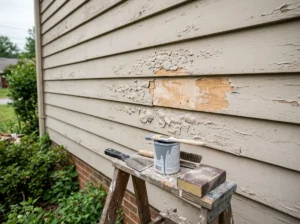
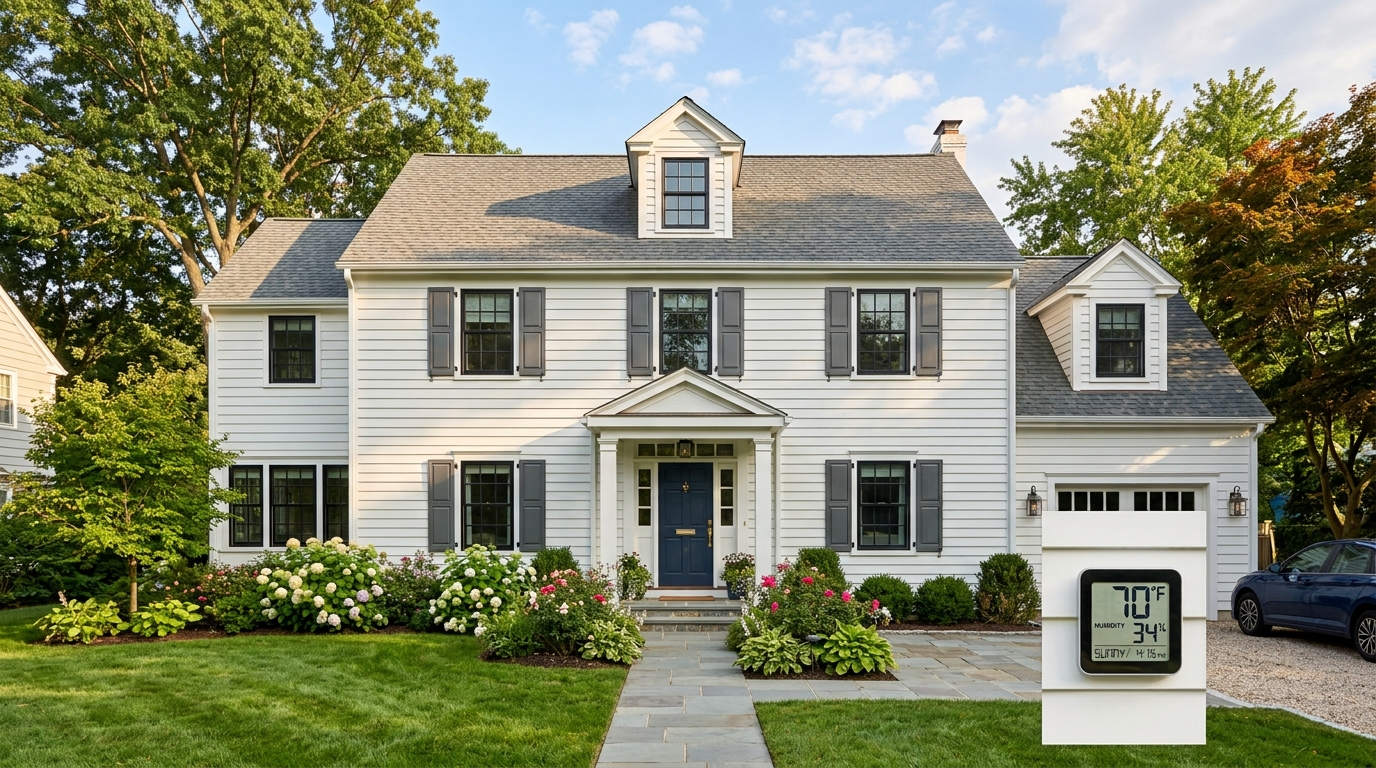
The best time to paint a house exterior in Cleveland is usually during a dry stretch from late spring through early fall. Still, the month alone does not decide when painting can begin. Air temperature, wall temperature, rain, dew, humidity, sunlight, and the paint maker’s instructions must all be checked first.
A warm day may look perfect, but the siding could still be wet from rain or morning dew. A cool fall day may also work when the right paint is used and the temperature will stay within its allowed range.
This guide explains how to judge the weather before exterior painting. It also covers spring, summer, fall, and the best time of day to work. For help with the full project, read our Cleveland house painting planning guide.
What Is the Best Time of Year to Paint a House Exterior?
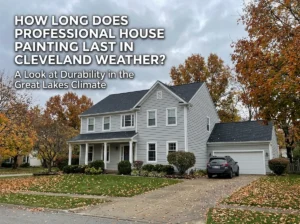
For most Cleveland homes, late spring through early fall offers the most workable days. May through September often provides warmer days and nights than early spring or late fall. However, rain and humidity can still delay work during any month.
National Weather Service climate normals show that Cleveland’s normal low rises above 50°F in May and stays there through September. April and October can still offer good painting days, but their cooler nights make the work window smaller.
The best time of year to paint a house exterior is not always the hottest part of summer. A mild, dry day can be better than a very hot day with direct sun on the siding.
The paint label or technical data sheet should guide the final choice. Many standard exterior products call for warmer conditions. Some newer products allow use at temperatures as low as 35°F. This does not mean every exterior paint is safe to use at that temperature. The rule depends on the exact primer and finish coat being applied.
What Temperature Is Suitable for Exterior Paint?
The correct temperature is the range listed for the exact paint being used. Both the air and the surface must stay within that range during application and for the required drying or curing period.
General painting advice often uses a range near 50°F to 90°F. Yet low-temperature exterior products may allow painting at 35°F. Some products also have different limits for metal, masonry, wood, or vinyl. Never assume that one number applies to every surface or coating.
The overnight low matters as much as the daytime high. A warm afternoon does not provide a safe painting window when the temperature drops below the product limit soon after sunset.
Cool weather can slow film formation and drying. This can leave the coating open to dew, dirt, or rain for longer. Hot weather can create a different problem. The paint may dry too fast on the surface, which can make application harder.
The safest rule is simple: check the product data sheet, then check the forecast for the full drying period.
Why Is Surface Temperature More Important Than Air Temperature?
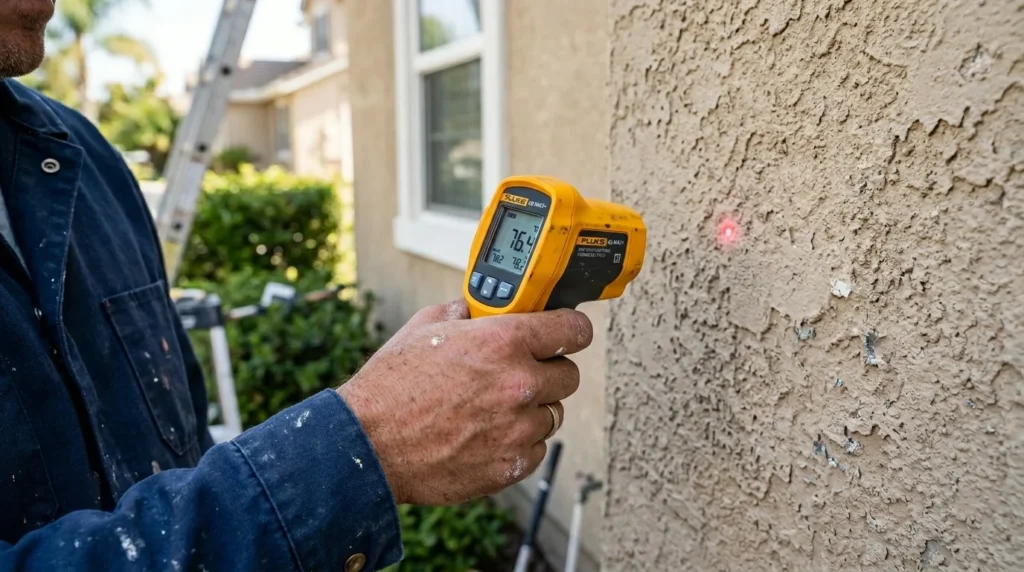
The wall or siding can be warmer or colder than the air. Direct sun can make dark siding much hotter than the weather report shows. A shaded north wall may stay cool and damp even when the afternoon feels warm.
This is why painters should check the actual surface, not only a phone weather app.
A sunny metal or vinyl surface can heat up fast. Paint may become hard to spread and may dry before it levels well. On the other hand, masonry and shaded wood can remain cool after a cold night.
Product guidance for exterior coatings often gives limits for air, material, and surface temperature. Some data sheets also require the surface to stay at least 5°F above the dew point during application.
A surface thermometer and a current dew-point reading give a better answer than air temperature alone.
How Do Dew and Humidity Affect Exterior Painting?
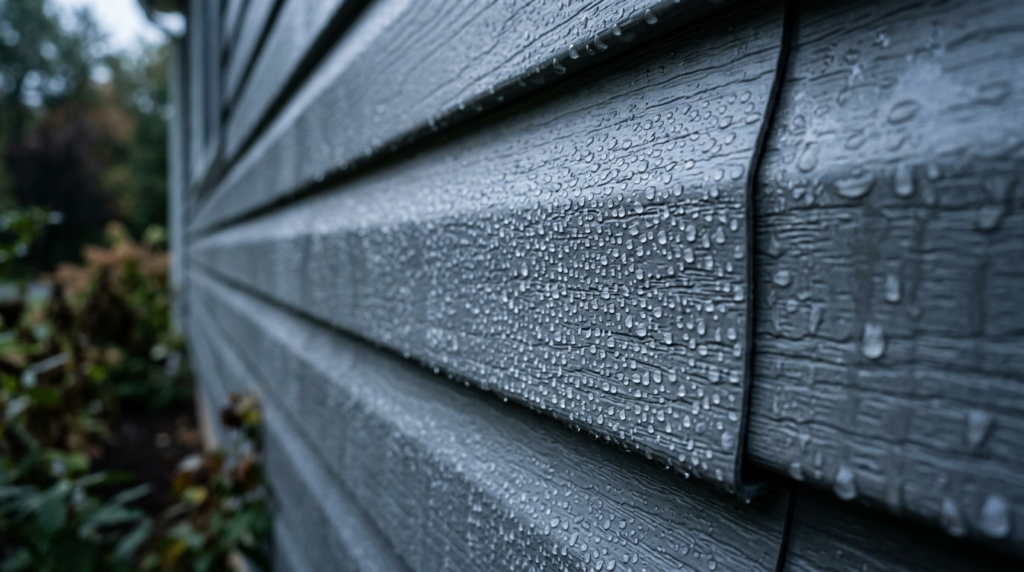
Dew forms when a surface cools enough for water in the air to collect on it. The siding may look dry at first but become damp as evening arrives.
Paint should not be applied to a wet or damp surface unless the exact product is made for that use. Moisture can stop the coating from forming a sound film. It may also lead to poor grip, marks, uneven color, or other early problems.
High relative humidity can slow drying and curing. Cool air makes this delay more likely. Manufacturer guidance often warns that humidity above about 85% can slow curing or make conditions unsuitable, but the exact limit must come from the product sheet.
Humidity does not always mean painting must stop. The crew must look at the full picture. The surface should be dry, the temperature should be safe, and the wall should stay above the dew point long enough for the paint to set.
How Long Should the Surface Stay Dry?
There is no single dry-time rule for every project. The answer depends on the surface, the paint, the weather, and how much water the material has absorbed.
After rain or washing, the outside may feel dry while wood, cracks, joints, or masonry still hold water. Shaded walls often take longer to dry than walls that receive moving air and light.
The surface must be dry before primer or paint is applied. It must also remain protected from rain and heavy dew for the period listed by the paint maker.
Some products gain early rain resistance faster than others. A product may call for several dry hours, while another may need a much longer rain-free window. The label or technical data sheet should always control the schedule.
Painting right after rain, during fog, or when rain is expected can harm film formation. Sherwin-Williams also advises keeping conditions within the suggested range and above the dew point after application.
Can Exterior Painting Be Done in Spring?
Yes. Spring can be a good time for exterior painting when the siding is dry and the temperature is stable.
The main spring problems are rain, cool nights, and damp surfaces. Snowmelt and freeze-thaw damage may also reveal loose paint, open joints, or damaged wood that must be repaired first.
April may offer a few workable days, but May often provides a wider window. The start date should not be chosen from the month alone. A dry forecast and safe overnight temperatures are more useful than the season name.
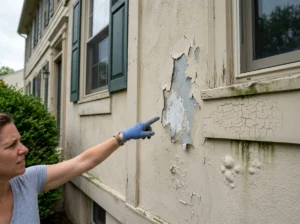
Spring is also a good time to inspect the exterior. Finding peeling paint, loose caulk, or soft wood early gives the homeowner time to plan repairs before the busiest part of the season.
Is Summer Always the Best Time for Exterior Painting?
Summer provides many workable days, but it is not perfect every day. Heat, direct sunlight, high humidity, storms, and wind can all affect the job.
The best time of day to paint an exterior of a house often starts after morning dew has dried. The crew may then follow the shade around the home instead of painting a wall under strong direct sun.
A surface in direct sunlight can become much hotter than the air. Paint may dry too fast and become hard to spread. Painting late in the day can also be risky when evening dew may form before the coating has set.
PPG advises avoiding early work when condensation is present and avoiding late application when dew is likely. It also recommends working on hot surfaces after direct sun has moved away.
Wind must also be considered. Strong wind can carry dust onto wet paint. It may also make spray work hard to control.
Can a House Be Painted in Fall?
Yes. Early fall can offer dry, mild days that are well suited to exterior work. The main concern is the shorter daylight window and the drop in overnight temperature.
September often has useful painting weather in Cleveland. October can also work, but each day needs closer review. Normal Cleveland lows fall from about 57°F in September to about 47°F in October.
A low-temperature paint may extend the season, but it does not remove the need to check dew, rain, and surface temperature. The primer, caulk, patching material, and finish coat must all be suitable for the conditions.
Fall painting should also start early enough in the day for the coating to set before temperatures drop and moisture forms.
How Does the Surface Type Change the Painting Window?
Different materials react to weather in different ways.
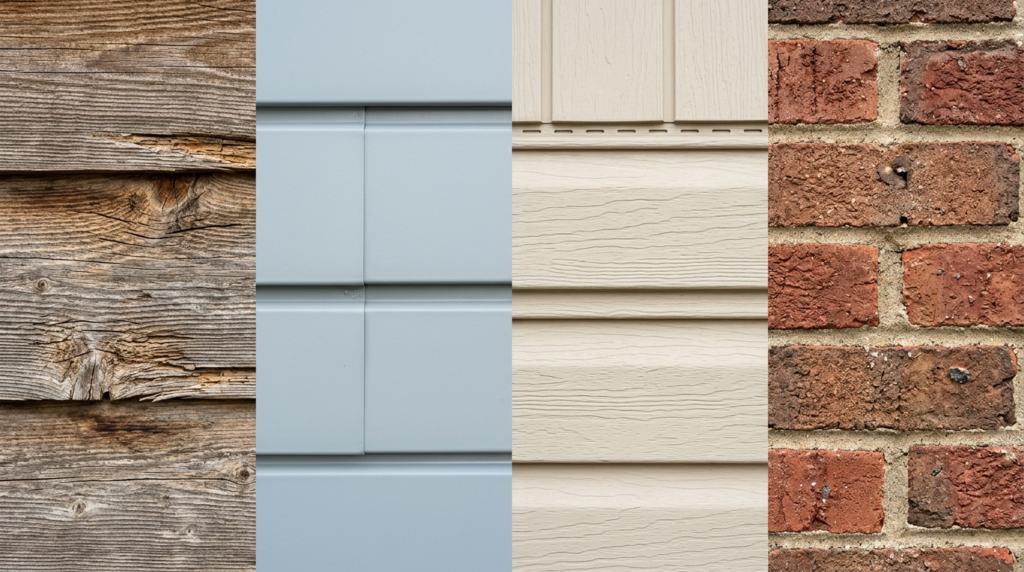
Wood siding can absorb rain and wash water. It may need more drying time, mainly in shaded areas or near open joints. Paint should not be used to cover active rot, leaks, or wet wood.
Aluminum siding does not absorb water like wood, but it can become very hot in direct sun. It may also have chalk or oxidation that must be removed before painting. Our aluminum siding painting guide explains how surface condition affects preparation and timing.
Vinyl siding can also heat up in sunlight. Paint color and product choice matter because some dark colors may cause too much heat gain. Read our vinyl siding painting guide before choosing a new color or deciding whether old siding should be painted.
Masonry may hold moisture below the surface. New or repaired masonry may also need added cure time before coating. The primer and finish must match the type and condition of the wall.
What Happens If Rain Arrives Too Soon?
Rain can mark, thin, or wash paint that has not formed a firm film. It can also cause streaks, uneven areas, or poor grip.
The level of harm depends on how long the paint had been drying, the type of product, the temperature, and the force of the rain. A brief light shower may affect one product less than a long, hard rain affects another.
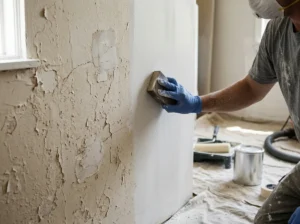
Do not touch or repaint the wet area at once. Let it dry, then inspect the surface. The affected section may need cleaning, light sanding, primer, or another finish coat.
The best way to prevent this problem is to use a rain forecast that covers the full product drying window. A forecast for only the next hour is not enough.
When Should Exterior Painting Be Delayed?
Painting should be delayed when the surface is wet, rain is expected too soon, dew is forming, or the temperature will fall outside the product range.
The work may also need to wait when strong wind makes safe ladder or spray work hard, or when direct sun has made the surface too hot.
A professional schedule should allow for weather delays. Moving the date is better than forcing paint onto a surface that is not ready.
Knapp Painting’s exterior house painting services can help homeowners review siding condition, needed repairs, preparation, and the likely weather window for the work.
Frequently Asked Questions
When is the best time to paint the exterior of a house in Cleveland?
Late spring through early fall usually offers the most workable weather. The final decision should be based on the surface, rain forecast, dew point, overnight low, and product instructions.
What is the lowest temperature for exterior painting?
It depends on the paint. Some products require about 50°F or warmer, while certain low-temperature products allow use near 35°F. Always check the exact product data sheet.
Can painters work in spring or fall?
Yes. Spring and fall can both work when surfaces are dry and temperatures remain within the product range during application and drying.
Does humidity slow paint curing?
Yes. High humidity, mainly with cool air, can slow drying and curing. The product sheet should list any humidity limit or added drying guidance.
How long after rain can exterior painting begin?
There is no set wait time for every surface. The siding must be fully dry, including joints, cracks, shaded areas, and materials that may hold moisture.
What happens when rain falls on fresh exterior paint?
Rain may cause marks, streaks, wash-off, or poor film formation. Let the area dry before deciding what repair is needed.
What is the best time of day to paint a house exterior?
Start after morning dew has dried. Avoid very hot surfaces in direct sun and stop early enough for the coating to set before evening dew forms.
Plan Exterior Painting Around the Weather
The best time to paint the exterior of a house is a dry period when the air, surface, and overnight temperatures fit the chosen products. The siding must also be dry and clear of damage that paint cannot repair.
To review your siding and plan around Cleveland weather, contact Knapp Painting to schedule an exterior painting assessment.