A fresh coat of paint doesn’t cover up all the things underneath. Once the new paint dries, the small cracks, peeling areas, and rough patches can become more apparent. This is why surface preparation for painting is important. The surface must be clean and prepared for paint application before any paint is applied. The preparation required is dependent on the existing situation and the state of the materials. If there are a few minor repairs to be made on a wall, it’s a different approach from an exterior surface with peeling paint or heavy build-up. Proper preparation provides paint with a firm foundation and contributes to a more even appearance after painting.
Why Surface Preparation Matters for Painting Quality and Durability
Paint is a thin film and requires contact. It adheres to whatever lies directly on top of it, making the surface’s condition a limit on the performance of the coating. When paint is applied over dust or grease, it adheres to the dust or grease rather than the wall.
The appearance will also be determined by the surface. Ridges and rough patches are covered with a thin layer of color. When the surface is prepared properly, the advantages are evident: the wall will look better once it dries, and the coating will hold on to the wall for longer, thus contributing to the longevity of the paint.
What Proper Paint Job Surface Preparation Addresses Before Painting
Surface preparation before painting starts with an inspection. A painter checks the substrate condition, meaning the wall, trim, or siding itself, and decides what needs work. Paint job surface preparation usually deals with these problems:
- Dirt and dust
- Grease and residue
- Mold, mildew, and algae are present
- Peeling or loose paint
- Cracks and holes
- Rough or uneven areas
- Repaired or bare sections
- Moisture-related problems
House painting preparation varies with the material and the age of the old coating. For interior walls with existing wallpaper or adhesive residue, wallpaper removal and surface prep may also be necessary before painting. The aim of paint-ready surface preparation is a surface that is clean, sound, and level.
How Surface Cleaning Before Painting Supports Better Paint Adhesion
Cleaning is easy to dismiss as cosmetic work, but it changes how the coating bonds. Dust, cooking oil, and chalky residue form a thin film between the old surface and the new paint. Dirt removal and dust removal come first on most walls. Grease removal matters most in kitchens and entryways.
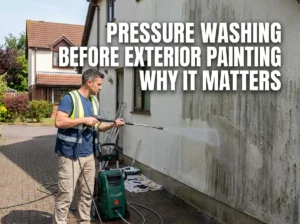
Outdoors, the problem is often living growth. Mold, mildew, and algae removal keeps it from sitting under the new film. Pressure washing clears heavy buildup from many exteriors, but soft wood and aged siding can be gouged by a strong spray. Cleaning also uncovers hidden damage, such as hairline cracks.
Why Old Paint, Cracks, and Rough Areas Need Attention Before Repainting
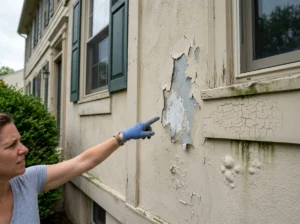
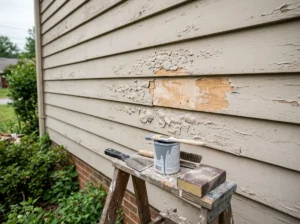
New paint follows the shape of whatever it covers. A crack stays a crack, and a raised edge of old paint stays visible as a ridge. Loose coatings are the bigger concern, because new paint lifts right along with them.
Old paint removal only needs to cover the failing areas. Scraping takes off what is loose, and sanding then feathers the edge where old paint meets bare surface. Exterior repainting preparation leans hardest on this step, since weathered boards tend to have more failing paint.
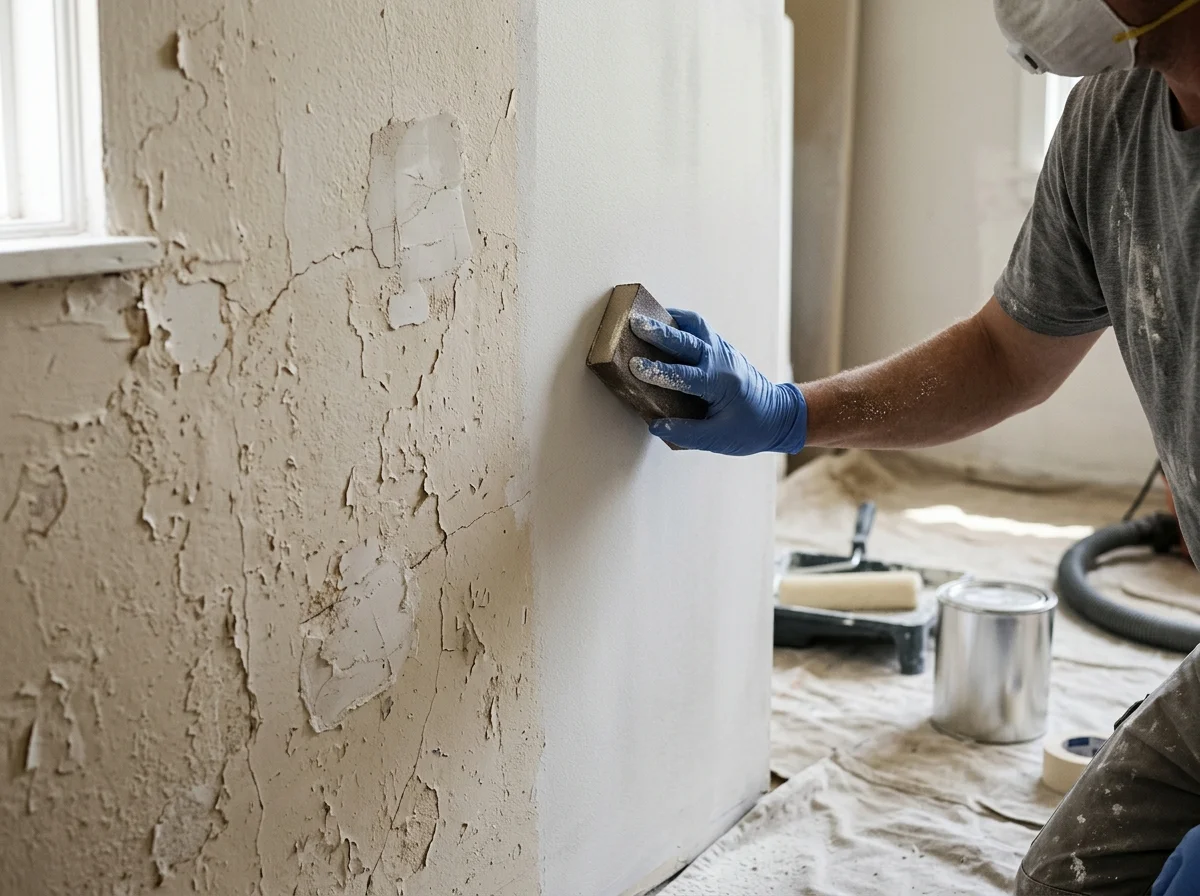
Holes, dents, and cracks get filled and sanded level. Drywall repairs need to blend in with the wall around them, because a rough patch shows up as a dull spot and an overfilled one shows up as a bump.
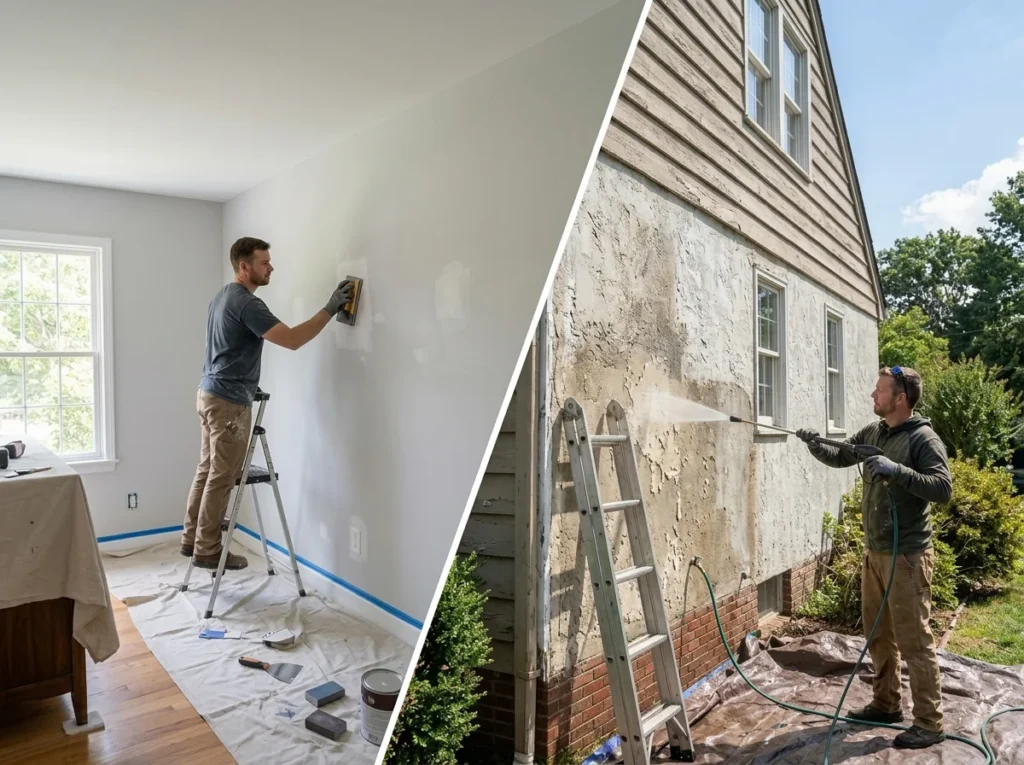
Interior Wall Preparation and Exterior Wall Preparation Follow Different Needs
Indoor walls stay out of the weather but take daily contact and small settling cracks. Exteriors face sun, rain, and temperature swings all year.
Preparing Interior Walls for a Clean, Even Finish
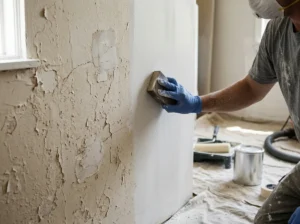
Interior wall preparation for painting begins with repairs. Nail holes, dents, and hairline cracks get filled, then sanded flat. Where a wall still has old wallpaper, the paper and its adhesive have to come off, since paint bonds poorly to both. Sanding dust gets wiped away before the first coat. Patched or porous spots often get primer so they absorb paint like the rest of the wall.
Preparing Exterior Walls for Long-Term Weather Exposure
Exterior wall preparation begins with cleaning off dirt and organic growth, using pressure washing where the siding can take it. Failing coatings are scraped away, and damaged spots get repaired. The surface then needs time to dry, since paint over damp siding can trap moisture behind the film. Surface preparation for exterior painting often takes longer than interior work, because drying time can set the schedule.
How Sanding and Priming Help Create a Paint-Ready Surface
Sanding and priming each solve a specific problem. Neither belongs on every job.
Where Sanding Improves the Surface Before Painting
Sanding smooths filled patches, rounds off rough edges, and removes weak material that would not hold a new coat. Sanding before exterior painting usually centers on the edges of peeling paint and on bare wood. Most surfaces need only light sanding.
When Primer Adds Protection and Better Paint Bonding
Priming before painting is not automatic. A sound wall repainted in a similar color may not need it. Primer earns its place on bare areas, fresh repairs, porous surfaces, and certain stains, where it gives the topcoat a uniform base to grip. That supports coating adhesion and even absorption across patched sections.
How Proper Preparation Helps Reduce Common Paint Failures
Most failures homeowners notice trace back to the surface. Careful scraping and cleaning help address exterior paint peeling by removing the layer most likely to let go first. Blisters form when moisture pushes up under the film, so letting the surface dry fully helps prevent paint blistering. Brittle old coatings crack and pull the new film with them, which is why removing them helps prevent paint cracking.
Preparation has limits, though. Moisture inside a wall, structural movement, mismatched products, and poor application weather can still damage a well-prepared coating.
| Pro Tip: If paint keeps peeling, bubbling, or staining in the same spot, another coat will not fix it. Look for the source of the dampness or movement first, correct it, then prepare the area and repaint. Otherwise, the same problem usually returns. |
Here is how the two results compare once the paint is dry and has been on the wall for a while.
| Well-prepared surface | Poorly prepared surface |
| Paint grips firmly | Bond is weak in spots |
| Finish dries smooth | Bumps and patches show |
| Color covers evenly | Coverage turns blotchy |
| Repairs blend in | Damage stays visible |
| Coating lasts longer | Problems appear early |
| Touch-ups start clean | Old issues remain underneath |
Why Professional Painters Treat Preparation as Part of the Job
A professional job starts by reading the surface. Each material behaves differently, and the condition of the old paint changes what the work requires. Some projects need light cleaning and a few repairs. Others call for scraping, sanding, and primer. Preparation shapes the final coating, so it belongs inside the scope of exterior house painting when the project involves an outside surface.
What To Ask a Painter About Preparation Before You Hire
Ask how the existing surface will be evaluated and how peeling paint will be handled. Ask whether wall repairs are in the estimate, how exterior buildup will be cleaned, where sanding is planned, and whether primer goes on repairs. If the estimate lists only paint and labor, the surface may get little attention.
Frequently Asked Questions
Homeowners tend to ask the same few questions.
Does surface preparation really affect the quality of a paint job?
Yes. Paint can only bond as well as the surface allows, so dirt, loose paint, and uneven repairs weaken adhesion.
What should be done before painting an interior wall?
Clean the wall, fill holes and cracks, and sand repairs smooth. Wipe away the dust, then prime patched or porous spots where needed.
Does exterior painting always require pressure washing?
No. Pressure washing suits many surfaces, but older wood and soft siding can be damaged by strong spray.
Is primer always necessary before painting?
No. Primer helps on bare wood, fresh patches, porous surfaces, and some stains. Sound, sealed paint may not need it.
What happens if you paint over peeling or damaged paint?
The new coat bonds to a layer that is already loose, so it usually peels along with it. Cracks and holes stay visible too.
The Surface Decides How the Paint Turns Out
The paint you see on the wall is only as dependable as the surface it was applied to. The cleanliness, repair, sanding, and priming, when required, create the environment for a good bond and smooth finish. The interior and exterior surfaces have different demands and require a different plan. The coating is most likely to last if a lot of preparation work is done. Knapp Painting LLC is a painting company in Cleveland, OH, that provides interior and exterior painting services. If you’re thinking about a project and want to have a conversation with them about the surface first, give them a call.