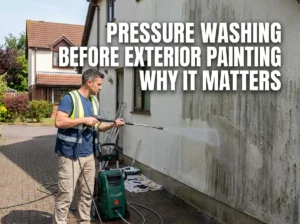
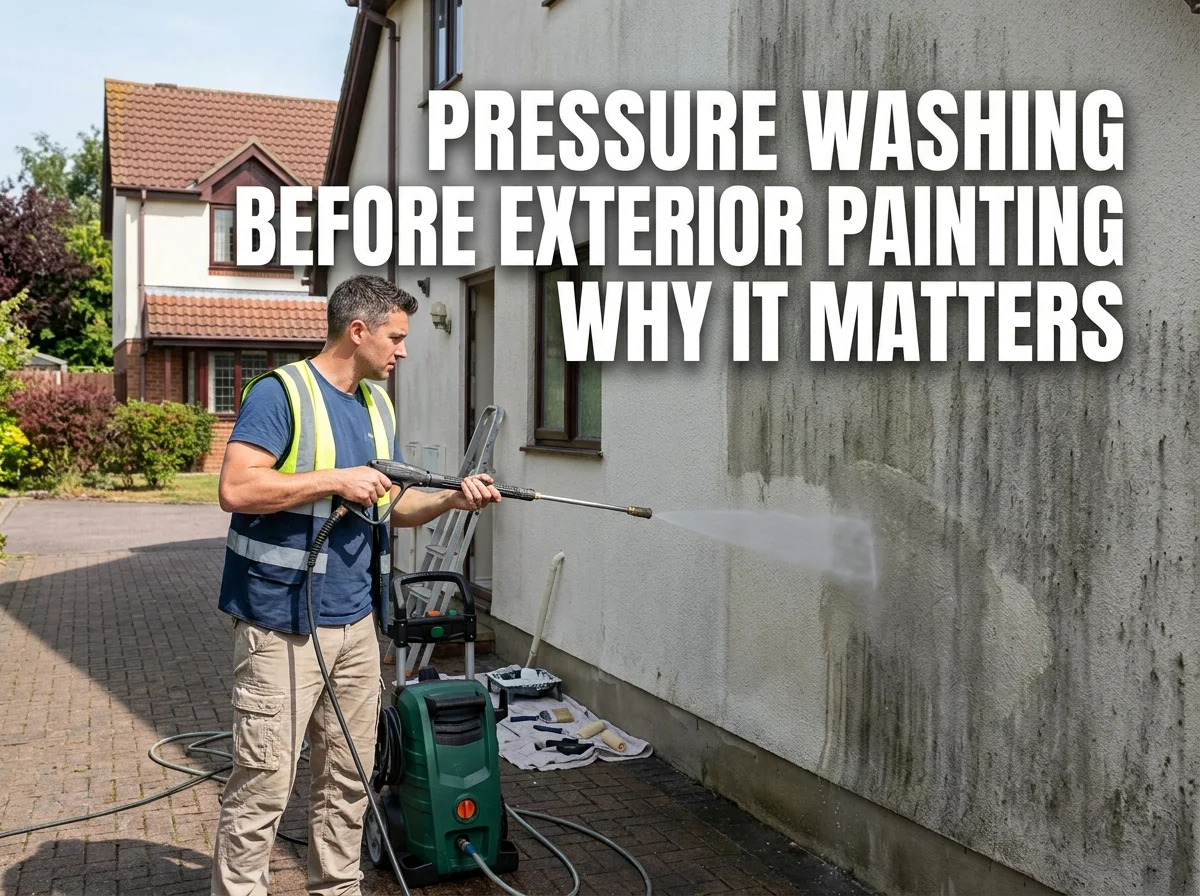
Exterior paint requires a reasonably clean surface to adhere properly. House siding accumulates dirt, grime, algae, and other residue over time that can become trapped between the existing surface and a new coat of paint. Weather can also leave surfaces stained or generally worn. For this reason, pressure washing before exterior painting is an important component of exterior house painting preparation.
Cleaning provides the painting team a clearer view of the surface and removes buildup that might cause problems during the work. It’s a great way to tell the difference between ordinary dirt and issues that must be addressed before painting is done. However, pressure washing is not simply a matter of using as much water pressure as possible. The cleaning procedure should be appropriate to the exterior material and condition.
What Needs to Come Off the Exterior Before New Paint Goes On?
Exterior walls rarely stay clean for long. Dust settles into textured surfaces, grime builds up around exposed areas, and moisture can encourage mildew or algae growth. Some homes also have chalky residue left behind by an aging coating. These contaminants matter because new paint is meant to bond with the surface beneath it, not with a layer of dirt or organic growth.
Common buildup can include:
- Dirt and dust: Loose particles can leave the surface visibly dirty and interfere with a clean coating application.
- Grime: This can collect around siding, trim, and other places exposed to outdoor runoff.
- Mold, mildew, and algae: Organic growth can remain attached to damp or shaded exterior surfaces and needs to be addressed before painting.
- Loose debris: Small pieces of deteriorated material can prevent the surface from being properly evaluated.
- Weather-related residue: Exterior surfaces can develop stains, deposits, and other residue after years of exposure.
The goal of exterior wall cleaning is not simply to make the house look better. It is to leave behind a cleaner painting surface that can be inspected and prepared appropriately.
Chalking Is Different From Ordinary Dirt
Chalking occurs when a coating deteriorates on the outside and leaves a fine powder on the surface. After normal dirt has been cleaned from a weathered wall, it may still appear dusty because the coating itself is breaking down. That’s important when preparing the surface for paint. The chalky residue should be properly addressed before a new coat is applied.
Why Painting Over a Dirty Surface Can Cause Problems Later
New paint cannot form a dependable bond with a surface that is covered by loose contamination, and proper preparation can also affect exterior paint lifespan over time. Dirt, organic growth, and residue can create a barrier between the existing surface and the new coating. The result can vary depending on the condition of the exterior and the coating being applied. You may see areas where the finish does not look uniform, or the new coating may begin separating from the underlying surface sooner than expected. Existing surface problems can also become more noticeable after painting.
Potential issues include:
- Poor adhesion in contaminated areas
- Premature peeling or flaking
- Blistering in areas affected by moisture or other conditions
- Uneven appearance caused by leftover residue
- New coating failure where the underlying surface was already deteriorated
This does not mean pressure washing alone prevents paint failure. Paint problems can have many causes, including moisture, material deterioration, application conditions, and inadequate preparation.
The reason pressure washing for paint preparation matters is more specific. It removes certain surface contaminants so the condition underneath can be evaluated and addressed before new paint is applied.
| Pro Tip: A clean-looking wall is not automatically a paint-ready wall. Cleaning should be followed by an inspection of what the washing reveals. |
What Can a House Wash Reveal Before Exterior Painting?
A house can hide surface problems beneath years of accumulated dirt and organic growth. Once that buildup is removed, the exterior may look quite different from what was visible beforehand.
Peeling Paint and Bare Areas
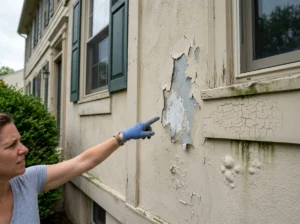
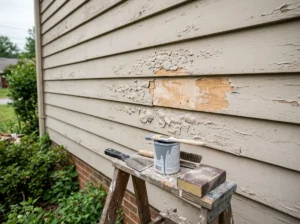
Washing can expose sections where the existing coating has already started to fail. Exterior paint peeling or bare areas become much easier to see once dirt and organic growth are gone. These spots may need additional attention before a new coating is applied.
Cracks, Deterioration, and Failed Caulk
A clean surface can make physical defects easier to spot. Cracks and failed caulk around joints or openings have been difficult to notice beneath surface buildup. Cleaning does not repair these conditions, but it gives the next inspection a clearer starting point.
Weathered or Moisture-Affected Areas
Some sections may look more worn after washing because the dirt was hiding their actual condition. Areas affected by moisture or recurring organic growth may become more apparent once the surface is clean. Those conditions should be evaluated rather than simply covered with fresh paint.
| Important: Pressure washing can reveal an existing problem without causing it. For example, paint that comes loose during washing may already have been too weak to remain bonded to the surface. |
Is Pressure Washing Suitable for Every Exterior Surface?
This does not mean that all exterior materials need to be cleaned in the same manner. The type of surface, its age, condition, and current coating may all impact the best method.
A cleaning method that is effective on one section of the exterior may not be the best option on another. This is particularly important if the outside of the building is already weathered or damaged.
Wood Siding
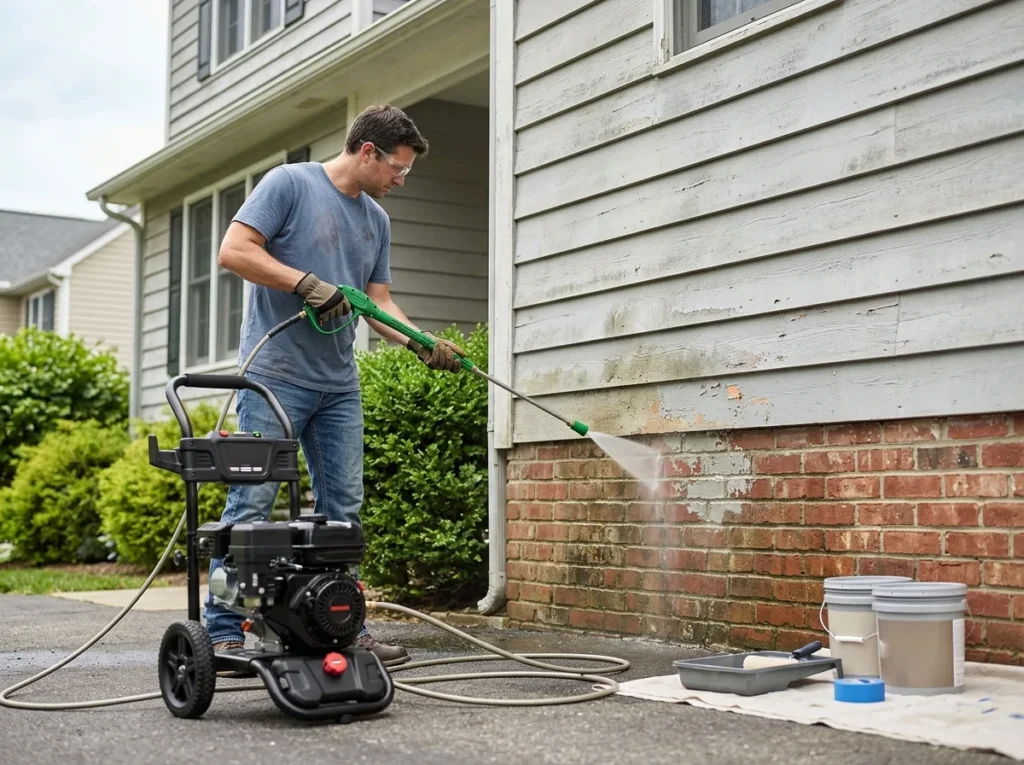
Wood siding deserves particular care because older boards may already have areas weakened by weather exposure. Excessive pressure can roughen the wood surface, damage vulnerable sections, or force water into joints and other openings.
When considering whether to pressure wash wood siding before painting, the condition of the boards matters as much as the fact that they need cleaning. The objective is to remove surface contamination without creating additional damage that then has to be addressed before painting. A gentler cleaning approach may be appropriate for some wood surfaces, particularly where the material or existing coating is fragile.
Stucco, Brick, and Siding
Stucco, brick, and siding have different surface characteristics and can respond differently to water pressure. Siding may have seams or areas where water needs to be directed carefully, particularly when you pressure wash vinyl siding before painting. Stucco can have damaged or weakened sections that require attention. Brick has joints that should not be treated as though they are an impervious painted wall.
The right approach depends on the material and its condition rather than a universal pressure setting. Concrete can also require its own considerations when it is part of the exterior being prepared. The important point is simple: cleaning should be controlled to suit the surface, not based on maximum pressure.
When Pressure Washing Can Make the Painting Job Worse
Pressure washing can create problems when the equipment or procedure is not appropriate for the surface. Excessive force may damage siding, roughen wood, remove paint that was still sound, or drive water into vulnerable areas.
That does not make pressure washing inherently harmful. It means the cleaning method needs to match the job. A surface with fragile paint reacts differently from newer siding. Older wood may need more care than a sound masonry surface. Areas around openings, joints, and damaged sections also require attention.
The objective is not to strip the exterior with water. It is to remove the contamination that needs to come off while leaving the underlying surface in suitable condition for the next stage. The goal is appropriate cleaning, not maximum pressure.
What Happens Between Washing and Painting?
Pressure washing is not the final step before the paint is applied. The exterior must be washed and then allowed to dry properly. The rate at which this occurs depends on factors like weather, sunlight, airflow, the material, and the amount of moisture on the surface.
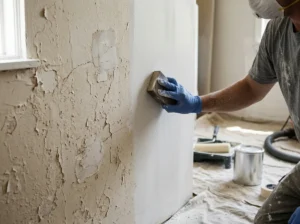
When the surface is completely dry, it can be checked again. This is when more preparation needs are apparent. Loose paint may need to be scraped off. The new coating may need to be sanded, repaired, and/or primed on some surfaces before it can be applied.
The sequence is straightforward:
Cleaning
Remove dirt and other surface residue.
Drying
Allow the exterior to dry based on the material and conditions.
Inspection
Check what the cleaned surface reveals.
Final Preparation
Handle remaining surface issues before painting.
Painting
Proceed once the exterior is properly prepared.
Simply finishing the pressure washing and immediately applying paint is not a reliable rule. The surface has to be sufficiently dry and ready for the coating being used.
Does Every Exterior Painting Project Need Pressure Washing?
No. A clean surface matters before exterior painting, but pressure washing is a cleaning method, not a requirement for every project.
The appropriate approach depends on the condition of the exterior. A surface with significant dirt, grime, mildew, algae, or other buildup may benefit from more thorough washing. Another surface may require a different cleaning method because of its material, age, or condition. The existing paint also matters. If it is already deteriorating, the project may involve preparation beyond simple cleaning.
Factors that can influence the cleaning approach include:
- The amount and type of surface buildup
- The exterior material
- The condition of the existing coating
- Organic growth or staining
- Areas that are difficult to access
- Whether pressure washing is suitable for the particular surface
FAQ
Why should you pressure wash before exterior painting?
Pressure washing can remove dirt, organic growth, and other surface buildup that may interfere with painting. It also helps expose the actual condition of the exterior so remaining preparation needs can be identified before new paint is applied.
How long should you wait to paint after pressure washing?
The surface needs to be completely dry before painting. How long that takes can vary based on the material, weather, humidity, airflow, and how much water the surface has absorbed.
Will Pressure Washing Remove Loose Paint Before Repainting?
Pressure washing can loosen and remove paint that is already peeling or failing. However, it is not a complete substitute for surface preparation. Any remaining loose paint or damaged areas should still be checked and properly addressed before the new paint is applied.
Can pressure washing damage siding before painting?
Pressure washing can damage siding when too much pressure or the wrong cleaning technique is used. It may roughen the surface, remove paint that is still in good condition, or force water into vulnerable areas. The pressure and cleaning method should match the type and condition of the siding.
Can you paint a house without pressure washing?
Yes, pressure washing is not required for every house. It depends on the condition of the exterior and how much cleaning the surface needs. What matters is having a clean, sound surface that is properly prepared before painting. Other cleaning methods may be suitable when pressure washing is not appropriate.
Final Thoughts
Pressure washing can remove dirt, grime, mold, and other buildup while making hidden surface conditions easier to identify before painting. It is one part of exterior painting surface preparation, not a replacement for inspecting and addressing other problems.
Knapp Painting LLC provides exterior painting services with attention to the preparation needed before a new exterior coating is applied. If you are planning to repaint your home’s exterior, contact Knapp Painting LLC to discuss the project.