Yes, you can paint vinyl siding when the panels are still sound and the right coating system is used. Faded color alone does not mean the siding needs to come off. A well-planned paint job can update the exterior without replacing panels that are still doing their job.
The catch is that vinyl is not painted the same way as wood. It moves as temperatures change, and dark colors can cause extra heat buildup. Dirt, chalk, mildew, moisture, or a poor paint choice can also leave you with weak adhesion or damaged siding. Sherwin-Williams specifically notes that vinyl expands and contracts with temperature and warns against ordinary darker colors unless the coating is designed for that use.
For Cleveland homeowners, weather adds another layer. Spring rain, summer heat, cool fall nights, and moisture around Lake Erie all affect when the work should happen. Here is how to decide if your siding can be painted and how the job should be done.
Can Vinyl Siding Really Be Painted?
Yes, but start by checking the siding rather than shopping for colors.
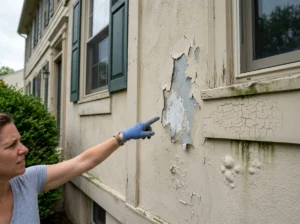
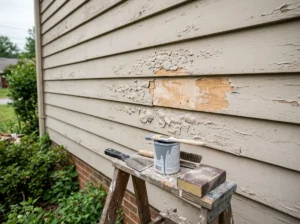
Painting works best when the vinyl is firmly installed and the main problem is fading, uneven color, or an outdated look. Paint will not repair siding that is cracked, badly warped, brittle, melted, loose, or allowing water behind the panels.
If the condition itself is questionable, read our guide on painting vs. replacing old siding in Cleveland before spending money on coating it.
There is another check homeowners sometimes miss: the warranty. The Polymeric Exterior Products Association advises homeowners to contact their siding manufacturer before painting because applying paint may affect the original product warranty.
So the first question is not just, “Can I paint it?”
It is, “Is this particular siding worth painting?”
How to Prep Vinyl Siding for Painting
Good vinyl siding painting preparation starts with a clean surface.
Vinyl collects road dust, pollen, dirt, mildew, chalk, spider webs, and residue from gutters or nearby trees. Painting over that material gives the coating something unstable to stick to.
Sherwin-Williams recommends cleaning vinyl with warm, soapy water, rinsing it thoroughly, and allowing it to dry before painting. Its preparation guidance also allows power washing or warm soapy water for dirt and chalk.
The basic process is straightforward:
- Inspect the siding for cracks, warping, loose panels, and leaks.
- Protect landscaping, lights, outlets, windows, and nearby surfaces.
- Remove dirt, chalk, mildew, and other surface contamination.
- Rinse away cleaning residue.
- Allow the siding and panel joints to dry.
- Repair problems before opening the paint.
- Prime only where the chosen paint system requires it.
- Confirm that the weather and surface temperature are suitable.
- Apply the vinyl-approved finish according to its product data.
If you want a deeper look at cleaning, repairs, masking, and surface inspection, our guide to preparing a building exterior before painting covers the same fundamentals across exterior surfaces.
Should You Pressure Wash Vinyl Before Painting?
You can, but more pressure is not automatically better.
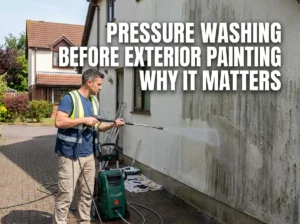
A careful pressure wash before painting vinyl siding can remove dirt and loose contamination quickly. Hand washing with a soft brush and cleaner is also a valid option. Sherwin-Williams lists both power washing and warm soapy water as acceptable methods for vinyl preparation.
What matters is getting the siding clean without damaging it or pushing unnecessary water behind the panels.
After washing, give the wall time to dry. Water can sit around overlaps, trim, corners, and shaded areas after the open face of the siding looks dry.
General Sherwin-Williams exterior guidance recommends allowing at least 24–48 hours after pressure washing before painting, although actual drying depends on conditions.
A north-facing wall in Lakewood may dry differently from a sunny wall in Parma. Check the siding itself rather than relying only on the clock.
What About Mildew Before Painting?
Mildew needs to be dealt with before paint goes on.
If dark or green staining remains after normal washing, identify and remove it with a cleaner suitable for the siding and coating system. Sherwin-Williams specifically tells painters to watch for mildew during vinyl preparation rather than coating over it.
Do not confuse mildew with ordinary dirt or staining. The important part is that the finished surface should be clean, rinsed, and dry before coating.
Painting over active contamination does not make the underlying problem disappear.
Do You Need Primer on Vinyl Siding?
Not always.
Many modern exterior paints designed for vinyl can go directly over clean, sound siding. Primer may still be useful when the surface is unusually slick, repaired, stained, pitted, or when the selected paint manufacturer calls for one.
Sherwin-Williams notes that priming is generally unnecessary with some approved exterior products but recommends a bonding primer if cleaned vinyl remains very slick.
That is why “always prime” and “never prime” are both weak rules.
Follow the system being used.
Primer cannot fix dirty siding, trapped moisture, or damaged panels.
What Is the Best Paint for Vinyl Siding?
The best paint for vinyl siding is an exterior coating that specifically lists vinyl as an approved surface and supports the color you want to use.
Acrylic exterior products are common because they can form a flexible coating over siding that moves with changing temperatures.
Several major manufacturers currently offer suitable options.
Sherwin-Williams lists Emerald Exterior Acrylic Latex alongside its VinylSafe color system.
Benjamin Moore lists Aura Exterior for vinyl siding and describes its resin as 100% acrylic.
BEHR currently lists BEHR ULTRA Exterior for vinyl siding as well. Homeowners may also encounter older references to BEHR Premium Plus Ultra, so current product specifications should be checked before buying based on an old article or paint can name.
The brand name matters less than compatibility.
Look for:
- Exterior use
- Vinyl listed as an approved substrate
- Suitable temperature range
- Approved color options
- Correct primer instructions
- Recoat requirements
- Recommended application method
Do not assume every exterior latex paint is automatically safe for vinyl.
Can You Paint Vinyl Siding a Darker Color?
Sometimes—but this is where mistakes can become expensive.
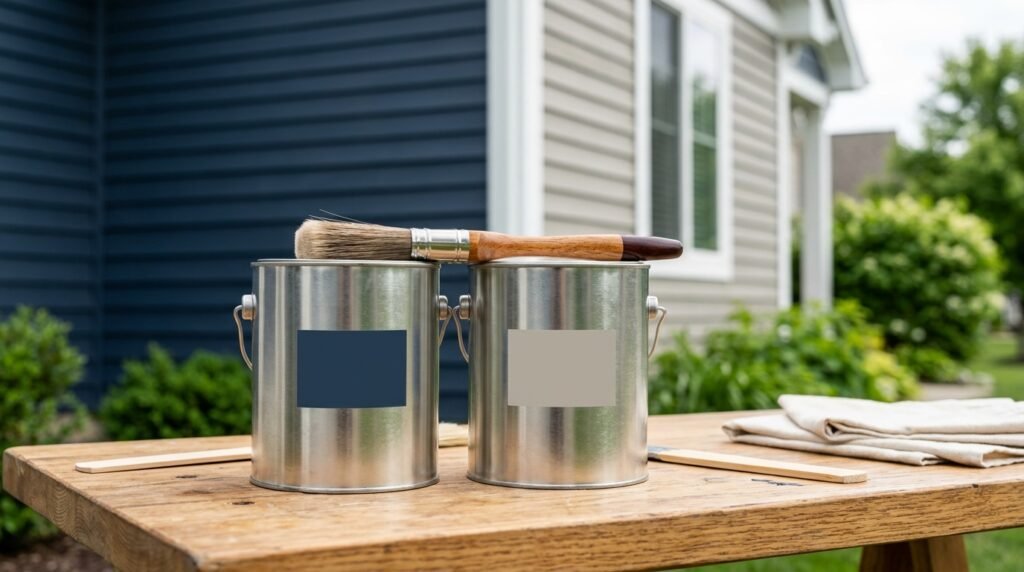
Vinyl siding absorbs heat from sunlight. A much darker ordinary paint color can increase surface temperature and cause panels to distort.
BEHR identifies dark repaint colors as a cause of vinyl siding warping because darker surfaces absorb more solar heat.
The old rule was simple: stay with the original color or go lighter.
Modern paint technology gives homeowners more options, but not unlimited freedom. Sherwin-Williams now offers VinylSafe paint colors, including selected darker shades formulated for compatible vinyl systems.
That does not mean you can grab any charcoal, navy, or black exterior paint and put it over light beige siding.
Use a color specifically approved for vinyl and the coating you selected.
What Is the Best Temperature to Paint Vinyl Siding?
Mild, stable weather makes the job easier, but paint vinyl siding temperature requirements vary by product.
A practical working window around 60°F to 85°F can be comfortable for many exterior projects because it avoids cold surfaces and intense summer heat. It should not be presented as a universal product limit.
Benjamin Moore Aura Exterior, for example, allows low-temperature application down to 35°F. Sherwin-Williams also lists several exterior product lines, including Emerald, for application down to 35°F under appropriate conditions.
That does not mean 35°F is automatically a good target day.
You still need to consider the wall temperature, overnight conditions, dew point, sunlight, humidity, and rain. Sherwin-Williams advises keeping conditions within the product’s recommended range and above the dew point after application.
For a broader Cleveland weather breakdown, see our guide to the best time to paint a house exterior in Cleveland.
When Is the Best Season for Vinyl Siding Painting in Cleveland?
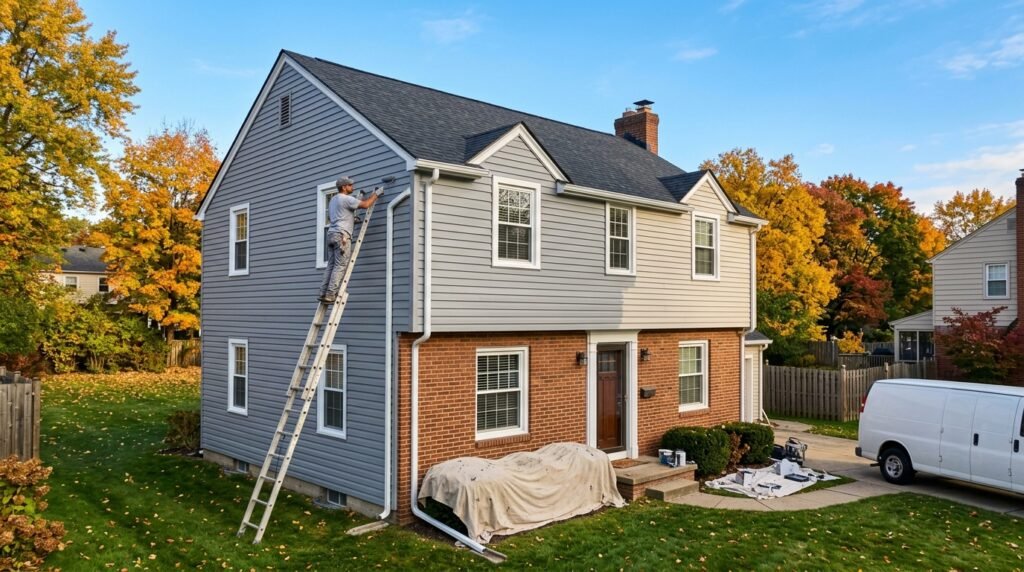
Late spring through early fall usually gives Greater Cleveland homeowners the widest selection of workable painting days.
Spring can be useful once surfaces are dry and overnight temperatures stabilize. Summer gives more warm days, but strong sun can heat the siding well above the reported air temperature. Early fall can also work well, though shorter days and cooler nights reduce the available work window.
Homes near Bay Village, Rocky River, Lakewood, Bratenahl, and other communities close to Lake Erie can also stay damp after rain or morning dew.
Do not choose a painting date simply because the forecast says “sunny.”
Check each wall.
The shady north side of a home can still be damp while the south side feels completely dry.
Brush, Roller, or Spray: How Should Vinyl Siding Be Painted?
All three methods can work.
Spraying is useful across large siding areas because it can produce an even finish quickly when handled correctly. Brushing gives more control around edges, trim, and detailed sections. Rollers may work on accessible siding depending on its profile.
Sherwin-Williams states that suitable vinyl coatings can be applied by brush, roller, or sprayer depending on the job.
Professional projects often combine methods rather than choosing only one.
Spraying also requires careful masking. Overspray can reach windows, roofing, cars, landscaping, neighboring homes, or masonry when wind changes.
The goal is not speed. It is even coverage without filling siding joints or interfering with panel movement.
Why Does Vinyl Expansion and Contraction Matter?
Vinyl siding is designed to move.
As temperatures rise, panels expand. When temperatures fall, they contract. That is one reason vinyl siding is installed with space for movement instead of being locked tightly in place.
Sherwin-Williams specifically warns that this horizontal movement becomes more significant when a darker surface absorbs additional heat.
Paint should therefore be applied without sealing movable panel joints together.
Painting into every overlap may look thorough while the coating is wet, but the siding still needs room to move later.
How Many Coats Does Vinyl Siding Need?
There is no rule that every vinyl exterior requires exactly the same number of coats.
Coverage depends on the product, old color, new color, siding condition, application rate, and whether primer is part of the system.
A major color change may require more work than refreshing a similar shade.
Follow the manufacturer’s spread rate and recoat instructions rather than adding heavy paint in an attempt to finish faster.
Thicker is not automatically better.
How Long Does Paint Take to Dry on Vinyl Siding?
Dry and recoat times depend on the exact product.
Temperature and humidity can change the schedule. Cooler temperatures or higher humidity often slow drying.
That means a product that is ready for another coat quickly on a mild, dry afternoon may take longer on a cool Cleveland day.
Do not treat “dry to touch” as the same thing as fully ready for the next stage.
The data sheet for the chosen paint should control the schedule.
How Much Does It Cost to Paint Vinyl Siding in Cleveland?
Vinyl siding painting cost depends on the amount of paintable siding and how much preparation the home needs.
Current national pricing data shows how wide the range can be. Angi’s July 2026 vinyl-siding painting guide reports professional projects from roughly $300 to $10,000, with an average around $4,000. That is national data, not a Knapp Painting or Cleveland quote, and the very wide range shows why one generic number is not especially useful.
For a Cleveland home, cost can change with siding area, height, access, cleaning, mildew, repairs, masking, trim, color change, paint choice, and the number of coats.
A two-story home with peaks, porches, shutters, and several repairs will not price like a simple one-story exterior.
Our Cleveland house painting cost guide explains the broader factors to compare when reviewing painting estimates.
How Long Does a Vinyl Siding Painting Project Take?
The timeline depends on the home.
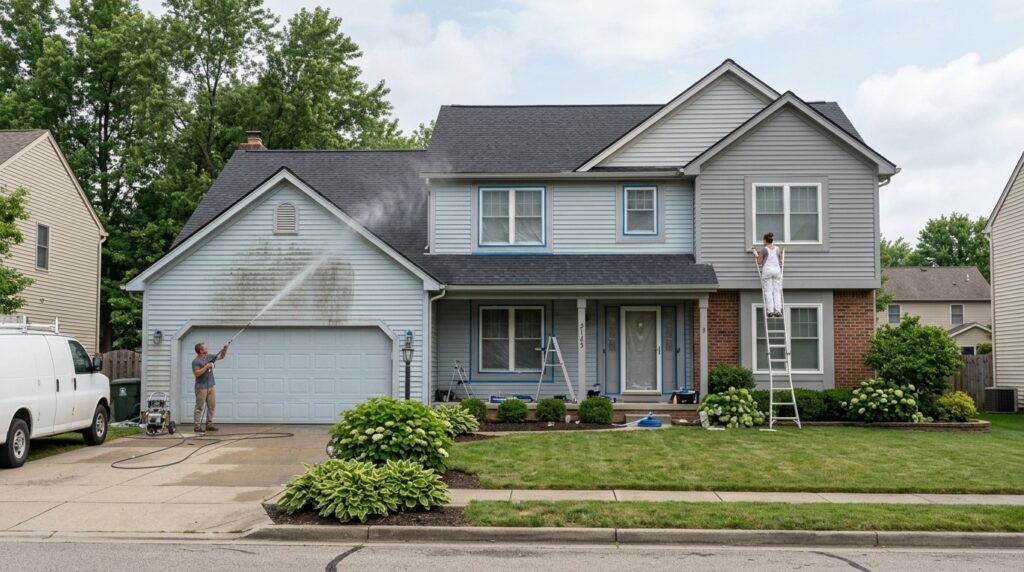
Cleaning and drying may take longer than expected if the siding is dirty or the weather stays damp. Repairs and masking add time before paint begins. A large color change can also affect the coating schedule.
A typical workflow looks like this:
Inspection → cleaning → drying → repairs → protection and masking → primer where needed → paint application → recoat time → final inspection and cleanup.
Weather can interrupt that sequence.
A contractor should build room into the schedule rather than promising a rigid completion time before seeing the property and forecast.
When Should Vinyl Siding Be Replaced Instead of Painted?
Paint is mainly a cosmetic and maintenance solution.
It is not a structural repair.
Replacement or siding repair deserves serious consideration when you find widespread cracking, brittle panels, severe warping, melted sections, repeated leaks, or loose siding across large areas.
That distinction matters because painting damaged vinyl can make the house look better while leaving the real problem untouched.
If you are not certain what material you have, do not assume all siding follows the same process either. Metal siding needs different inspection and preparation. Our guide to painting aluminum siding in Cleveland explains those differences.
Frequently Asked Questions
Can you paint old vinyl siding?
Yes, if the siding is still firm and functional. Clean it well, repair damaged areas, and use a vinyl-approved exterior coating and color.
Does vinyl siding need to be sanded before painting?
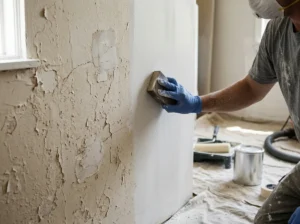
Usually not. Sherwin-Williams warns that sanding or wire brushing can permanently mark vinyl. Cleaning is normally the main preparation method unless the chosen coating system gives different instructions.
Can you paint vinyl siding black?
Do not use an ordinary black exterior paint simply because you like the color. Very dark colors can increase heat buildup. Only use a dark shade when it is approved for the vinyl and coating system.
Is 100% acrylic paint good for vinyl siding?
Many approved vinyl coatings use 100% acrylic resin, including Benjamin Moore Aura Exterior. The important point is that the specific product must list vinyl siding as an approved surface.
Can you pressure wash vinyl siding before painting?
Yes, when done carefully. Warm soapy water and hand cleaning are also acceptable. The siding needs to be rinsed and allowed to dry before painting.
Do you need two coats of paint on vinyl siding?
Not in every situation. Coat requirements vary by product, surface condition, and color change. Follow the paint manufacturer’s instructions.
Is spring or fall better for painting vinyl siding in Cleveland?
Both can work. Choose a dry period with temperatures and surface conditions that meet the paint manufacturer’s requirements.
Will painting vinyl siding void the warranty?
It can. Check the siding manufacturer’s written warranty before painting, especially if the siding is still under coverage.
Paint Vinyl Siding Only When the Surface Is Ready
You can successfully paint vinyl siding, but the project should start with the condition of the panels—not a color card.
Sound vinyl needs thorough cleaning, enough drying time, an approved exterior paint, and a color that will not create unsafe heat buildup. Cleveland weather also makes timing important, especially when siding is shaded, damp, or exposed to strong summer sun.
If your home’s vinyl is faded but still in good condition, Knapp Painting’s exterior house painting services can help assess the siding, preparation needs, weather window, and coating options.
If you are unsure whether painting or replacement makes more sense, contact Knapp Painting for an exterior assessment before committing to either route.