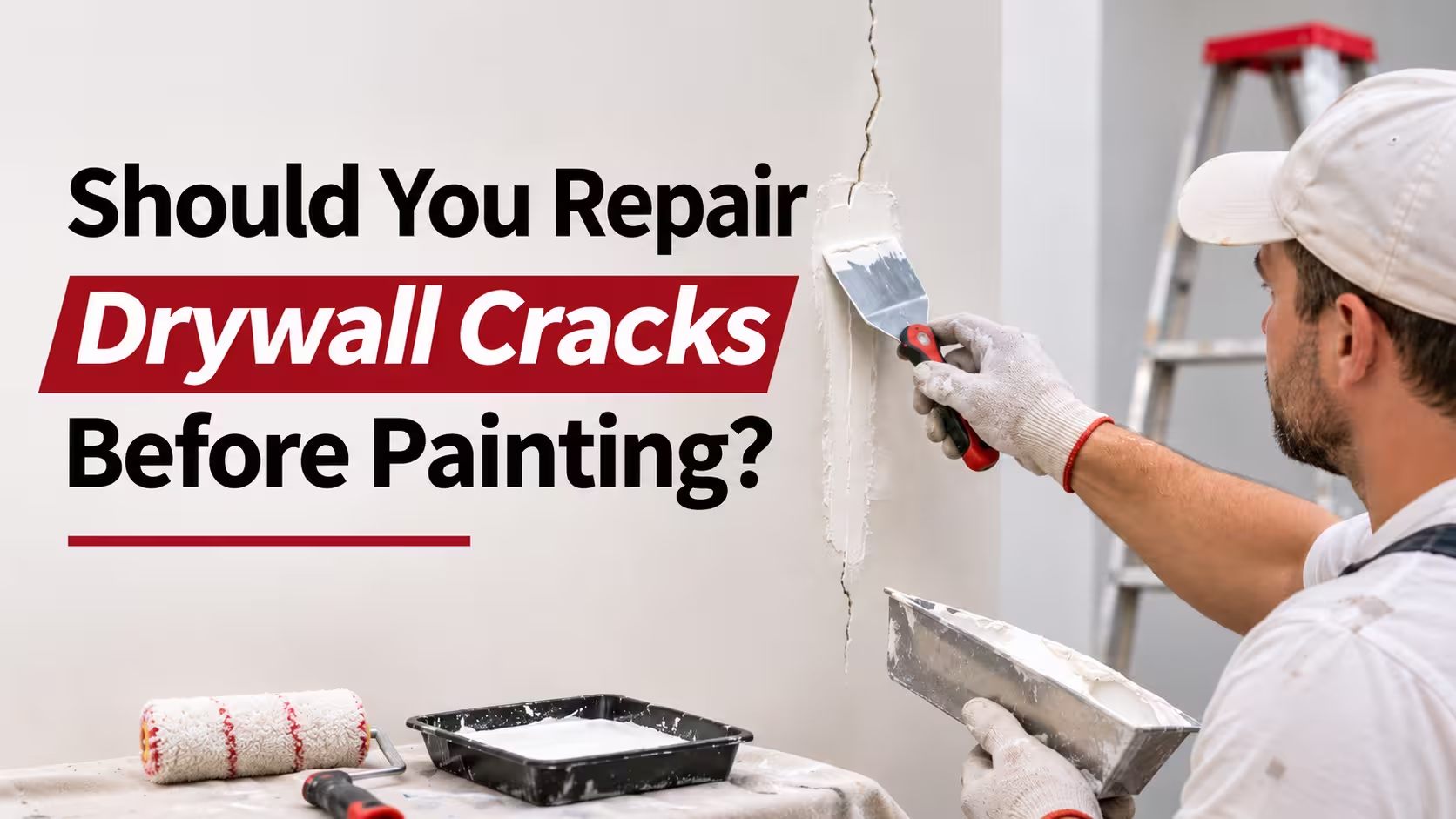
You move the couch, tape the trim, and grab the roller. Then you spot a thin crack running up from a door corner. Should you fix those drywall cracks before painting or just roll over them? Usually, you should inspect the crack and repair it first. Paint is a coating rather than a filler, so it can’t close a split joint or stop a wall that is still moving. Some cracks are purely cosmetic. Others point to failed tape, hidden moisture, or a shifting house. Here’s how to tell which cracks need a simple patch and which deserve a closer look.
Why Painting Over Wall Cracks Doesn’t Fix Them
A crack is a symptom, and paint only hides symptoms. Covering a crack and repairing it are two different jobs, so figure out what you’re looking at before you open a can.
Paint Cannot Fix an Existing Crack
Paint takes the shape of whatever sits under it. Roll it over a gap, and the gap stays put, just in a new color. Fine cracks often show right through a fresh coat, and wider ones can split the new film as the wall flexes. Piling on extra coats might bridge a hairline for a while, but paint has no strength to hold a moving seam together. Filling the crack and sanding it flush gives paint a solid, even surface to grab.
Some Cracks Need More Than a Surface Patch
The crack’s location and pattern tell you a lot, and so do its depth and history. A faint line mid-panel is a different problem from a seam pulling apart where two sheets of gypsum board meet. Patched the same spot twice, and it keeps coming back? Stop patching, because something behind it is still moving or wet. Figure out the cause first, then pick a repair material that fits it.
What Types of Drywall Cracks Should You Look for Before Painting?
Drywall cracks show up for a handful of reasons, and their shape gives you useful clues. Appearance alone can’t confirm a structural diagnosis, so treat what you see as a starting point.
Hairline Cracks and Minor Surface Cracks
Hairline cracks in drywall are thin, shallow lines you can barely catch with a fingernail. They often come from joint compound shrinking as it dries or from small seasonal swings. A stable one is usually a routine patch job. Don’t assume everyone is harmless, because a thin line that keeps growing is telling you something.
Cracks Along Drywall Joints and Corners
Seams are the weak spot because that’s where two panels meet. When the drywall tape loses its grip or the compound over it cracks, a straight line opens along the joint or inside corner. Another thin skim of filler rarely holds over a failing seam, so check that the tape is still bonded first.
Settlement and Stress-Related Cracks
Houses move. Framing lumber can shrink as it dries, and the ground under a home can shift. Settlement often shows up as diagonal stress cracks off the corners of doors and windows. Most are minor, but one that keeps widening or returns after every repair deserves a closer look. Even then, the pattern alone can’t confirm a structural problem.
How Can You Tell Whether a Drywall Crack Needs More Than a Basic Repair?
Three things guide your next step: the crack itself, how it changes, and the wall around it.
| What you notice | Possible explanation | Appropriate next consideration |
| Fine, stable surface line | Minor cosmetic cracking | Assess for ordinary patching. |
| Crack following a drywall seam | Joint compound or tape failure | Inspect the joint and reinforcement. |
| Crack repeatedly opening in the same place | Continuing movement or an incomplete repair | Investigate the cause before repainting. |
| Staining, bubbling, or soft drywall near a crack | Possible moisture damage | Identify and correct the moisture source. |
| Widening or irregular cracks with other building changes | Possible structural movement | Seek qualified professional evaluation. |
Treat these as clues rather than a verdict, since similar cracks can have very different causes.
Change over time is your strongest signal. Pencil-mark both ends of the crack, write the date, and check back in a few weeks. A crack that grows or reopens after a careful repair points to ongoing movement or a fix that missed the cause. Staining, bubbling paint, or soft drywall near a crack usually signals moisture.
Paint only hides that damage, so find and fix the leak before you touch the crack. Sticking doors and sloping floors can go along with structural movement. Paired with widening cracks, those changes call for a qualified structural professional before you repaint.
How Should You Repair Drywall Cracks Before Painting?
Match the fix to the crack’s type and severity. Neither a quick patch nor new tape will last on a wall that’s still wet or moving.
Prepare the Damaged Area
Scrape out loose compound and flaking paint with a putty knife, then wipe away the dust. Check the surrounding drywall too, since lifted tape or soft spots mean the damage runs wider. New compound needs a firm, clean surface to grab onto.
Use Joint Compound and Tape Where Needed
Joint compound alone can fill a small, stable crack when you apply it in thin layers. A separating joint usually needs new reinforcement, which means cutting out the failed tape and embedding fresh tape in compound. Fiberglass mesh tape is easy to handle on flat seams. Paper drywall tape is strong and folds cleanly into corners, but neither one suits every joint. If a joint keeps cracking, look at the joint itself instead of adding more filler.
Sand the Repair Smooth After It Dries
Let the compound dry completely before sanding, and follow the label since drying time varies by product and room. Sand lightly to feather the edges into the wall, then wipe off the dust so primer can bond. A ridge you can barely feel now will stand out under fresh paint.
What Should You Do Before Painting a Repaired Drywall Crack?
A repair is ready for paint only when it’s solid, dry, and smooth. Rush it, and the finished wall will show exactly where the crack was.
Check That the Repair Is Dry and Level
Damp compound can leave blisters or an uneven sheen under paint. Give it the full drying time on the label, longer in a cool or humid room. Then shine a flashlight across the patch at a low angle to find ridges, dips, and rough edges. Smooth them with light sanding, because going too hard just creates a new low spot. The goal is a patch that disappears into the wall.
Apply Drywall Primer to the Patched Area
Patched compound is far more porous than the painted wall next to it. Skip primer, and the patch soaks up paint, leaving a dull blotch. Painters call it flashing. A coat of drywall primer seals the patch and evens out absorption, so the finish coat looks uniform. Still, primer can’t hold an active crack together or stop moisture from coming through.
When Should You Delay Painting and Get Professional Help?
Hold off on painting when a crack may be part of a bigger problem nobody has solved yet. Put the roller down if you notice any of these signs:
- Cracks that keep getting wider
- Cracks that return after careful repairs
- Drywall that feels soft, swollen, or damp
- Staining, bubbling, or crumbling wall material
- Walls that bulge or separate at seams and corners
- Sticking doors, sloping floors, or other new changes
Different problems call for different help. A qualified drywall or painting professional can assess and handle surface and joint repairs. Suspected building movement belongs with a qualified structural professional who can investigate the cause. A painter can make the wall look right again but can’t diagnose a foundation or certify that a house is structurally sound.
Frequently Asked Questions
Can you paint over hairline cracks in drywall?
You can, but the crack will likely show through or come back. Paint has no filling strength, so the line stays in the wall underneath. Cleaning, filling, and sanding the crack first gives you a smoother result that holds up longer.
Should drywall tape be replaced if a crack appears along a joint?
Yes, loose or torn tape should come out because anything applied over it will fail along with it. If the old tape is still firmly attached and the crack sits only in the compound, a lighter repair may do. The condition of the joint decides the approach.
Do you need to prime drywall crack repairs before painting?
Yes. Primer seals the porous compound so the patch takes paint at the same rate as the rest of the wall, which helps prevent dull spots and uneven sheen. Make sure the repair is fully dry and sanded smooth before you prime it.
Final Thoughts
Paint can refresh a wall, but it can’t repair one. Check every crack and fix what you find before you paint. Small cosmetic cracks usually need only a simple patch. Recurring cracks, moisture damage, and signs of building movement need more attention first. Let each repair dry fully, then sand and prime it so the new color looks even.
Knapp Painting LLC serves the Greater Cleveland area with interior wall painting and drywall repair, including crack patching and seam and joint refinishing. If your next interior project starts with a few cracks, reach out to their team to talk it through.