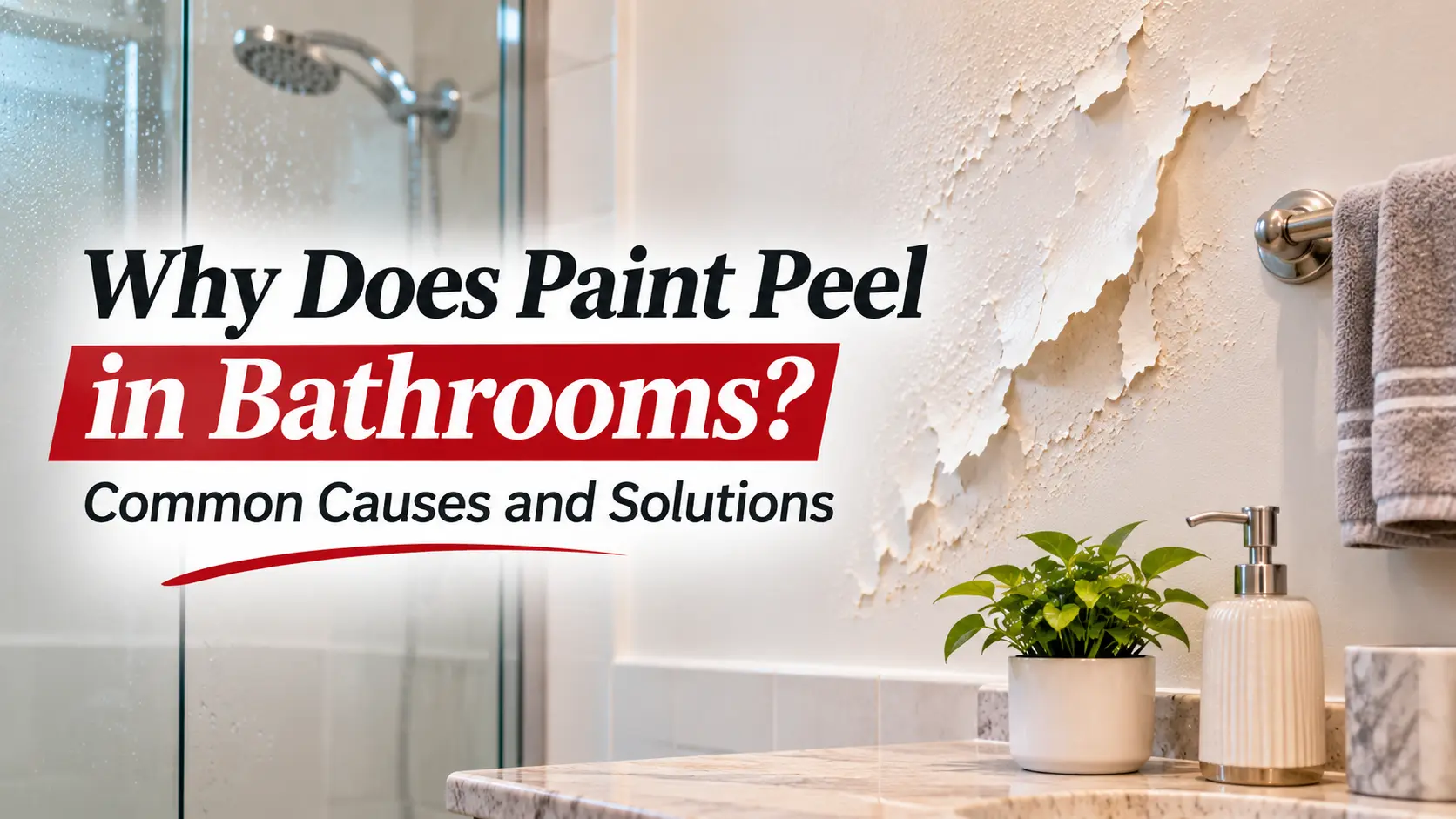
You step out of a hot shower and spot a bubble of paint above the tub. A week later, it splits open. Bathroom paint peeling usually traces back to moisture. But steam isn’t the only suspect. Weak fans play a part. So do cold ceilings and hidden leaks. Rushed prep can fail on its own. Another coat won’t fix any of it.
What Causes Paint to Peel in Bathrooms?
No other room puts paint through this kind of daily abuse. A bathroom wall can go from dry to dripping in ten minutes. Then it dries out again. Those quick swings in heat and moisture stress the paint film every day. Over months, tiny weak spots turn into visible peeling.
High Humidity and Water Vapor From Showers
A hot shower fills a small room with water vapor. That moist air settles on the walls and ceiling. Paint is not a waterproof shell. Water-based coatings soak up a little moisture, and so does the surface under them. Over time, the bond weakens. That’s paint adhesion failure. It often starts as blisters.
Poor Bathroom Ventilation
Steam has to go somewhere. A working exhaust fan pulls humid air outside before it lands on the walls. An undersized fan can’t keep up. A dusty one barely moves air. A window helps, but nobody leaves one open in a Cleveland January. Your fan must fit the room. It also has to get used.
Water Leaks and Moisture Behind the Walls
Some peeling has nothing to do with steam. A dripping supply line or a failed tub seal can push water into the wall from behind. Roof leaks reach top-floor bathrooms too. Wet drywall softens and stains. Unlike broad surface condensation from shower steam, a hidden leak creates a concentrated damp spot that stays wet or keeps returning. Fix the leak first.
Incorrect Paint or Poor Surface Preparation
Not every paint belongs in a bathroom. Flat finishes and bargain paint soak up moisture and break down under steam. Prep matters just as much. Paint won’t grip a damp wall or soap scum. In older homes, water-based paint over old glossy oil paint often fails. A suitable primer bridges that gap. Skip it, and paint lifts.
How Can You Identify the Reason for Peeling Bathroom Paint?
Where and how the paint fails tells you a lot about the cause. Still, hidden leaks don’t always show on the surface. A wall may look dry while moisture builds up behind it. So treat what you see as a starting point, not a final diagnosis. Use these clues before buying new paint.
Peeling or Bubbling Near the Shower and Bathtub
Check the walls beside the tub and shower first. These spots take direct splashing and the heaviest steam. Condensation forms there fast. Peeling in a band around the bathing area points to humidity and splashing. Corners fail sooner because air barely moves there. The wall behind a towel bar often goes early too.
Bathroom Ceiling Paint Peeling or Flaking
Warm, wet air rises. In winter, a ceiling under an attic is often the coldest surface in the room. Moisture condenses there and works into the paint. Wide, even peeling usually means poor ventilation. A single brown stain is different. So is a soft, sagging spot. Those suggest a leak from above.
Discoloration, Damp Spots, and Signs of Mold
Dark spots that keep returning deserve a closer look. So do damp patches and a musty smell. Not every dark mark is mold. In some cases, the discoloration is just dirt or an old stain. EPA mold cleanup guidance says not to paint or caulk over moldy surfaces, since that paint is likely to peel. Fix the moisture source first, let the area dry, and then thoroughly clean off the mold before applying any primer or paint.
How Do You Fix Peeling Bathroom Paint?
A lasting bathroom paint repair starts with the cause, not the paint can. Scraping and repainting over an unsolved moisture problem buys a few weeks at best. Then the bubbles come back. The order below actually works. Stop the water. Prep the surface. Fix the wall. Then pick the right paint.
Find and Fix the Moisture Source First
Check for extra moisture before you touch a scraper. Look under the sink. Look for gaps or damage in the tub’s caulk and grout. A ceiling stain below an attic or another bathroom calls for a plumber or roofer. If humidity is the cause, improve the fan first. Then let everything dry completely before painting.
Remove Loose Paint and Prepare the Surface
Scrape off loose paint until you reach paint that holds firm. Feather the edges with light sanding. Wash off dust and soap residue. Homes built before 1978 may hide lead paint, and many Cleveland-area homes qualify. The EPA warns that sanding it creates hazardous dust. Test for lead before sanding, or bring in a lead-safe certified contractor.
Repair Damaged Drywall and Apply the Right Primer
Press gently around the damaged area. Drywall that feels soft or swollen can’t be saved with paint. Small spots can be patched. Larger soaked sections may need replacing. Once the damaged area is repaired and dry, apply the appropriate primer. Primer seals patches and blocks stains. It can’t stop a leak or replace a fan.
Choose Moisture-Resistant Paint for the Bathroom
Pick a paint made for humid rooms. Most interior paint is water-based latex, but quality varies. Water-based formulas labeled 100% acrylic resist moisture and scrub damage much better than cheaper vinyl-latex blends. Satin and semi-gloss shed water more easily than flat. Mold-resistant paint helps the surface fight mildew. It won’t treat existing mold, though. Follow the label directions.
How Can You Prevent Bathroom Paint From Peeling Again?
Long-term protection comes down to moisture control and solid prep. The right coating finishes the job. Most of the work is a simple daily habit, not big projects. Once the wall is repaired, these steps help the new paint last for years. Stick with them through every season.
- Run the exhaust fan during and after showers. Leave it on until the mirror clears.
- Make sure the fan vents outdoors. Venting into the attic just moves moisture onto cold framing.
- Address leaks promptly. Recaulk worn tub seals and fix drips fast.
- Allow wet surfaces to dry. Squeegee the walls and leave the door open after bathing.
- Use suitable primer and bathroom paint. Choose products rated for humid rooms.
- Monitor recurring damp spots or mold. A spot that returns needs investigating, not another coat.
When Should You Call a Painting Professional?
A small patch above the shower is often a weekend job. Other peeling problems are bigger than they look. Consider hiring a painter when peeling covers several walls or a large stretch of ceiling. The same goes for paint that keeps failing. A pro can choose the right primer and paint.
Know where painting work ends. Active leaks need a plumber. Roof damage needs a roofer. Significant mold may call for a mold cleanup professional. A painter should come in last. Once those fixes are done and the area is fully dry, the painter can take over and finish the room.
Frequently Asked Questions
Why Does Bathroom Paint Peel Even After Repainting?
New paint usually fails for the same reasons the old paint did. High humidity can undo a fresh coat quickly. So can an active leak. Skipped cleaning and missing primer lead to the same result. The wrong product does too. Find the cause and correct it. Only then should you repaint.
Is Bathroom Ceiling Paint Peeling a Sign of a Leak?
Not always. Condensation and poor ventilation cause plenty of ceiling peeling across broad areas. A brown stain tells a different story. So does a spot that never dries. Those point more toward a leak. Soft or sagging drywall is another warning sign. Have someone trace the water before you repaint.
Can You Paint Over Peeling Bathroom Paint?
No. Fresh paint over loose paint will peel right along with it. Scrape away anything that isn’t firmly attached. Then clean the surface and prime it. Any active moisture problem has to be handled first. The same goes for mold. Skipping these steps means doing the job twice.
Final Thoughts
Peeling bathroom paint is often a symptom of a deeper issue, such as trapped moisture, a hidden leak, or poor paint adhesion. Identifying the cause, fixing moisture problems, repairing the surface, and applying the right primer and bathroom paint can help prevent the problem from returning. Proper ventilation also helps protect the finish.
Knapp Painting LLC is a licensed and insured painting company serving Cleveland, Ohio. Its residential painting services include interior wall and ceiling painting, along with drywall repair. For an upcoming interior painting project, contact Knapp Painting LLC.