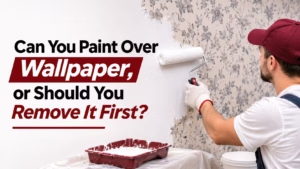
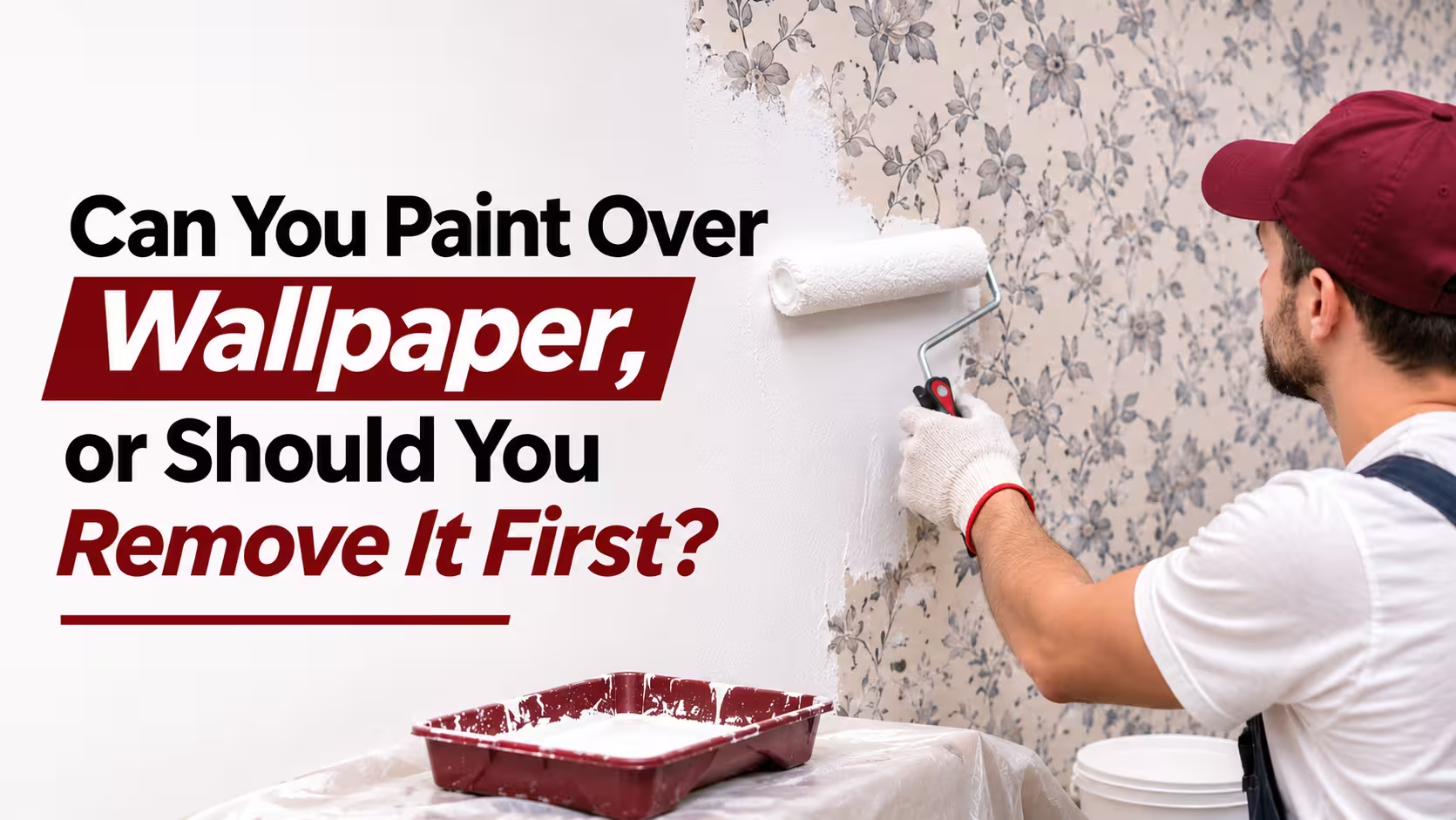
Yes, you can paint over wallpaper, but only when the paper is stuck tight and in good shape. For most rooms, stripping it first gives paint a smoother and more dependable surface to grab. Painting over wallpaper works in a narrow set of cases that depend on adhesion, texture, existing damage, and the wall behind the paper. Removal carries its own risk, because old paper glued straight to drywall can tear the wall’s face as it comes off. Here’s how to weigh both paths.
Is It Better to Paint Over Wallpaper or Remove It First?
Take the wallpaper down if the wall allows it. Paint bonds best to a bare, sound, and primed surface, and stripping gets rid of the seams and pattern that tend to ghost through a new color. The right answer still depends on the paper and the wall underneath it.
Paper that’s bonded tight across the whole surface can sometimes take paint after careful prep. Stripping isn’t free of risk either. Pulling old paper can uncover gouged drywall, crumbling plaster, or a second layer nobody knew about. Hold a flashlight flat against the wall before you decide, since raking light reveals bubbles and lifted seams that ceiling lights hide.
Here’s a quick comparison of both options:
| Consideration | Painting Over Wallpaper | Removing Wallpaper |
| Wallpaper condition | Best when firmly bonded everywhere | The better fit for loose or failing paper |
| Wall finish | Seams and texture may still show | Better shot at a smooth finish |
| Wall underneath | Leaves fragile drywall undisturbed | Allows direct inspection and repair |
| Long-term result | Rides on adhesion and prep quality | Usually gives paint a stronger foundation |
When Can You Paint Over Existing Wallpaper?
Leaving the paper up is sometimes the smarter call, especially when stripping it would tear up a fragile wall. You can paint over existing wallpaper when it passes every one of these checks:
- The paper is stuck tight across the entire wall, including corners and edges.
- You see no widespread bubbling, peeling, lifting, or open seams.
- The surface is fairly flat, without deep embossing or heavy texture.
- There’s no sign of mold, water stains, or moisture damage.
- You can clean and prime it without the paper softening or letting go.
To inspect wallpaper adhesion, press your fingertips along each seam and across the open areas. A hollow, puffy, or crinkly spot means the glue has already let go, and that spot will likely lift under wet paint. Vinyl wallpaper needs extra thought. Its plastic-coated face is designed to shed moisture and stains, so ordinary wall paint may not bond to it well.
Plan on a primer rated for slick, coated surfaces and test a small hidden patch first. Even well-bonded paper usually leaves faint seam lines after painting, so this route suits homeowners who can live with that.
When Should You Remove Wallpaper Before Painting?
Plan on wallpaper removal before painting when the paper is unstable, damaged, or heavily textured. Paint adds weight and moisture to whatever it covers, so paper that’s already failing usually fails faster once you paint it. These signs point toward stripping:
- Loose wallpaper seams or edges curling away from the wall
- Bubbles or whole sections that have pulled free
- Tears, scratches, or brittle paper that crumbles at the edges
- Deep texture or bold patterns that paint won’t hide
- Two or more layers stacked into an uneven surface
- Water stains, soft spots, or mold that need a closer look
Painting over these problems only puts a fresh, even color beside every flaw, which makes each one easier to spot. Loose areas can also keep lifting under the paint film and drag the new finish along with them. Wallpaper stripping has one more payoff, because it lets you see the actual wall. You can fix cracked plaster, damaged drywall, or old moisture damage before paint goes on.
What Problems Can Occur When You Paint Over Wallpaper?
Paint is a coating, not a repair, so an unstable covering underneath tends to show its weak spots through the new finish. The most common trouble starts with the wallpaper adhesive. Many older pastes soften when wet, and latex paint is mostly water. Seams can lift, and bubbles can form as the paint soaks in, and heavy scrubbing during prep can set off the same reaction.
Other issues appear even when the paper holds:
- Seams and edges remain visible as fine lines or ridges.
- Embossed texture shows through the new color.
- Rushed prep leads to poor paint adhesion and peeling.
Extra coats won’t flatten a raised seam or fill a deep pattern, and the added weight can make a loose section lift faster. Wall finish quality comes from the surface you start with, not the number of coats you roll on.
| Important: Primer Won’t Glue Down Failing PaperNo primer or paint can reattach wallpaper that’s already peeling or bubbling. If large areas have come loose, strip the covering before any coating goes on. |
How Should You Prepare Wallpaper If You Decide to Paint Over It?
Paper that stays on the wall becomes the base for every coat. To prepare wallpaper for painting, you need a surface that’s stable, clean, and suited to your primer and paint.
Inspect and Secure Loose Areas
You can glue down a few small lifts with wallpaper seam adhesive, pressing them flat and letting them dry completely. If loose spots keep turning up across the wall, the bond is failing, and removal is the better choice.
Clean the Surface Carefully
Dust, grease, and cooking film keep primer from grabbing. Wipe the paper with a barely damp sponge and keep water away from the seams, because extra moisture softens the paste. Follow the directions from the cleaner and the wallpaper manufacturer, then let the wall dry.
Apply a Suitable Primer Sealer
A primer sealer shields the paper and its adhesive from the water in your topcoat and gives paint an even surface to bond to. The right product depends on the paper material and your paint system, so check the label for wallpaper use. Regular wall paint isn’t a stand-in because it doesn’t seal the way this surface needs.
How Can You Remove Wallpaper Without Damaging Drywall?
Most drywall is gypsum board wrapped in a thin paper face. Wallpaper paste often bonds straight to that face, so yanking off the covering can peel the drywall paper along with it. To remove wallpaper safely, lift a corner with a putty knife first and see how it behaves. Some modern papers peel off dry in full sheets, while others split and leave a backing layer to soak loose. Vinyl and other coated papers may need light scoring so a removal solution can reach the glue.
Give stubborn sections time to soak, then scrape at a low angle instead of pulling hard on dry paper. A wallpaper steamer can loosen tough or painted-over coverings, but keep it moving. Holding steam in one spot can soften the drywall face and cause drywall paper damage of its own. Multiple layers, decades-old glue, and plaster walls each need a gentler hand, and plaster can react differently to water and heat than drywall does. Once the paper is off, let the wall dry completely before you start any repairs.
What Should You Do After Removing Wallpaper Before Painting?
Bare walls aren’t automatically ready for paint, because leftover glue, torn drywall paper, and gouges all need attention first. Clean adhesive residue first, since paint over old paste can crack or peel. Warm water with mild detergent handles light residue, and a commercial paste remover tackles stubborn spots. A slick or tacky feel after drying means glue is still there.
Next, check the surface in raking light and repair damaged drywall paper. Joint compound spread straight onto torn brown paper can soak in and bubble, so seal those areas with a suitable primer first. Then fill gouges with compound and sand lightly once the patches dry. Larger damage may need a skim coat or new drywall.
Finish your wall surface preparation by priming the whole wall with a primer sealer, which evens out patched and bare spots so the topcoat dries to a consistent sheen. A clean, dry, and reasonably smooth surface is the goal when you prepare walls for repainting.
Frequently Asked Questions
Here are short answers to three questions homeowners ask most often.
Can You Paint Over Vinyl Wallpaper?
Often, yes, as long as the vinyl is firmly attached and you use a primer made for slick, coated surfaces. Pair it with a compatible paint and test a small patch first.
Will Painting Over Wallpaper Hide the Seams?
Usually not. Paint tends to settle along joints and highlight raised edges, especially on textured or uneven paper. Expect faint lines to remain visible even after several coats.
Can Removing Wallpaper Damage Drywall?
Yes. Old paper, strong adhesive, and rushed stripping can tear the drywall’s paper face or gouge the surface underneath. Patient removal and proper repairs keep that damage small and manageable.
Final Thoughts
For most walls, stripping the wallpaper gives paint the best base for a smooth and lasting finish. Painting over it can still make sense when the paper is firmly bonded and carefully prepped. Let the condition of the paper and the wall behind it guide the decision.
Knapp Painting LLC handles wallpaper removal, surface prep, drywall repair, and interior painting for homeowners across the Greater Cleveland area. If you’re not sure which way your walls should go, reach out to the team to talk through your project.