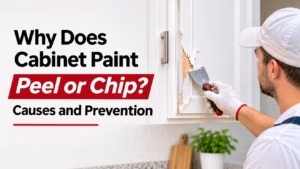
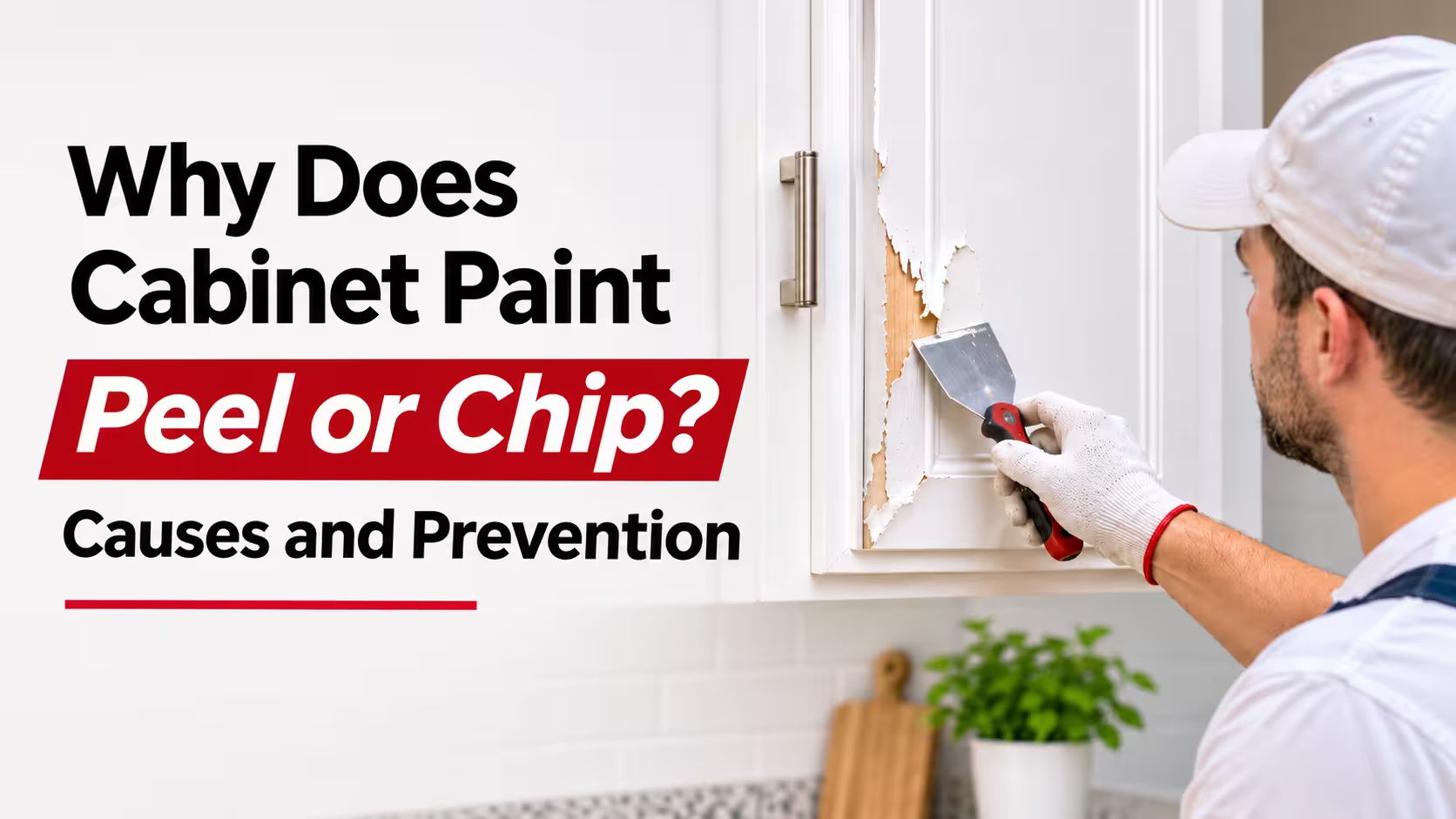
Cabinet paint often peels or chips when it fails to bond properly with the surface beneath it. Rushed prep, mismatched products, or plain daily use can all break that bond at the weakest spots. Cabinet paint peeling often starts with something you can’t see, like a thin film of cooking grease or moisture working into a door beside the sink. A primer that doesn’t suit the existing finish causes similar trouble. Hands and hardware are then worn at the edges and handle areas every single day. This article will help you pin down the likely cause of your damage, weigh your repair options, and keep the damage from coming back.
What Causes Cabinet Paint to Peel or Chip?
Two doors can look equally rough and still be failing for different reasons. One might be shedding paint because grease sat under the finish. The next might just be taking a beating from a busy household. Identifying the specific problem is important, since a solution for one may not work for the other.
Grease and Residue Prevent Proper Paint Adhesion
Kitchen cabinets collect a film most people never notice. Cooking vapor leaves oily residue on doors near the range, while hand oils and spray cleaners build up on the doors people grab most. Paint applied over that film grips the grime instead of the cabinet. The residue often looks clean, which is why degreasing cabinets with a finish-safe cleaner matters before any refinishing. Skip it, and fresh paint near the stove is usually the first to lift.
Inadequate Surface Preparation or an Unsuitable Primer
New paint needs something to grip. Glossy factory finishes and old lacquer are slick, and paint laid over them without scuffing or a suitable primer often bonds weakly. Loose paint from an earlier job is a different trap, because the new coat holds onto it and lifts when the old layer lets go. A bonding primer helps on hard or slick surfaces by acting as a bridge to the topcoat. It can’t overcome leftover grease or failing old paint, and not every cabinet needs one.
Incompatible Paint Products or Coating Layers
The coating has to suit both the existing finish and the material underneath it. Many waterborne paints struggle to grip an old oil-based finish unless the right primer goes down first. Some solvent-heavy products can soften or wrinkle a finish they weren’t designed to cover. Cabinet enamel hardens into a tougher film than typical wall paint, and polyurethane coatings can add abrasion resistance in compatible systems. Still, no single product suits every cabinet.
Frequent Contact, Impact, and Everyday Wear
Some damage has nothing to do with how the paint went on. Doors swing open and shut all day while fingernails and pot handles catch the same edges. High-contact surfaces such as drawer fronts and door edges take far more friction than a flat center panel. Corners and the area around pulls get it worst, because paint also builds thinner on a crisp edge. Chips in these spots don’t automatically mean the painter did a bad job.
How Can You Identify the Cause of Cabinet Paint Failure?
Before you buy any supplies, walk the kitchen and note where the paint fails and what the damage looks like. A chip tells a different story than a blister, and one bad door tells a different story than twelve. Watch for these patterns:
- Peeling along edges: Weak adhesion, skipped prep, or repeated friction may be behind it.
- Small chips near handles: These usually trace back to frequent contact and impact.
- Bubbling or lifted paint: Moisture behind the finish is one possible cause, though trapped grease or layer problems look similar.
- Widespread flaking: This may indicate a broader adhesion failure or products that weren’t compatible.
- Damage around sinks or cooking areas: Steam and splashes can contribute here, along with grease and harsh cleaners.
These patterns narrow things down but can’t confirm the cause on their own. Inspect peeling cabinet surfaces door by door and note whether the damage stays in one spot or spreads across several doors and drawers. One chipped corner beside the trash pull is usually just wear. Peeling throughout the kitchen more likely points to a problem with the original finish system.
Does Cabinet Material Affect Paint Peeling and Chipping?
Cabinet material matters more than many homeowners expect. Wood, MDF, and laminate each present a different surface to the paint. The existing finish on top also shapes how well a new coat holds.
Wood Cabinets
Wood cabinets rarely arrive at a repaint bare. Most carry varnish or lacquer, and some carry several old paint jobs. The new coating has to suit that top layer, which also needs to be firmly attached. Exposed wood at a worn edge takes primer differently than a sealed face, so damaged spots may need their own prep.
MDF Cabinets
MDF has no grain, so its flat faces generally take paint smoothly. Cut or damaged edges are more porous and can soak up primer and moisture unevenly. Once water reaches exposed MDF, the fibers can swell and push the paint off. Painted MDF can perform well for years with properly sealed edges.
Laminate Cabinets
Laminate is smooth and nonporous, so paint has nothing to soak into. Adhesion depends almost entirely on a primer made for slick surfaces. Check its condition first, because peeling edges or bubbled sheets will take new paint with them when they lift.
Can Peeling or Chipped Cabinet Paint Be Repaired?
You can fix plenty of cabinet paint damage without refinishing the whole kitchen. The right approach depends on how far the failure has spread and whether the surrounding paint is still firmly attached. Press painter’s tape over the edge of a chip and pull it off fast. If more paint comes away, the damage runs deeper than it looks.
- Minor isolated chips: Small chips on otherwise solid paint often suit a localized repair, as long as you can match the color and sheen.
- Peeling or flaking across larger areas: The loose paint has to come off first, which often means sanding or stripping the affected doors back to a sound surface.
- Repeated damage across multiple doors: Find the underlying adhesion or product issue before trying again.
- Damaged cabinet surfaces: Swollen MDF or split veneer needs more than a paint touch-up and sometimes needs replacement.
| Don’t Paint Over Failing PaintA fresh coat over loose or poorly bonded paint only hides the problem temporarily. The new layer clings to the old one, and both come off together when the old one releases. |
A professional assessment can tell you whether a localized repair will hold or broader refinishing makes more sense. Some doors may be past saving, but an honest diagnosis beats guessing and repainting twice.
How Can You Prevent Cabinet Paint from Peeling or Chipping Again?
Durable cabinet paint depends on the right products and solid prep, followed by careful application and sensible care. These habits help prevent cabinet paint chipping and peeling the second time around:
- Remove grease before painting. Focus on doors near the range and the ones people grab most.
- Prep for the chosen products. The surface needs whatever cleaning and scuffing lets the primer and paint grip it.
- Use a bonding primer when needed. Slick or nonporous surfaces often call for one, while freshly sanded bare wood may not.
- Pick a coating made for cabinets. Cabinet enamel usually outlasts ordinary wall paint on surfaces people handle daily.
- Let the finish cure. Follow the manufacturer’s instructions before rehanging doors and loading drawers.
- Protect the hot spots. Bumper pads soften impacts, and well-placed hardware keeps fingers off painted edges.
- Clean gently. A damp microfiber cloth with a little dish soap handles most messes without scouring the finish.
- Control moisture. Run the range hood while cooking and fix slow leaks under the sink quickly.
Cabinet finish durability never comes from one product or one step. Compatibility and surface condition set the foundation, while good application and full curing complete it.
Frequently Asked Questions
Why Does Cabinet Paint Chip Around Handles and Edges?
These spots take more contact than anywhere else in the kitchen. Fingers and hardware strike them daily, and paint naturally builds thinner on sharp edges. Any weakness in adhesion shows up there first.
Can You Paint Over Cabinets That Are Already Peeling?
Not until you deal with the loose paint. Anything lifting or poorly bonded needs to come off first. Another coat on top may look fine for a while, but it won’t fix why the original paint failed.
How Long Should Cabinet Paint Cure Before Regular Use?
It depends on the coating. Drying means the surface has set enough to touch, while curing is the slower process where the film fully hardens. Follow the manufacturer’s instructions for your product and go easy on doors and drawers until then.
Final Thoughts
Cabinet paint peeling and chipping usually come down to a weak bond or a contaminated surface. Unsuitable products and moisture can play a part too, as can the cabinet material and daily wear. Finding the real cause beats covering damage with another coat that fails the same way. Knapp Painting LLC is a licensed and insured painting contractor serving Greater Cleveland. Its cabinet services include surface repair and full refinishing, along with priming and painting. Call 567-274-2211 or request a quote online to talk through your cabinet paint concerns.