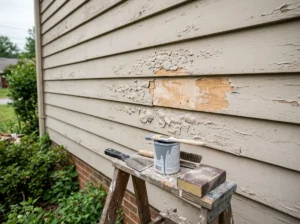
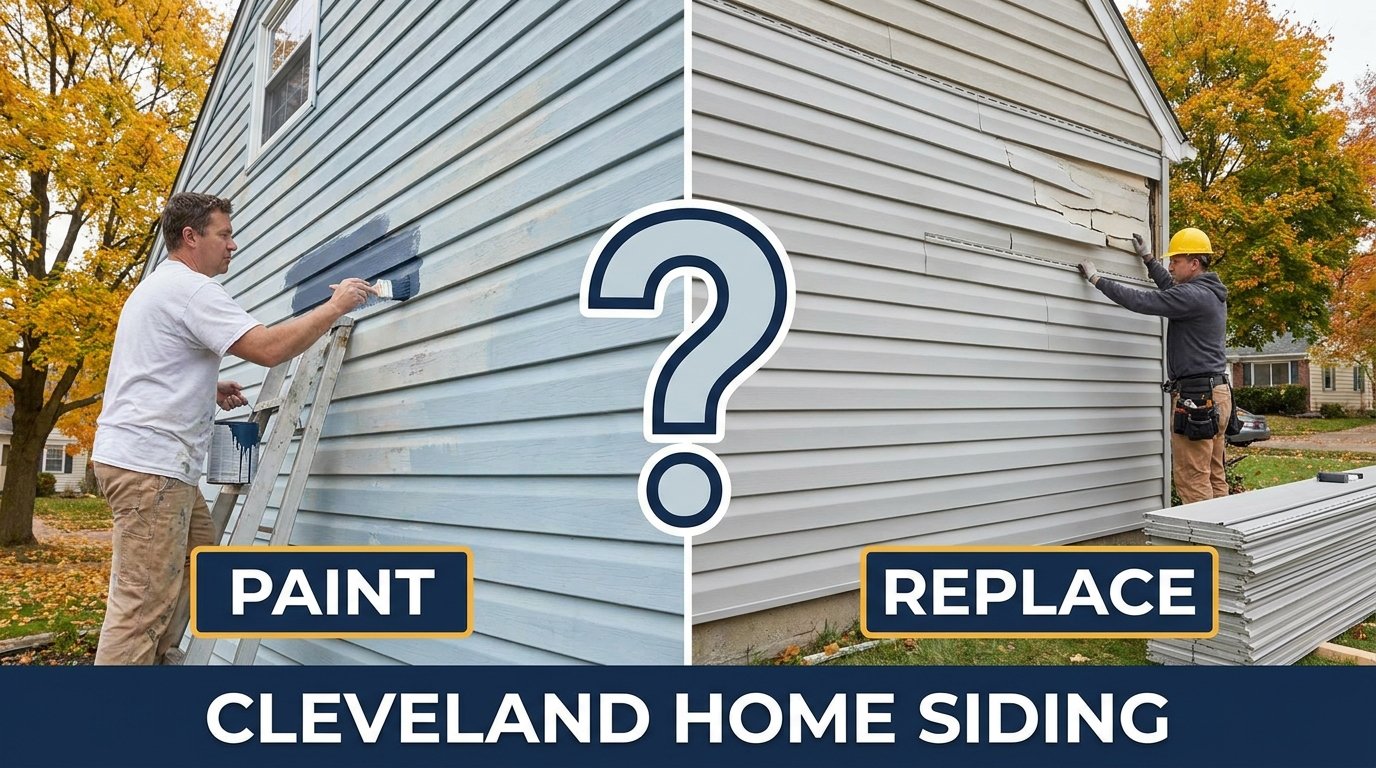
Can you paint vinyl siding? Yes, when the siding is clean, firm, and installed well. The right paint and color must also be used. Paint can improve faded siding, but it cannot repair cracks, warping, loose panels, leaks, or heat damage. Siding with those problems should be repaired or replaced first.
Many Cleveland homeowners face this choice when an older exterior starts to fade. The siding may still protect the home, but the color no longer looks even. In this case, paint may offer a useful update without removing all the panels.
The decision should start with the condition of the siding, not the color you want. This guide explains when paint makes sense, when replacement is safer, and how cleaning, color, weather, and product choice affect the result. For help planning the full exterior, read our Cleveland house painting guide.
Can Vinyl Siding Be Painted Safely?
Can vinyl siding be painted without causing damage? Yes, but only when the surface and paint system are suitable.
The siding should be stable, clean, dry, and free from wide damage. The paint must be approved for vinyl. The chosen color must also meet the rules for that paint and the siding below it.
Vinyl moves as the weather changes. It expands in heat and contracts in cold. A coating used on vinyl must be able to move with the panels.
Color is another key issue. A color that absorbs too much solar heat may cause the panels to bend, buckle, or warp. This is why homeowners should not choose exterior colors by appearance alone.
Paint makers now offer approved vinyl color groups. Some include darker shades that are made to reduce the risk of excess heat. These colors must be used with the listed paint products and on siding that is already sound and stable.
When Should You Paint or Replace Vinyl Siding?
Painting is best for a cosmetic problem. Replacement is better when the siding itself has failed.
| Siding condition | Better option |
|---|---|
| Faded or uneven color | Painting may be suitable |
| Firm panels with light surface wear | Clean, prepare, and consider painting |
| A few damaged panels | Repair or replace those panels before painting |
| Wide cracks or holes | Replacement may be better |
| Warped or melted panels | Replace damaged sections |
| Loose panels across large areas | Repair the installation or replace the siding |
| Water entering behind the siding | Find and repair the cause before painting |
| Brittle panels that break easily | Compare full replacement with repair |
Paint should never be used to hide a leak or failed panel. A fresh finish may improve the surface while the wall behind it continues to suffer damage.
A small repair may be enough when only one or two panels are damaged. Yet matching old vinyl can be hard because the original color may have faded. In some cases, the replacement panels can be installed first and the full wall can then be painted with one approved system.
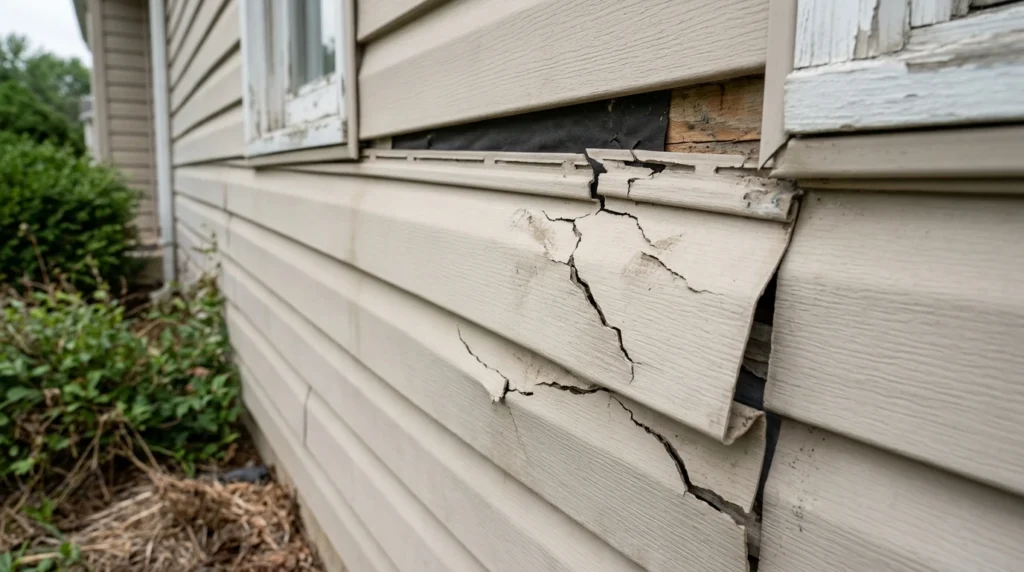
What Should Be Checked Before Painting?
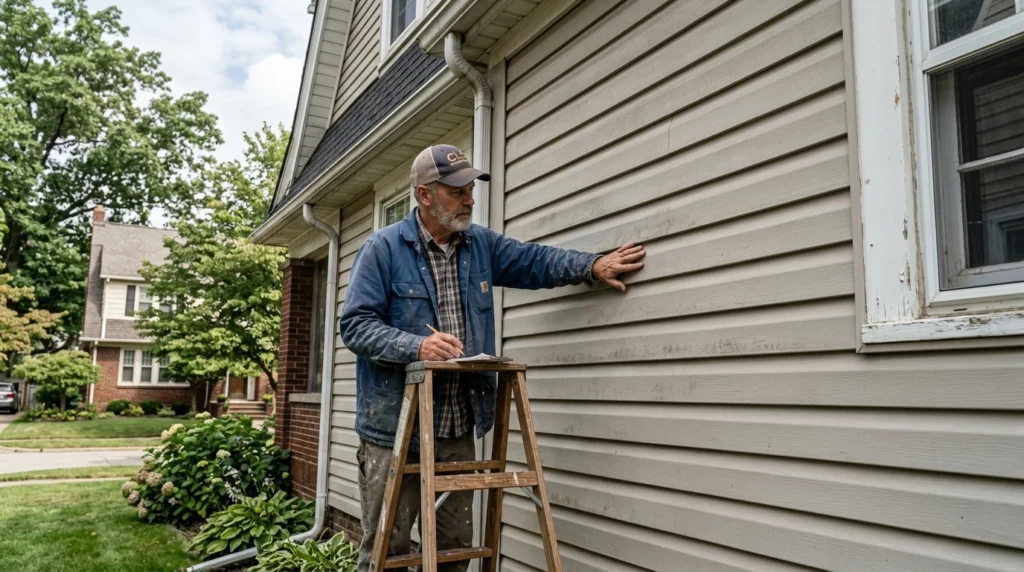
A close inspection should happen before washing or choosing colors.
The panels should sit flat and move as designed. Vinyl siding is not meant to be fastened so tightly that it cannot expand and contract. Panels that are buckled or pulled out of place may have an installation or heat problem.
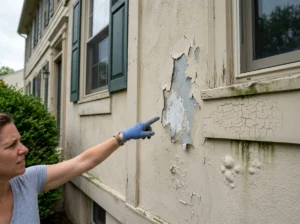
The areas around windows, doors, roof edges, gutters, vents, and utility openings also need attention. Water marks, soft wall areas, failed caulk, or repeated staining may point to a leak.
Look closely at siding that receives strong afternoon sun. Heat from direct sunlight or reflected light from nearby windows can damage vinyl. The Polymeric Exterior Products Association warns that strong heat and concentrated window reflections can cause polymeric siding to melt or warp.
Paint cannot return a warped panel to its old shape. Damaged pieces should be repaired or replaced before the coating work begins.
How Should Vinyl Siding Be Cleaned Before Painting?
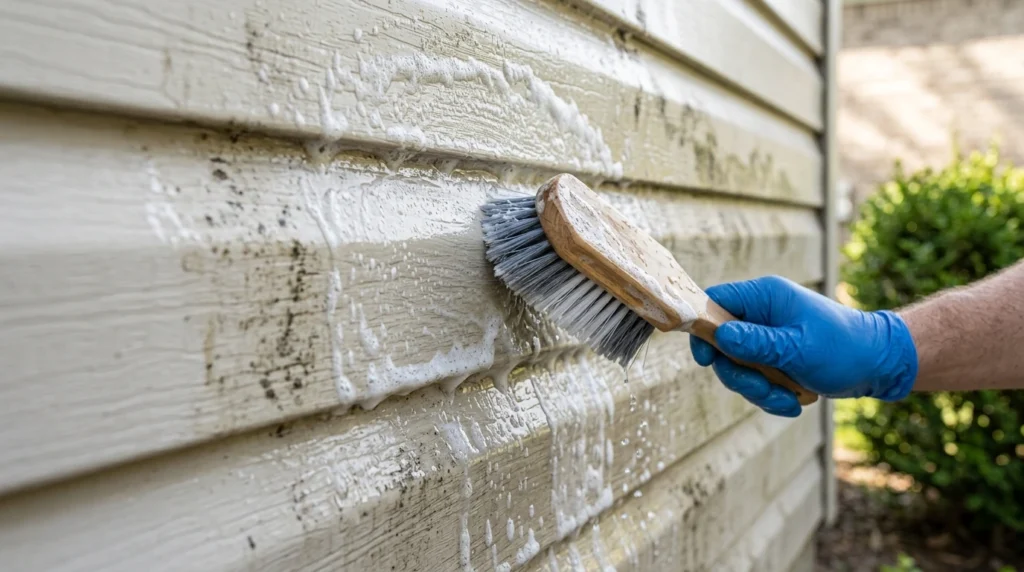
Good cleaning is a major part of how to paint vinyl siding. Paint may not hold well when dirt, mildew, chalk, grease, or cleaner stays on the surface.
For normal cleaning, mild soap, water, and a soft cloth or soft-bristle brush are often enough. The wall should be rinsed well so no cleaning film remains. Industry guidance also warns against harsh solvents and cleaners that may harm the vinyl.
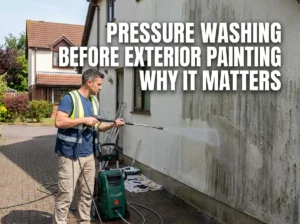
Power washing may be used on some siding, but it needs care. The spray should not be aimed upward because water can be forced behind the panels. Some siding makers also place limits on pressure washing, so their care instructions should be checked first.
The wall must be fully dry before painting. Moisture can remain around panel joints, trim, shaded walls, and areas below gutters even when the open surface looks dry.
Cleaning should also reveal the real condition of the siding. Dirt may hide scratches, small cracks, and loose panels that need attention.
Is Primer Needed on Vinyl Siding?
Primer is not always needed. Many exterior paints made for vinyl are self-priming on siding that is clean and properly prepared.
Primer may be needed when the vinyl is pitted, porous, stained, repaired, or difficult to coat. The paint maker may also call for primer under certain products or conditions.
Benjamin Moore states that primer is not needed in most cases when its approved exterior products are used on prepared vinyl. Its guidance calls for primer on pitted or porous areas. The company also tells painters to check the siding maker’s rules and the paint’s technical data sheet.
Primer is not a fix for poor cleaning or damaged siding. The surface still needs to be sound, dry, and free from material that may block adhesion.
What Is the Best Paint for Vinyl Siding?
The best paint for vinyl siding is an exterior acrylic or latex coating that is listed for use on vinyl. It should also be paired with an approved vinyl-safe color.
Not every exterior paint is suitable. The product label or data sheet should name vinyl siding as an approved surface. It should also explain the correct temperature, cleaning, primer, coat, and color rules.
Acrylic exterior coatings are often used because they can hold well and move as the vinyl expands and contracts. The exact product still depends on the siding, color, weather, and old surface.
The finish should not be applied too heavily. Thick paint cannot repair damage and may not dry as expected. The painter should follow the listed spread rate and number of coats.
A low-lustre or satin finish is often chosen for siding because it offers a clean look without making every wave or joint stand out. The final sheen should come from a product approved for vinyl.
Which Paint Colors Reduce the Risk of Warping?
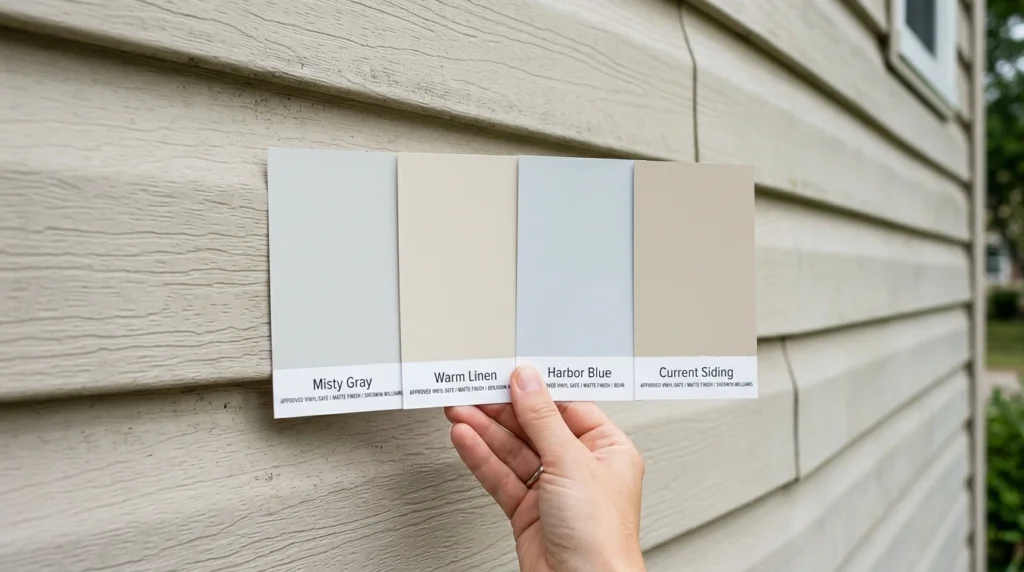
The safest color choice is one approved by the paint maker for vinyl siding.
A common older rule was to use the same color as the original siding or a lighter shade. This reduces the chance that the new surface will absorb more heat than the vinyl was made to handle.
Some modern paint systems now include approved darker colors. These colors are made to manage heat better when used with certain paints. This does not mean any dark color is safe.
Light Reflectance Value, or LRV, is one tool used to judge color. A lower LRV usually means the color reflects less light and may absorb more heat. Some product data sheets set a minimum LRV unless the color comes from an approved vinyl palette. The limit can differ by product, so homeowners should not use one number for every paint.
The original siding color matters too. A dark color placed over light siding may raise the panel temperature more than the old surface did.
The paint maker and siding maker should both be checked before the final color is ordered.
Is It a Bad Idea to Paint Vinyl Siding?
Homeowners often ask, is it a bad idea to paint vinyl siding? It can be a poor choice when the panels are damaged, the warranty is still active, or the desired color is not approved.
It may also be a poor value when many panels need repair. Paying for wide repairs and then painting the whole home may come close to the cost of replacing the siding. The homeowner should compare both scopes before deciding.
Painting can make sense when the siding is firm and the problem is mainly faded color. It may also suit a homeowner who wants to change the look of the home without removing sound siding.
The choice should account for future care. New vinyl siding normally arrives with its finished color. Painted vinyl will need to be checked and may need another coat later.
How Is Vinyl Siding Painted?
After inspection and repair, the siding is cleaned and allowed to dry. Windows, doors, lights, brick, roofs, plants, and other nearby areas are then protected.
Primer is applied only where the approved system calls for it. The finish may be sprayed, brushed, rolled, or applied with a mix of methods. Benjamin Moore states that suitable vinyl coatings may be sprayed, brushed, or rolled. It also advises avoiding direct sunlight and hot surfaces.
Spraying can give broad panels an even finish, but it needs careful control. Wind may carry paint toward windows, roofs, cars, or nearby homes.
The crew should work in sections and avoid pushing paint into open panel joints. Vinyl needs room to move. Drain and airflow paths should not be sealed by mistake.
All drying and recoat times should follow the exact product instructions. The schedule should also allow enough dry weather after each coat.
How Does Cleveland Weather Affect the Project?
Cleveland’s large seasonal changes make timing important. Normal temperatures move from cold winter conditions to warm summer weather, and the area receives precipitation throughout the year.
Cold weather makes vinyl contract. Hot weather makes it expand. Painting during extreme heat or cold may affect how the coating looks when the panels later move.
Direct summer sun can make vinyl much hotter than the air. A shaded wall may stay damp after rain or morning dew. Painters should check the wall itself rather than rely only on the weather report.
Spring and fall can offer good painting days, but cool nights reduce the work window. Summer offers more warm days, yet heat, storms, humidity, and direct sun still need review.
Our guide to the best time to paint a house exterior in Cleveland explains how surface temperature, rain, dew, and overnight lows affect the schedule.
How Long Does Painted Vinyl Siding Last?
There is no fixed lifespan for every painted vinyl exterior.
The finish depends on cleaning, paint choice, color, sun, weather, panel movement, and the condition of the siding below it. A shaded wall may age in a different way from a wall that receives hot afternoon sun.
The life of the finish may also be shorter when the siding was dirty, loose, wet, or damaged before painting. Poor color choice can cause a more serious problem if the vinyl absorbs too much heat.
Homeowners should inspect the siding each year. Look for peeling paint, new warping, cracks, open joints, loose panels, and water marks. Small problems are easier to handle before they spread.
A contractor should not promise a set lifespan without seeing the home and knowing which paint system will be used.
Does Painting Vinyl Siding Affect the Warranty?
It may. The result depends on the siding brand and its written warranty.
The Polymeric Exterior Products Association advises homeowners to contact the siding maker before painting because the work could void the product warranty.
Some manufacturers state this rule clearly. For example, Mastic says painting its siding will void the warranty on the finish. Other brands may use different terms or may limit only certain parts of the coverage.
Check the exact warranty for the product installed on the home. Do not rely on a general statement from a painter, store, or online article.
The paint itself may also have a separate warranty. A paint warranty does not replace the siding warranty or cover damage caused by failed panels.
What Affects the Cost of Painting Vinyl Siding?
The cost depends on the size and height of the home, the panel condition, access, cleaning, repairs, paint system, trim, and color change.
A one-story wall with firm siding is simpler than a tall home with many peaks, shutters, windows, porches, or narrow side yards.
Heavy mildew, stains, loose panels, and failed caulk add work. Replacing broken sections also changes the scope. A dark approved color may require a specific product system.
The estimate should show what is included. Washing, repairs, primer, coats, trim, shutters, masking, cleanup, and optional work should not be hidden in one unclear total.
Our Cleveland house painting cost guide explains how to compare the scope before comparing prices.
When Is Professional Help Useful?
Professional help is useful when the home has tall walls, many repairs, strong sun exposure, or a large color change. It is also useful when the homeowner does not know the siding brand or which colors are safe.
Homes with warped or loose panels need more than a paint quote. The cause of the damage should be reviewed first.
Knapp Painting’s exterior house painting services can help homeowners review the siding, preparation, paint system, weather window, and areas that need repair before painting.
For homes with metal siding, the process is different. Read our guide to painting aluminum siding before comparing the two materials.
Frequently Asked Questions
Can you paint vinyl siding that has faded?
Yes, when the panels are firm, clean, and free from major damage. Use a paint and color approved for vinyl.
Can you paint warped vinyl siding?
No. Paint will not return a warped panel to its old shape. The cause should be found, and the damaged panels should be replaced.
What type of paint should be used?
Use an exterior acrylic or latex paint that lists vinyl siding as an approved surface. Follow its color and primer rules.
Does vinyl siding need primer?
Not always. Many approved paints are self-priming on clean vinyl. Pitted, porous, stained, or repaired areas may need primer.
Can vinyl siding be painted a darker color?
Sometimes. Use only a darker color approved for vinyl and the chosen paint system. A normal dark exterior color may absorb too much heat.
Should vinyl siding be painted or replaced?
Paint may suit faded siding that is still firm. Replacement is better for wide cracks, warping, loose panels, repeated leaks, or brittle siding.
Will painting void the siding warranty?
It may. Check the written warranty and contact the siding maker before painting.
Decide Whether Your Vinyl Siding Is Ready for Paint
Painting vinyl siding can update a Cleveland home when the panels are still sound. The surface must be cleaned, repaired, and coated with a vinyl-approved paint and color.
Paint is not the right answer for warped, cracked, loose, or leaking siding. To review the condition of your home and compare the available options, contact Knapp Painting to request an exterior assessment.