
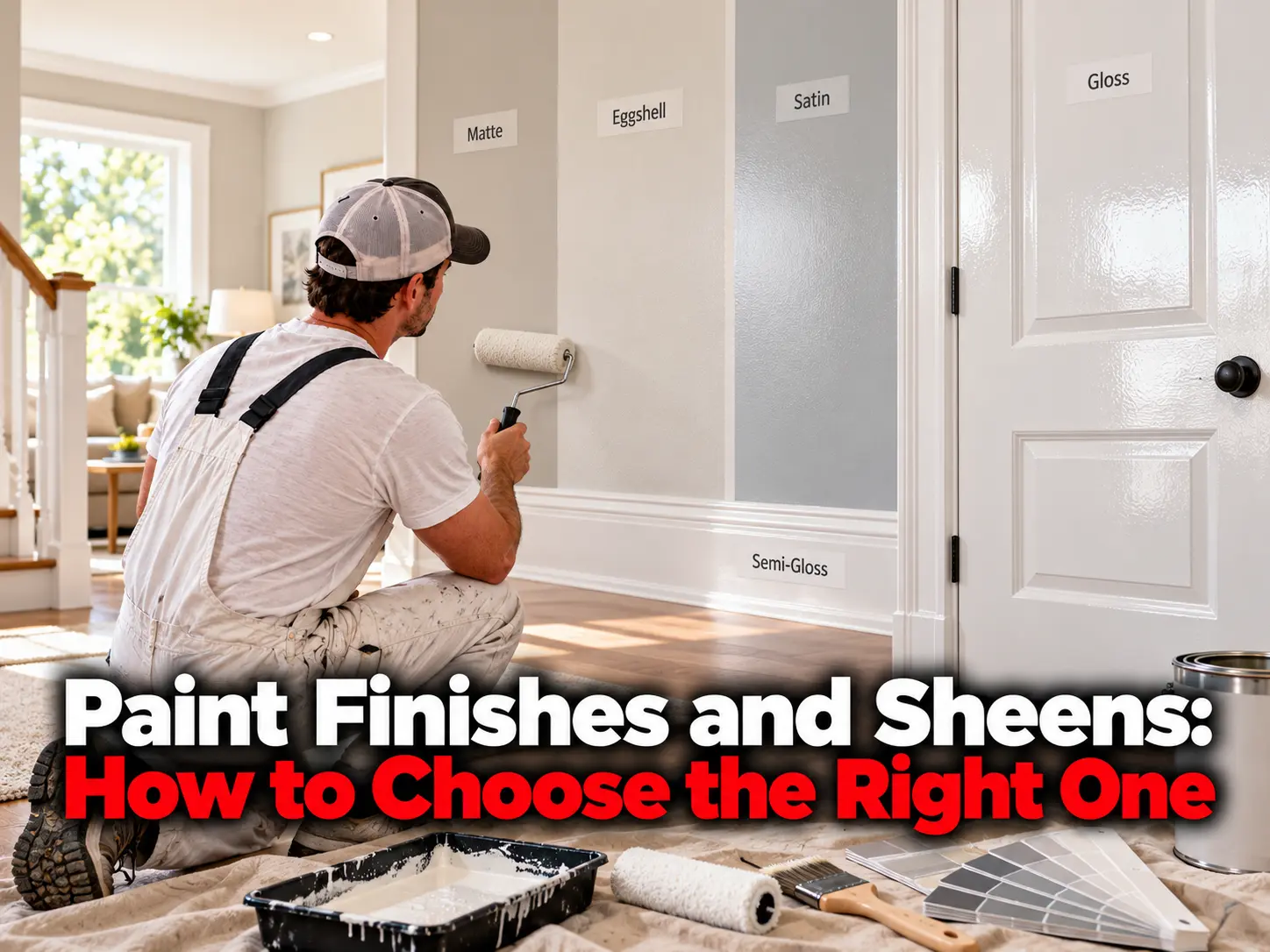
Most homeowners spend weeks picking a color and about thirty seconds on the finish. That’s a mistake. The finish often decides whether the room turns out the way they pictured. Paint finishes and sheens control how much light bounces off a surface. They also affect how easy the walls are to clean and how well the paint handles wear.
A glossier finish shows every dent and patch that a flatter one hides. No single sheen fits every surface in the house. The right pick depends on the surface and how the room gets used. Your cleaning habits count too. So does the look you want. This guide compares each option and shows where it works best.
What Should You Know Before Choosing a Paint Sheen?
Sheen is more than shine. It changes how a wall looks in different light and how much work it takes to keep clean. Two things should guide your choice. The first is how light moves through the room. The second is the true condition of your walls.
How Sheen Changes the Look of Interior Paint
Sheen is how much light the paint throws back. A flat wall soaks most of it up and looks soft. A semi-gloss door bounces it back and looks crisp. Almost wet. Lighting changes that picture all day. Afternoon sun skims a west-facing wall, and recessed lights throw tight pools at night. A higher sheen turns both into glare. That’s why one gallon of gray can look like two colors on two finishes.
Why Surface Condition Matters When Selecting a Finish
Look at your walls before you look at sample cards. Sweep a flashlight across them at night. Every nail pop and roller ridge gets louder under a shinier finish. Flat and matte paints scatter light, so small dings and old patches blend in. Satin and semi-gloss do the opposite. Sheen won’t save a damaged wall. Cracks and water stains need real repair before any paint goes on.
Which Paint Finish Types Suit Different Needs?
Paint finish types run on a scale from almost no shine to a mirror-like gloss. Each step up makes the surface easier to clean. It also makes the paint less forgiving of flaws. Here’s how each one behaves in a real home, from the flattest finish to the shiniest.
Flat and Matte Finishes for a Soft, Low-Reflection Look
Flat paint gives the quietest look, with almost no glare. That makes it the go-to for ceilings, where light hits at sharp angles. Bedrooms and low-traffic rooms suit it too. Matte sits next to Flat. Some brands treat them as one. Others make matte a bit tougher, with a hint more sheen. Cleaning is the trade-off. Scrubbing a traditional flat can leave a shiny spot. Newer washable mattes handle wiping better.
Eggshell for a Subtle Sheen With Everyday Practicality
Eggshell has a low glow, a lot like the shell it’s named after. It reflects more light than matte but still looks soft from across the room. Many homeowners pick it for living and dining rooms. Think of it as the middle ground. You get better fingerprint resistance than most flats without the obvious shine of satin. Cleaning performance still varies by brand.
Satin for Surfaces That Need More Routine Cleaning
Satin has a visible, pearl-like sheen. That extra reflection usually comes with a tighter surface that holds up better to wiping. Hallways and mudrooms take a beating from hands and backpacks. Satin earns its place there. It can work in kitchens and bathrooms too, if the product is rated for them. Honesty is the downside. Satin shows roller marks and patched spots more than eggshell or matte.
Semi-Gloss and High-Gloss for a More Reflective Finish
Semi-gloss and high-gloss play in a different league. Their clear shine sharpens edges, which is why you see them on trim and doors. Cabinets too. They shrug off scuffs and wipe clean, though durability depends on the product. High-gloss goes further with an almost lacquered look. It suits a front door or a built-in. All that shine magnifies every brush mark and sanding scratch. Trim needs careful sanding and priming first.
| Finish | Light reflection | Wipe-down tolerance | Hides minor flaws |
| Flat or matte | Very low | Varies by product | Best |
| Eggshell | Low | Moderate | Good |
| Satin | Medium | Good | Fair |
| Semi-gloss | High | Very good | Poor |
| High-gloss | Very high | Very good | Poorest |
How Do You Compare Paint Finishes for Real-World Use?
Most people don’t get stuck picking from five finishes. They get stuck between two reasonable options. One looks better on the sample card. The other may be more practical for everyday use. Here’s how to settle the two most common ties, based on how each room gets used every day.
Matte vs Satin Paint: Appearance or Easier Maintenance?
The short answer to matte vs satin paint is simple. Choose matte if looks and hiding flaws come first. Choose satin if the wall gets touched or wiped often. Matte reflects very little light, so the wall looks soft and even. Satin reflects more and usually handles scrubbing better. A bedroom with slightly wavy plaster leans matte. A family room where the dog rubs the wall every day leans on satin.
Eggshell vs Semi-Gloss: Where Does Each Work Best?
Eggshell belongs on most walls. Trim and doors are good places for semi-gloss, especially when they need regular wiping. That settles the eggshell vs semi-gloss question in most homes. On a full wall, semi-gloss throws glare and shows every drywall flaw. On a baseboard, that same shine looks sharp and stands up to shoes and vacuums. Eggshell walls with semi-gloss trim is a classic pairing. Swap them and both surfaces suffer.
How Should You Match Paint Sheen to Each Room?
The best paint finish depends on how each room is used. Traffic is one factor. Humidity is another. Lighting matters too, since a sunny room shows sheen more than a dim one. Use the table below as a starting point, not a rulebook. Your home’s quirks may point you one step up or down.
| Room or surface | Finishes to consider | Main selection factor |
| Ceilings | Flat or matte | Less glare and fewer visible flaws |
| Bedrooms | Matte or eggshell | Desired look and cleaning needs |
| Living and dining rooms | Matte or eggshell; satin where it fits | Appearance, traffic and upkeep |
| Kitchens | Satin or semi-gloss, where suitable | Splashes, grease and frequent cleaning |
| Bathrooms | Satin or semi-gloss products rated for humidity | Moisture exposure and ventilation |
| Hallways and entryways | Eggshell or satin | Scuffs and routine wiping |
| Doors and trim | Semi-gloss or high-gloss | Crisp look and durability |
Product matters as much as sheen. Sheen alone doesn’t make paint waterproof or right for a bathroom. Look for products the manufacturer rates for kitchens or high-humidity rooms. Then run the exhaust fan. Prep the surface properly too. Satin over a damp, dirty wall will still fail.
What Can Go Wrong When You Choose the Wrong Sheen?
A sample square can look perfect until the whole room is done. Then the light hits a full wall, and the surprises start. Most of them trace back to a handful of common mistakes. Most of the people make these same ones on repaint jobs around Cleveland all the time:
- Rolling satin or semi-gloss over a wall full of patches and dents.
- Using flat paint in a kitchen without checking its scrub rating.
- Judging a sample in daylight and forgetting how it looks under lamps.
- Assuming every product labeled “eggshell” or “satin” performs the same.
- Skipping sanding and priming before gloss goes on trim or doors.
Before you buy, read the product data sheet for washability and recommended uses. Then paint a large sample on the actual wall, not a small card. Check it in daylight once it’s dry. Look again at night under your own fixtures. That second look often changes minds.
Frequently Asked Questions
A few questions tend to linger even after the samples go up on the wall. You’re not alone there. Homeowners ask us these during in-home estimates. The short answers below help you narrow things down before you buy a single gallon of paint.
Which Paint Sheen Is Easiest to Clean?
Satin and glossier products are usually the easiest to wipe down. Their tighter surface lets grime sit on top instead of soaking in. Formula still matters, though. A quality washable matte can outperform a budget satin. Compare the scrub claims on each label before you choose one.
Does Higher Sheen Make a Paint Color Look Different?
Yes, it can. A glossier finish bounces more light around. This can make a color look more intense and create bright highlights along the wall. A flatter finish softens the same color. Lighting also shifts how a color reads. So do the floors and furniture sitting next to it.
Can You Use Different Paint Sheens in the Same Room?
Yes, and most rooms already do. A common setup starts with a flat ceiling. The walls get matte or eggshell. The trim gets semi-gloss. Coordinated colors tie it all together, while each sheen handles the job its surface needs. The result looks planned instead of patched together.
Final Thoughts
The right sheen balances how a room looks with how it lives. Weigh wall condition and traffic against your cleaning habits. Knapp Painting LLC helps homeowners in Cleveland and nearby communities make those choices before the first coat goes on. Our interior wall painting and ceiling and trim painting services cover every surface in this guide. Not sure which finish fits? Reach out to our team or call +1 567-274-2211.