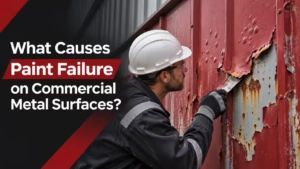
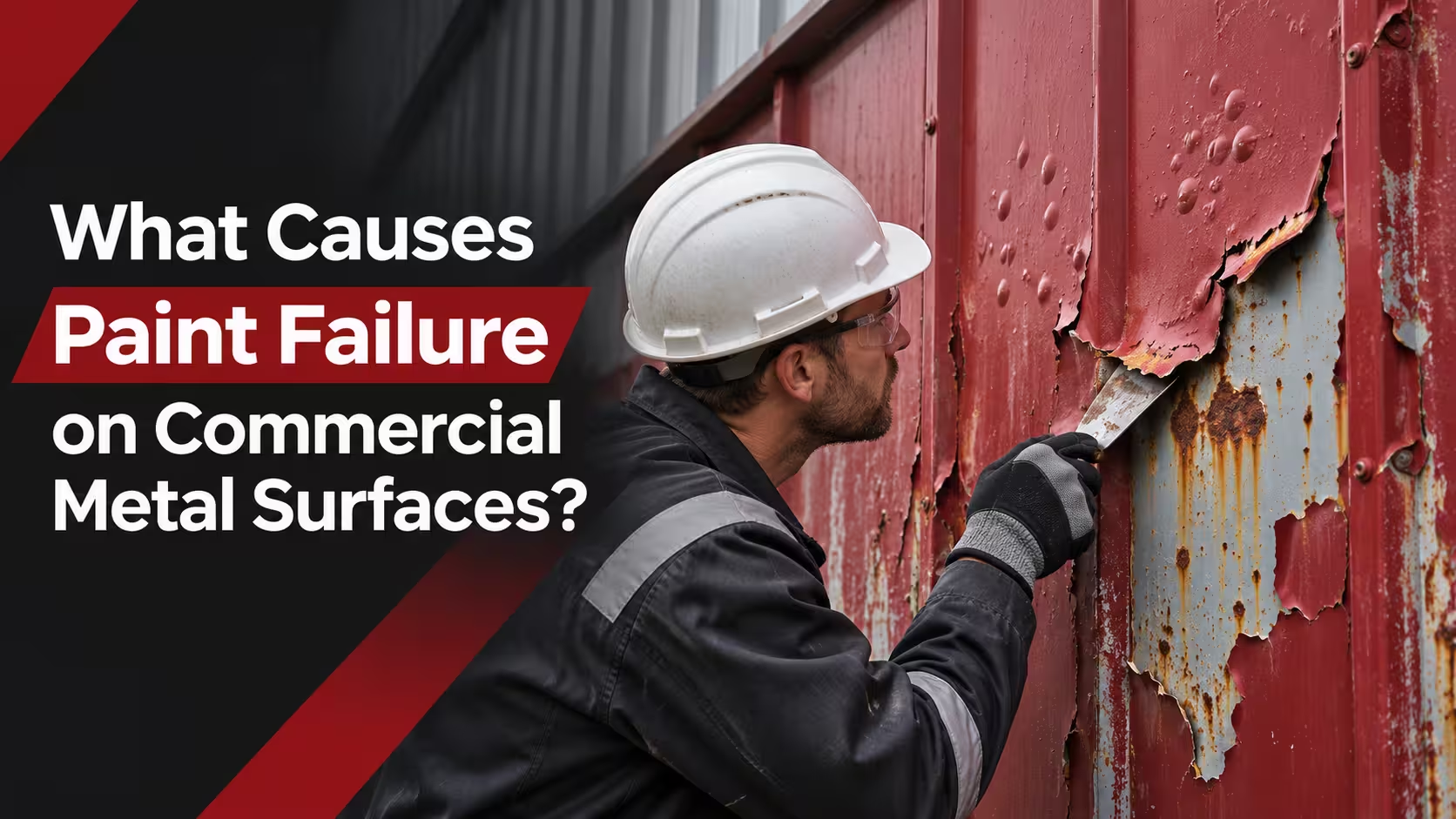
A Cleveland warehouse manager notices paint peeling around a steel loading-door frame after winter. The damage looks minor, so it is added to a routine maintenance list. A few weeks later, rust appears beneath the lifted edges and spreads along the frame. The issue is no longer just appearance; the coating may have stopped protecting the metal.
Coatings protect doors, railings, equipment, and steel from moisture, chemicals, and wear. When paint blisters, cracks, flakes, or separates, damage is often a symptom. The cause may involve surface preparation, contamination, moisture, corrosion, coating compatibility, or how the product was applied.
Why Commercial Metal Paint Starts to Fail
Coating failure often develops from more than one condition. Repainting without finding the cause can leave the weak layer or moisture problem in place, allowing peeling or blistering to return soon after the repair.
Surface contamination and poor preparation
Oil, grease, dust, salts, rust, and loose paint can prevent a new coating from bonding. A surface may appear clean while still carrying contaminants. If cleaning, removal of failed paint, or surface profiling is inadequate, the coating may detach instead of forming a durable protective layer.
Moisture and corrosion beneath paint
Water can enter through cracks, seams, fasteners, edges, or damaged coating. When moisture stays trapped, corrosion may develop beneath the paint and push it away from the metal. Rust can spread beyond the visible spot, so a small stain may not reveal the full area of coating breakdown.
Incompatible coatings or application issues
An incompatible primer or topcoat, insufficient drying time, incorrect film thickness, or unsuitable application conditions can weaken adhesion. Paint may initially look smooth but fail prematurely when the coating system cannot bond or cure properly.
Warning Signs Facility Managers Should Recognize
The visible defect offers clues, but one symptom can have several causes. Facility teams should record the location, size, and progression of damage and check whether exposed metal is sound. Photographs taken during routine inspections can help establish whether a problem is spreading.
| Visible defect | Possible cause |
| Peeling or flaking | Poor adhesion, contamination, or corrosion underneath |
| Blisters or bubbles | Moisture, trapped contaminants, or heat |
| Cracks or brittle paint | Aging, movement, or coating stress |
| Rust staining | Corrosion or gaps in protective coverage |
| Patchy finish | Uneven preparation or application |
Look beyond the damaged patch. Inspect seams, welds, corners, fasteners, edges, and ledges where water may collect. On steel, corrosion can continue beneath paint that appears intact. On galvanized steel, confirm that the coating system is compatible with zinc and that preparation suited the surface.
How Cleveland Weather Can Affect Metal Coatings
Cleveland exterior metal surfaces face seasonal moisture, freezing temperatures, snow, and temperature changes. Water entering small coating defects can freeze and thaw, stressing paint around edges and openings. Metal near streets, driveways, or parking areas may also collect salt residue, which can increase corrosion risk when moisture remains.
What to Check Before Repainting
- Map the damage: Record peeling, blistering, cracks, rust, and missing paint.
- Check water exposure: Look for leaks, drainage problems, damp joints, or salt deposits.
- Assess the metal: Determine whether corrosion appears superficial or has caused material loss.
- Review existing layers: Note prior repairs, known primers, or coatings if available.
- Consider site conditions: Record chemical exposure, abrasion, weather, or repeated contact.
Avoid aggressive scraping or testing that may damage the substrate or expose workers to hazardous paint. If older coatings could contain lead or other hazardous materials, appropriate testing and safe work practices should be considered before disturbing them.
Repair or Recoat: How to Determine the Scope
Localized repair may be reasonable when the defect is small, surrounding paint is firmly bonded, and corrosion is limited. The failed material still needs to be removed and the surface properly prepared. Applying paint over loose edges does not restore adhesion and often leads to another round of peeling.
Widespread blistering, recurring rust, extensive peeling, or multiple adhesion failures may indicate that a larger coating system needs renewal. An assessment can determine whether removal, corrosion treatment, priming, or recoating is appropriate.
| Inspection finding | Potential response |
| Small chip, sound surrounding coating | Prepare and apply compatible touch-up |
| Rust under lifted paint | Remove failed coating and assess corrosion |
| Repeated peeling or widespread blisters | Investigate the cause and consider broader recoating |
| Significant corrosion or metal loss | Assess substrate condition before selecting a coating |
Preventing Premature Coating Breakdown
Prevention starts with surface preparation and product selection. Carbon steel and galvanized steel may require different preparation and primer choices. A coating system should be selected for the substrate, exposure, and service conditions, with application and curing requirements followed carefully.
A sound coating process includes:
- Removing oil, dirt, salts, rust, and loose paint.
- Preparing the surface to the specified cleanliness and profile.
- Selecting compatible primers and topcoats, including epoxy systems where suitable.
- Following required temperature, humidity, film-thickness, and curing conditions.
- Paying attention to welds, edges, fasteners, and hard-to-cover areas.
- Inspecting periodically and repairing small defects before corrosion spreads.
Commercial coating specifications may reference AMPP (Association for Materials Protection and Performance) guidance, depending on the coating and project.
When a Professional Coating Assessment Makes Sense
Professional evaluation is useful when peeling returns after repairs, rust appears beneath apparently intact paint, damage covers a broad area, or the existing coating is unknown. An assessment can also help when the metal type, preparation needs, or coating compatibility is uncertain.
Knapp Painting LLC can help commercial property teams evaluate deteriorating metal surfaces, determine preparation needs, and plan suitable coating repairs. Correcting the underlying issue is more effective than repeatedly painting over damage that has not been addressed.
Frequently Asked Questions
What causes paint to peel off commercial metal?
Peeling can result from inadequate cleaning, poor surface preparation, moisture, corrosion, incompatible coating layers, or application errors. The cause should be identified before repainting so the repair does not fail again.
Can coating damage be spot repaired?
Small isolated defects may be repaired when surrounding paint is bonded, and the metal is sound. Repeated or widespread failure may require a larger area to be prepared and recoated.
How often should commercial metal surfaces be inspected?
The schedule depends on exposure and coating condition. Surfaces exposed to moisture, chemicals, abrasion, or harsh weather may need more frequent checks. Routine inspection records help maintenance teams identify changes early.
Final Thoughts: Find the Cause Before Repainting
Commercial coating failure is a sign that protection has weakened through poor preparation, moisture, corrosion, incompatibility, or application problems. Recognizing early warning signs and checking the underlying metal helps facility managers avoid superficial repairs and determine whether localized maintenance or broader recoating is needed.
Knapp Painting LLC helps property owners address peeling, blistering, and deteriorating commercial metal paint with attention to surface preparation and coating selection. A condition-based assessment can clarify the repair scope and help protect metal surfaces from premature failure.