
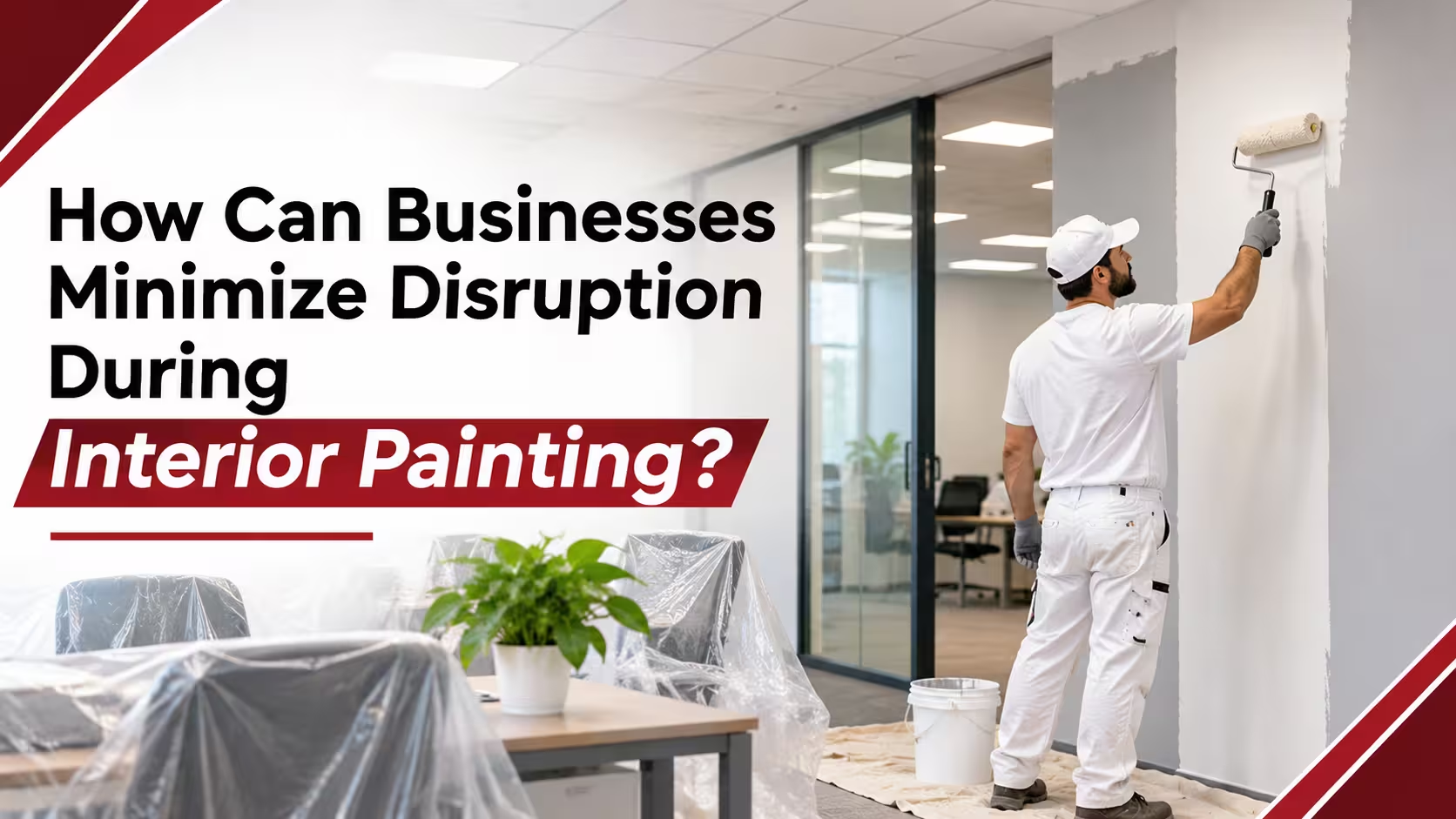
Your walls need fresh paint, but the phones keep ringing, and clients keep walking through the door. Shutting the whole building for a week rarely works, because that kind of business downtime costs real money and can push customers toward competitors. Painting an occupied office is possible when you treat it like any other operational project. The short answer is smart scheduling, phased work zones, solid protection, and steady coordination with the crew. This guide covers what to check before booking a crew, how to time the work, and how to keep everyone safe and informed.
What Should Businesses Evaluate Before Scheduling Interior Painting?
Walk through your building before anyone picks a start date. You need a clear picture of how people use the space on a normal day, because that picture drives every scheduling choice that follows.
Identify High-Traffic and Essential Work Areas
Start with the spots that never go quiet, the places where people gather or pass through all day:
- Entrances and the reception desk
- Main hallways and break rooms
- Busy conference rooms
- Employee workstations
- Customer-facing counters or showrooms
These areas usually need a different time slot than a storage room. Flag any space you can’t close or relocate at all, such as a front desk that must stay staffed. Those spaces become the hardest pieces of the scheduling puzzle.
Review Daily Business Activities and Access Requirements
Pull up the calendar and look at the week as it really runs. Note employee shifts, client appointments, deliveries, and any recurring meetings. Watch for the hours when certain departments thin out, like a sales team that spends Thursdays in the field. Then ask whether some staff could work remotely for a few days.
When Should Businesses Schedule Interior Painting to Reduce Downtime?
Timing decides how much your staff even notices the crew. Good commercial painting scheduling puts the messiest work in the hours when the fewest people are around, with enough slack for the prep every job needs.
Consider After-Hours, Evening, and Weekend Painting
After-hours commercial painting suits spaces that stay packed from open to close. Crews can work evenings, overnight, weekends, holidays, or planned closures, so your lobby gets painted while nobody needs it. This option takes extra coordination, though. Someone on your side has to sort out alarm codes, keys, and security sign-off. The contractor also needs a crew free for those hours. Night work can still leave a faint smell or a few shifted chairs, so plan a quick walkthrough before staff arrives.
Decide Which Areas Can Be Painted During Business Hours
Painting while business is open works fine in some rooms, like a low-traffic private office or an unused conference room. Weigh the noise, odor, and access needs against the size of the job. Most projects mix both approaches, with daytime work in quiet rooms and after-hours shifts for the busy ones. That blend keeps painting project scheduling realistic for most offices.
How Can Phased Painting Keep an Office Operational?
Break the job into pieces, and most of your office stays open the whole time. Phasing is the main tool for office painting without disruption, because the crew only occupies a small slice of the building at once.
Divide the Building Into Separate Work Zones
Draw work zones that match how your business already runs. You might split the project by room, department, floor, or wing. The crew finishes one zone and hands it back before moving to the next. People from the active zone can relocate to a finished area for a day or two. Commercial painting phases set up this way keep each interruption short.
Establish a Practical Order for Painting Different Areas
Pick the order based on your operations, not on whichever room sits closest to the door. Reception areas and hallways carry heavy traffic all day, while private offices are easier to book around. Build drying time into the sequence too. Paint can feel dry within hours but take much longer to fully cure, so check the product data before desks go back against fresh walls.
How Can Businesses Protect Furniture, Equipment, and Workplace Access?
Protect the gear and keep people moving safely. A paint drip on a laptop or a blocked hallway causes more grief than the painting itself, so good office painting preparation handles both before the first can is opened.
Protect Office Furniture and Sensitive Equipment
Workspace protection starts with deciding what stays and what goes. Anything left in the work zone needs proper coverage:
- Desks, chairs, and shelving
- Computers, monitors, and printers
- Floors, carpet, and nearby fixtures
- Outlets, switches, and finished surfaces next to the work
Move valuable or sensitive items out entirely, especially electronics and confidential files. Agree in writing on who moves furniture and who reconnects equipment afterward. That one conversation prevents a lot of finger-pointing later on.
Maintain Clear Walkways and Access Routes
People still need to get where they’re going. Give employees and customers clearly marked detours whenever an area closes. Keep entrances, exits, and essential pathways open at all times. Signs and temporary barriers should mark every restricted area so nobody wanders into wet paint. Ask the crew to keep ladders and supplies in one agreed staging spot instead of lining the hallway. A tidy staging area keeps traffic flowing and cuts tripping hazards.
How Do Paint Selection and Ventilation Affect an Occupied Workplace?
The product on the wall and the air in the room shape how the job feels to everyone inside. Get both wrong, and you’ll hear complaints about the smell all week.
Consider Low-VOC and Low-Odor Coatings
Volatile organic compounds (VOCs) are chemicals that can evaporate into the air as paint dries. Low-VOC paint releases fewer of them, which makes it a common pick for occupied buildings. Still, low-VOC doesn’t mean odorless or risk-free. The coating also has to suit the surface, the room conditions, and the wear it will face. A busy corridor needs a tougher finish than a quiet private office does. Even with low VOC coatings, employees shouldn’t automatically stay in a room while it’s being painted.
Plan Ventilation Around the Painting Work
Fresh air moves fumes out and helps paint dry properly. Ventilation planning should happen with your facility manager before work starts, because every building’s HVAC system behaves differently. Some setups can exhaust air from the work zone straight outside, while others could push odors into occupied rooms. Follow the product label and the manufacturer’s guidance on airflow. Then decide together whether to adjust, isolate, or keep running specific units to protect indoor air quality.
What Safety and Communication Steps Help Minimize Workplace Interruptions?
Surprises cause most of the friction on these jobs. Employees, contractors, and facility managers all need the same picture of what’s happening and when, ideally from a short planning meeting before day one.
Communicate the Painting Schedule Before Work Starts
Tell people early and tell them plainly. Send the plan to employees and tenants, plus any department losing space. Post a simple notice at the entrance for customers and visitors. Each notice should cover:
- The dates and areas affected
- Temporary access changes and detours
- Where displaced staff will work
- One main contact for questions and schedule changes
Advance notice turns a surprise into a minor inconvenience, and a reminder the day before each phase keeps people from walking into a taped-off room.
Establish Safe Work Zones and Workplace Procedures
Employee safety depends on keeping the active zone clearly separate from occupied workspaces. Signs, barriers, and careful equipment placement should mark that boundary without blocking safe routes around it. Store paint, solvents, and rags in a closed spot away from break rooms and heat sources. OSHA rules require exit routes to stay free of obstructions, and paint makers supply safety data sheets the crew should keep handy. Your contractor and facility manager should agree on who handles what, from daily cleanup to locking up.
FAQs
Can an Office Stay Open While Interior Painting Is Being Done?
Often, yes. It can work when the project is phased, work zones are controlled, and the schedule and ventilation suit the building. Some rooms may still need to close for a short time while they’re painted and drying.
Is It Better to Paint a Commercial Office After Business Hours?
After-hours work cuts down interference in busy areas like lobbies and open offices. It isn’t automatically the best choice, though. The right schedule depends on building use and project scope, plus access and staff hours.
How Can Businesses Keep Employees Safe During Interior Painting?
Keep active work zones separated and clearly marked, and keep access routes open. Ventilate according to the product instructions and your building’s setup. Most of all, keep management and the contractor in regular contact so problems get fixed early.
Final Thoughts
Good planning keeps paint on the walls and your business on track. Scheduling, phased zones, workspace protection, ventilation, and communication all work together to limit disruption. Every commercial property runs differently, so the best plan balances the painting timeline with employee safety and business continuity. Knapp Painting LLC provides commercial interior wall painting and office painting across the Greater Cleveland area, with flexible scheduling built around each client. If your workspace is due for a refresh, request a quote and talk through your interior painting needs and the schedule that fits your operations.