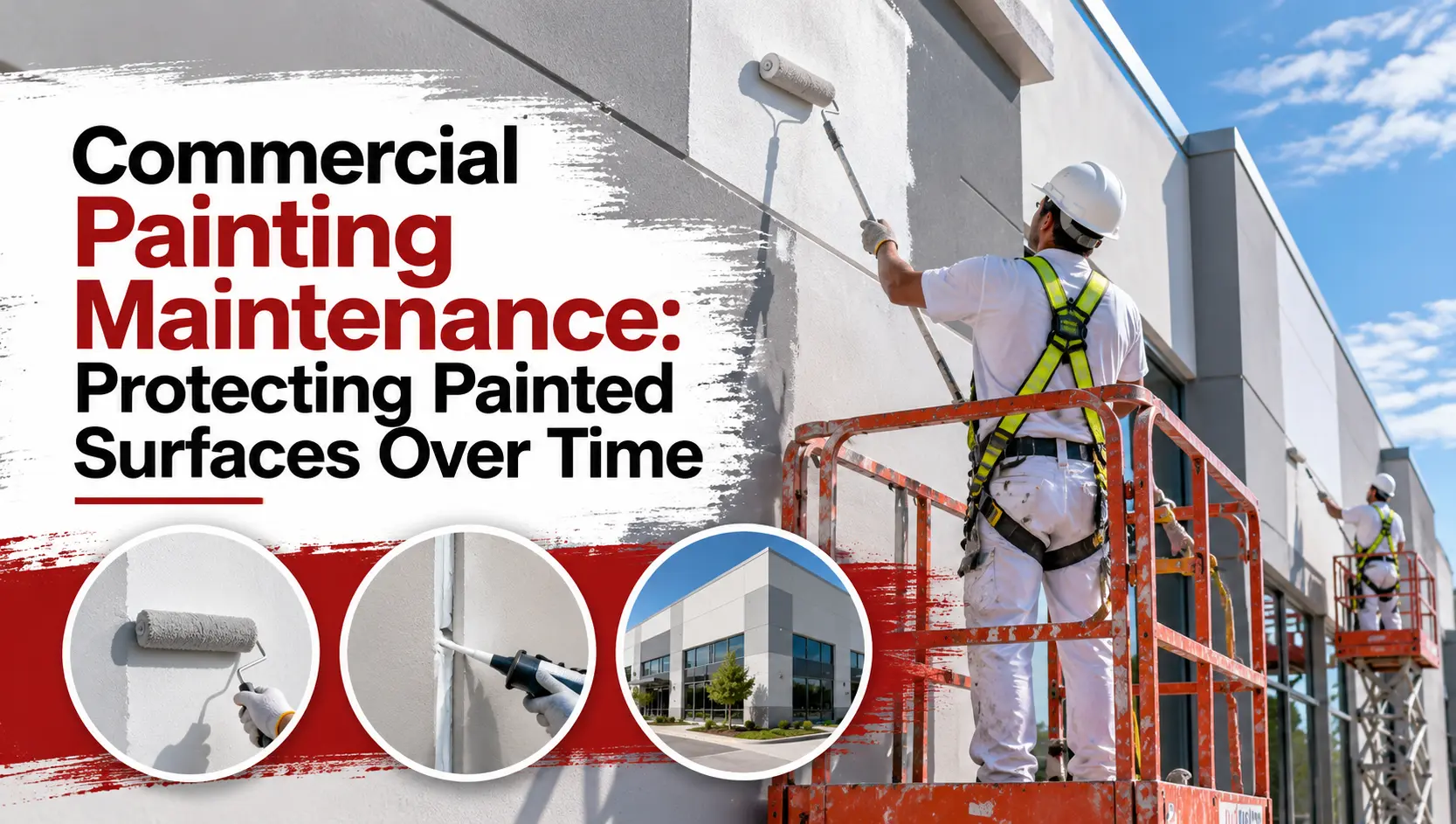
Scuff marks show up first. Then a dull patch appears near the loading dock, or paint lifts by a downspout. Foot traffic and cleaning crews wear down the inside, while weather and moisture go after the outside. Commercial painting maintenance means checking those coatings and fixing small problems before they spread. Below, you’ll find practical advice on inspections, cleaning, targeted repairs, and repainting schedules.
Why Commercial Painting Maintenance Matters
Paint does its job quietly. Most damage starts small, and small damage is easy to ignore for months at a time. That delay is where repair costs start to climb. Steady care keeps minor flaws from growing into bigger and pricier problems down the road.
Protecting the Appearance of a Commercial Property
Customers judge a business by what they see at the front door. First looks stick. Faded siding or a scuffed reception wall hints that nobody is paying attention. Paint in good shape keeps offices and storefronts looking sharp, which helps the whole property hold its appeal.
Extending the Service Life of Existing Coatings
Dirt that builds up on a surface speeds up wear, and so do small breaks in the paint film. Regular cleaning and quick attention to minor damage can keep a coating serviceable longer. Care has limits, though. Sunlight and age will still break paint down over time.
Planning Repairs Before They Become Larger Projects
A chipped corner this spring can turn into a peeling wall by next year. Early catches buy time. Property managers can sort out what’s urgent and what can wait. That’s the real payoff of building painting maintenance, because repairs land on your terms instead of by surprise.
How to Inspect Painted Surfaces for Early Signs of Wear
Walk the building with a notepad and a phone camera in hand. You won’t need special gear. A simple surface inspection catches trouble while it’s still small and easy to manage. Snap photos of anything that looks off so you can spot changes on your next walk.
What to Look for on Interior Walls and Trim
Start where people move the most. Hallways and door frames take a beating every day, and so do the walls beside elevators. Look for scuffs and chips first. Then check for stains and any spots where the color has faded or worn thin from contact.
Checking Exterior Walls and Coatings
The warning signs look different outside. Chalking leaves a powdery residue when you rub the wall. Fading tends to show first on the sunniest sides. Peeling and cracking point to a coating that’s losing its grip. Blisters and dark stains often appear where rain and runoff hit hardest.
How Often Should Commercial Painted Surfaces Be Inspected?
No single schedule fits every building. A busy retail space may need a look more often than a quiet office suite. Weather matters just as much. Walls with heavy sun or rain exposure call for more frequent checks, and so does a history of coating problems.
Routine Cleaning and Care for Painted Surfaces
Clean paint looks better and tends to last longer, but the wrong cleaner can do more harm than the dirt ever did. So take a close look at the wall before you grab a bucket. Match your method to the finish and the condition of the surface.
Cleaning Interior Painted Walls Without Damaging the Finish
Start gentle. A soft cloth with mild soap and water handles most everyday marks. Test in a hidden spot first. Abrasive pads and harsh chemicals can leave shiny spots on flat paint or wear right through the coating. If a stain won’t lift, stop scrubbing before you damage the finish.
Maintaining Exterior Painted Surfaces
A soft wash with a suitable cleaner removes most dirt and mildew from outside walls. A pressure washer isn’t the right tool for every surface, because too much pressure can strip paint. Spraying at the wrong angle can also drive water behind siding and into joints.
Establishing a Practical Cleaning Routine
Let the building tell you how often to clean. A lobby with constant foot traffic needs more attention than a back storage hallway. Restrooms and break rooms collect grime faster than an empty conference room. Set the routine area by area, then adjust when buildup starts showing between cleanings.
Handling Touch-Ups, Paint Damage, and Moisture Problems
Spotting a problem is only half the job. The fix also has to match what’s actually wrong with the surface. A dab of paint works on a fresh chip, but it won’t help a wall that’s failing from behind. Some damage is cosmetic, and some points are deeper.
When to Perform Paint Touch-Ups
Touch-ups work best on small, isolated damage like a chip on a door frame or a scratch from a delivery cart. Match the original color and sheen. Even the right paint can stand out against a wall that has faded. In that case, repainting the full wall section usually looks cleaner.
Addressing Peeling, Cracking, and Other Paint Deterioration
Peeling that keeps spreading is not a touch-up job, and neither is cracking that returns after a repair. These patterns often mean the coating has lost its bond or something underneath is failing. When damage covers a wide area or keeps coming back, have a pro assess it first.
Identifying and Addressing Moisture Damage
Brown ceiling stains often trace back to water somewhere above them. So do bubbles in a wall and paint lifting near a window frame. When you spot these signs, check for roof leaks and plumbing problems nearby. Paint can’t seal out a leak that’s still active.
| Important: Painting over moisture damage without fixing the cause can lead to repeat paint failure. Find and stop the water source first, then repair and repaint the affected area. |
Building an Effective Commercial Paint Maintenance Program
Good intentions fade fast without a system. Busy weeks push paint checks to the bottom of the list. A simple paint maintenance program fixes that by giving you a record to work from and a plan to follow. A spreadsheet and a camera will do the job.
Create a Record of Painted Areas and Their Condition
List every painted area by location, such as the main lobby or the north exterior wall. Note its current condition and any visible defects. Log the date every time work gets done, even for small touch-ups. Over time, that record shows where the same problems keep coming back.
Set Maintenance Priorities and a Repainting Schedule
Use the record to rank the work. Damage near entrances usually goes to the top, along with exterior failure that’s spreading. No universal repainting interval fits every commercial building, either. Timing depends on the coating type and the surface underneath, plus weather exposure and daily use.
Know When to Contact a Painting Contractor
Not every chip needs a pro. Your maintenance staff can usually handle small touch-ups without outside help. Bring in a painting contractor when peeling covers large areas or coating failure keeps coming back. The same goes for high exterior walls your team can’t reach safely.
Interior vs. Exterior Commercial Paint Maintenance
Inside and outside paint live very different lives. Interior walls deal with hands and carts all day, while exterior coatings take whatever the weather throws at them. Because the stress is so different, the care should be different too. The table below lays out the main differences.
| Maintenance Factor | Interior Painted Surfaces | Exterior Painted Surfaces |
| Common wear | Scuffs, scratches, stains, small chips | Fading, chalking, peeling, weather wear |
| Main causes | Daily contact and regular cleaning | Sun, rain, temperature swings, moisture |
| Cleaning | Mild, compatible cleaners and soft tools | Exterior-safe cleaners; controlled pressure only where suitable |
| Areas to monitor | Corridors, doors, trim, busy walls | Exposed walls, trim, joints, spots hit by water |
| Main priority | Keep surfaces presentable and fix local wear | Track coating condition and respond to exposure damage |
| Repainting decisions | Visible wear and overall appearance | Coating condition, exposure, spread of damage |
Interior Maintenance Priorities
Inside, the busiest spots wear out first. Door frames and hallway corners get bumped by people and carts all day long. A quiet office wall may look fine for years while the corridor outside it needs regular touch-ups. Put your time and budget there first.
Exterior Maintenance Priorities
Outside, the weather sets the pace. Walls facing south and west usually take the most sun, while areas near downspouts take the most water. In the Cleveland area, freeze and thaw cycles add stress wherever moisture gets into the coating. Check those spots closely each spring.
Matching Maintenance to the Building’s Needs
Each building has its own story. A newer office park with light traffic won’t need the same plan as an older retail strip on a busy road. Copying another property’s plan rarely works. Instead, weigh how your space gets used against how your coatings are holding up today.
Frequently Asked Questions
Property managers tend to ask the same few questions about paint care. Most of them come down to timing. Nobody wants to repaint too early and waste money or wait too long and pay for bigger repairs. Here are straight answers to three common ones.
How often should a commercial building’s painted surfaces be inspected?
It depends on the building. High-traffic interiors and heavily exposed exteriors call for more frequent checks than quieter spaces. The bigger risk is letting those checks slip off the calendar altogether. Folding a paint walkthrough into your regular facility inspections is the easiest way to make sure it happens.
How often should a commercial property be repainted?
There’s no one-size answer. Timing depends on location and exposure, along with how hard the space gets used. It also depends on how well the current coating is holding up. A street-facing storefront may need attention sooner than a sheltered side wall on the same building.
Can regular maintenance prevent the need for a full commercial repaint?
Sometimes it can delay one, but it can’t stop the clock forever. Regular cleaning and quick repairs can help a coating last longer in the right conditions. Once peeling or cracking spreads across large areas, spot fixes stop making sense. Commercial repainting is usually the better fix at that point.
Final Thoughts
Paint care isn’t a one-time chore. It’s a steady routine that shows in how the building looks. Walk your property often and clean with methods that suit the finish. Fix small damage early, and stop moisture at its source before new paint goes on. Let the real surface condition decide when to repaint.
Knapp Painting LLC is a Cleveland painting contractor serving the city and nearby communities like Lakewood and Parma. When touch-ups stop cutting it, their commercial painting services can help with larger repairs and repainting. Got a building that’s starting to show its age? Contact Knapp Painting LLC or call (567) 274-2211 to talk through your next project.