Timing matters almost as much as the stain you choose. A deck may look ready on the surface while the boards still hold moisture. A hot afternoon can make stain dry too fast, while a cool, damp morning may slow the process down.
For homeowners wondering when to stain a deck in Cleveland, late spring through early fall usually offers the most workable conditions. May and June are often strong months, while September can give homeowners another good window before colder weather arrives.
Still, the month alone should never make the final decision. Temperature, wood moisture, direct sun, rain, and the stain manufacturer’s instructions all matter. If the deck needs more than basic maintenance, a professional deck and fence staining service can also help determine whether the surface is ready before work begins.
What Is the Best Time to Stain a Deck in Cleveland?
For most homes in Northeast Ohio, the best time to stain a deck is when the wood is dry, the temperature is moderate, and the forecast gives the stain enough time to set.
Late May through June often works well because daytime temperatures are usually comfortable for outdoor coating work. September can be another useful period because summer heat begins to ease while freezing temperatures are still some distance away.
Instead of choosing a day several weeks in advance and hoping the weather cooperates, treat your staining date as flexible.
A good deck staining day usually has:
- Dry wood
- Mild temperatures
- Limited direct sun
- No immediate rain risk
- Enough time for drying
- No heavy morning dew
- Weather that matches the stain label
The calendar gives you a general season. The actual deck and forecast tell you when to begin.
Is Spring a Good Time to Stain a Deck in Ohio?
Yes. Spring deck staining in Ohio can work very well once the weather becomes more stable.
Early spring can still be unpredictable around Cleveland. Cold nights, rain, and damp soil can keep exterior wood wet longer than homeowners expect. By May, conditions often become easier to work with, but the deck still needs to be checked carefully.
Spring is also a useful time to look for problems left behind by winter.
Before staining, inspect for:
- Loose boards
- Raised nails or screws
- Mold or mildew
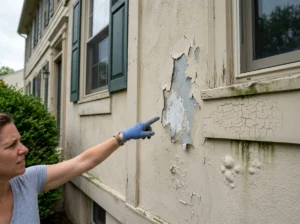
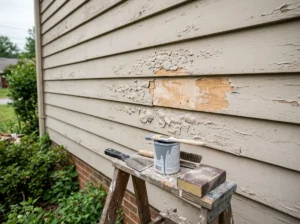
- Peeling old finish
- Gray or weathered wood
- Areas that stay damp
- Splinters or rough grain
Winter moisture and repeated freezing and thawing can be hard on exterior wood. Homes near Lake Erie may also deal with damp mornings and changing weather.
If you are already checking other exterior surfaces around the home, Knapp Painting’s guide to common house paint problems in Cleveland explains how local moisture and weather can affect exterior finishes.
Why May and June Often Work Well
May and June usually give Cleveland homeowners a good mix of moderate temperatures and longer daylight.
That does not mean every day during those months is suitable. Several rainy days in a row can leave boards too wet. Morning dew may take time to dry. A deck surrounded by trees may also stay damp much longer than one sitting in full sun.
The practical approach is to inspect the deck after the weather has been dry.
If the boards still feel damp, cool, or heavy with moisture, give them more time.
A stain should never be used to trap moisture inside the wood.
Can You Stain a Deck in Summer?
Yes. Can you stain a deck in summer? In many cases, absolutely.
Summer is not automatically a bad staining season. In fact, Cleveland often gets plenty of usable summer weather.
The problem comes when homeowners assume the hottest, sunniest day must be the best day.
Strong direct sun can heat deck boards much more than the surrounding air. When stain hits an overly hot surface, it may begin drying before it has enough time to spread and penetrate evenly.
That can lead to:
- Visible lap marks
- Uneven color
- Fast surface drying
- Poor penetration
- Difficult application
High humidity can create the opposite issue by slowing drying.
When staining during July or August, work around the sun whenever possible. A deck that gets heavy afternoon sun may be easier to stain earlier in the day after the morning dew has dried.
The goal is not simply warm weather. The goal is stable weather.
How Does Lake Erie Affect Deck Staining Conditions?
Homes closer to Lake Erie can experience different moisture patterns than properties farther inland.
Areas such as Bay Village, Lakewood, Bratenahl, and Eastlake can see damp mornings, quick weather changes, and higher moisture exposure around exterior surfaces. That does not mean lakefront decks cannot be stained successfully. It simply means surface conditions deserve more attention.
A deck in a shaded backyard near the lake may stay damp well after a nearby driveway appears dry.
For homeowners in western lakefront communities, the Bay Village service area page provides more information about Knapp Painting’s work in that part of Greater Cleveland.
Local conditions are useful context, but they should never replace testing the actual wood.
Is Fall Deck Staining in Cleveland a Good Idea?
Yes. Fall deck staining in Cleveland can be an excellent option, especially during September.
By early fall, the strongest summer heat has often passed. Daytime conditions can remain comfortable, while the deck still has enough time to dry before colder weather becomes common.
The biggest concern is waiting too long.
As October progresses, overnight temperatures fall, daylight gets shorter, and morning dew becomes more common. A deck may take longer to dry even when the afternoon feels comfortable.
Early fall usually works better than late fall because the weather window is wider.
If you are considering staining before winter, avoid rushing the job. Applying stain to damp wood just because colder weather is approaching creates more risk than waiting for a proper maintenance window.
What Temperature Is Best for Deck Staining?
Most deck stains are designed for mild weather, but exact deck staining temperature requirements depend on the product.
A common working range for many exterior stains is around 50°F to 90°F. Some products allow application outside that range, so the label should always be checked.
Do not look only at the daytime high.
You should also consider:
- Overnight temperatures
- Wood surface temperature
- Direct sunlight
- Shade
- Wind
- Humidity
- Rain
A deck board sitting in direct sun can become much hotter than the air temperature reported by a weather app.
That is why surface conditions matter more than one number.
How Much Humidity Is Too Much for Deck Staining?
There is no single deck staining humidity level that applies to every stain.
High humidity generally slows drying because the air already holds more moisture. Very humid weather may also keep the deck damp longer in the morning.
Instead of relying on a fixed percentage, check the stain manufacturer’s instructions and pay attention to how the wood feels.
If the deck is still damp from dew, rain, washing, or shade, wait.
A few extra hours of drying is usually better than forcing the job into poor conditions.
How Long After Pressure Washing Should You Stain a Deck?
The answer to how long to wait to stain a deck after pressure washing depends on the wood and the weather.
Pressure washing pushes water into the surface. Even when the top of the board looks dry, moisture can remain below it.
Some decks may dry quickly during warm, breezy weather. Others may need several days, especially when they are shaded or surrounded by trees.
Do not use time alone as your test.
Moisture Testing Before Deck Stain
Moisture testing before deck stain is a better way to judge whether the wood is ready.
A moisture meter can help show how much water remains inside the boards. The acceptable reading depends on the stain being used.
You can also watch how clean wood reacts to water. If small drops quickly soak into bare wood instead of sitting on top, the surface may be able to accept stain.
Still, product instructions should make the final call.
If you are working with exterior wood elsewhere around the property, our guide to outdoor paint and finishes for wood covers additional preparation and coating considerations.
How Should a Deck Be Prepared Before Staining?
Good prep gives the stain a clean, stable surface to bond with or penetrate.
Staining over dirt, mildew, or loose old finish can create problems even when the weather is perfect.
A normal preparation process may include:
- Move furniture and planters.
- Sweep away dirt and leaves.
- Inspect boards and fasteners.
- Repair damaged wood.
- Clean mildew and algae.
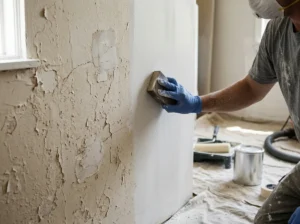
- Remove loose old coating.
- Wash the surface.
- Let the deck dry fully.
- Sand rough areas if needed.
- Confirm weather conditions.
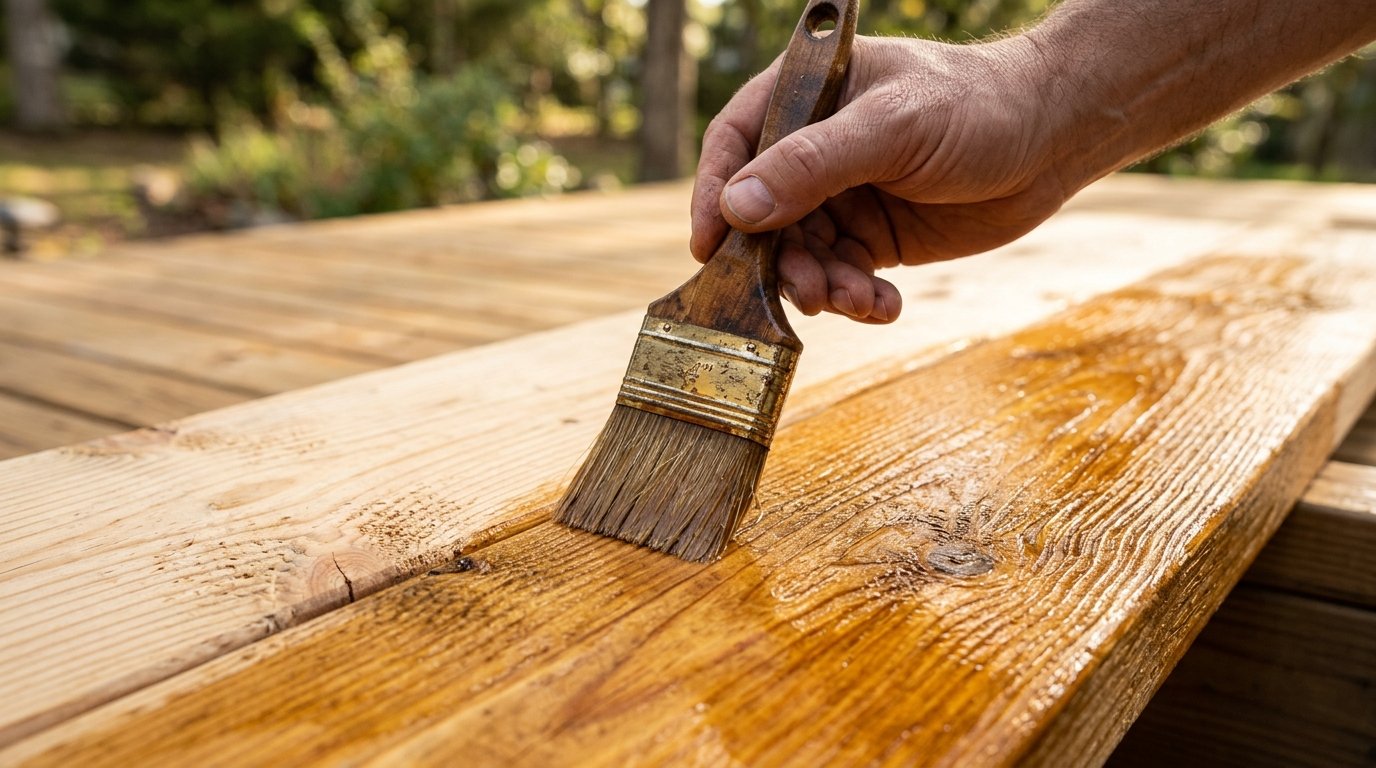
- Apply the stain as directed.
Do not rush the drying stage.
Preparation can take more time than the actual staining, especially on older decks.
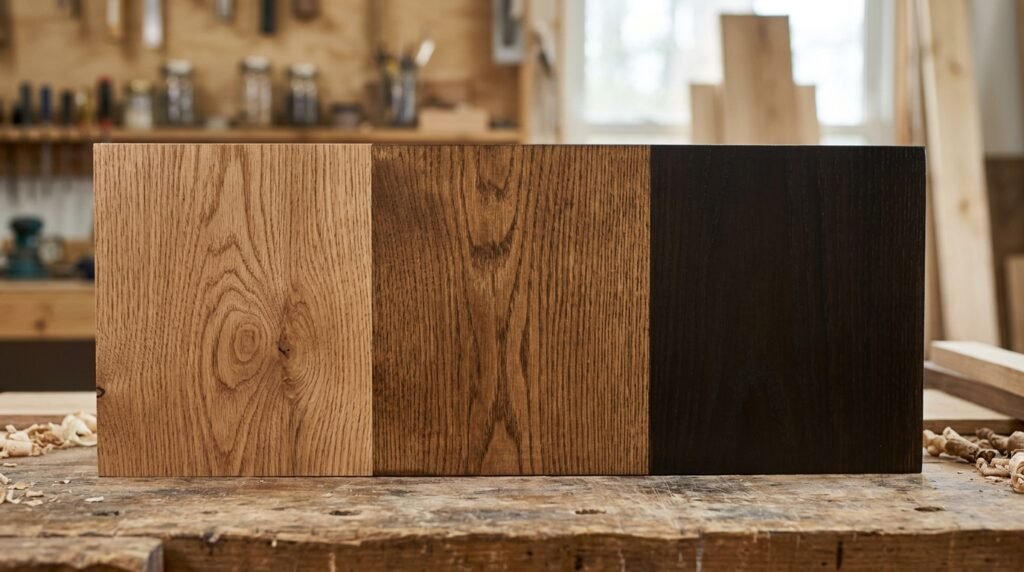
Transparent vs. Semi-Transparent vs. Solid Deck Stain
The right stain depends on the look you want and the condition of the wood.
Transparent Stain
Transparent stain keeps the natural wood grain easy to see. It works well when the boards are in good condition and you want the wood itself to remain the main feature.
Semi-Transparent Stain
Semi-transparent stain adds more color while still showing much of the grain.
It offers a middle ground between a natural appearance and stronger color coverage.
Solid Color Stain
Solid stain gives the strongest color coverage.
It hides much more of the grain while still showing the wood’s texture.
The transparent vs solid deck stain choice should not be based only on appearance. Existing finish, wood condition, sun exposure, and maintenance plans also matter.
What About Oil-Based and Water-Based Stains?
Both oil-based and water-based stains can work well.
It is better to compare specific products than assume one category is always superior.
Oil-based stains may penetrate wood differently and can take longer to dry in some conditions.
Water-based stains may offer easier cleanup and faster drying in certain formulas.
Modern products vary widely, so compare:
- Application temperature
- Drying time
- Recoat requirements
- Wood compatibility
- Existing finish compatibility
- Cleanup
- Appearance
Read the technical sheet before buying rather than relying only on the words “oil” or “water.”
Does the Type of Deck Wood Matter?
Yes. Different materials can change the preparation and staining timeline.
Pressure-Treated Wood
New pressure-treated lumber often contains significant moisture.
A new deck should not be stained simply because construction is finished. The boards need time to dry enough for the stain being used.
Cedar
Cedar can stain beautifully, but older cedar may need cleaning, sanding, or restoration first.
Weathered boards may absorb stain differently from newer wood.
Composite Decking
Composite decking should not automatically be treated like natural wood.
Many modern capped composite boards are not intended to be stained at all. Check the manufacturer’s instructions before applying any coating.
How Long Does Deck Stain Take to Dry?
There is no universal deck stain drying time.
Many stains need at least a day before light use, while others may need longer. Weather can also change the timeline.
Drying slows when conditions are:
- Cool
- Humid
- Shaded
- Still
- Damp
It may speed up during warm, dry weather, although excessive heat is not ideal either.
Also remember that “dry to touch” and “fully cured” are not the same thing.
Avoid putting furniture, rugs, grills, or heavy planters back on the deck until the product instructions say it is safe.
How Much Dry Weather Do You Need?
A stable forecast is important, but there is no universal 48-hour rule.
Some stains need a shorter rain-free period. Others need more time.
Check the exact product before starting.
A longer dry window can still be helpful because the full project may include cleaning, drying, staining, and curing.
This is especially useful in Cleveland, where a clear morning does not always guarantee a clear evening.
How Much Does Deck Staining Cost in Cleveland?
There is no reliable one-size-fits-all answer for deck staining cost Cleveland homeowners should expect.
The price depends on much more than deck size.
Important cost factors include:
- Square footage
- Railings
- Stairs
- Number of levels
- Wood condition
- Cleaning needs
- Sanding
- Old stain removal
- Repairs
- Stain type
- Number of coats
- Access around the home
A deck that only needs cleaning and fresh stain is very different from one with peeling finish, damaged boards, mildew, and heavy weathering.
That is why an on-site estimate is more useful than a broad online average.
How Often Should You Stain a Deck?
There is no fixed answer for how often to stain a deck.
Some decks wear faster than others.
Sun exposure, foot traffic, drainage, tree cover, stain type, and previous preparation all affect how the finish ages.
Instead of following a strict calendar, inspect the deck every year.
Watch for:
- Faded color
- Bare-looking areas
- Water soaking into the boards
- Peeling finish
- Gray wood
- Mildew
- Surface wear
- Splinters
A deck that faces strong afternoon sun may need attention sooner than a protected deck under partial shade.
Deck Stain or Paint: Which Is Better?
The wood deck stain vs paint choice depends on the look you want and what is already on the wood.
Stain usually keeps more of the natural wood texture visible.
Paint creates a thicker, more opaque finish.
Solid color stain sits somewhere between the two in appearance.
The existing coating matters most. If the deck already has paint or solid stain, changing systems may require stripping or heavy preparation.
Before choosing a finish, identify what is already on the boards.
Simple Deck Staining Timeline for Cleveland Homeowners
Here is a practical way to plan the year.
March to April
Use this time for inspection, repairs, and cleaning.
Cold nights and wet weather can make early spring staining less predictable.
May to June
This is often one of the best windows for spring deck staining Ohio homeowners can use.
Temperatures are usually milder, but rain and wood moisture still need attention.
July to August
Summer can work well.
Avoid staining when boards are extremely hot, storms are approaching, or humidity is slowing surface drying.
September
September is often a strong second window.
Temperatures may be comfortable, and there is usually more time before freezing nights become common.
October
Staining may still be possible, but planning becomes more difficult.
Cool nights, dew, shorter daylight, and unstable weather can reduce usable workdays.
Late Fall and Winter
These months are usually poor choices for standard deck staining around Cleveland.
Use the colder season for planning repairs and choosing colors or stain types.
Frequently Asked Questions
What month is best to stain a deck in Cleveland?
May, June, and September are often practical choices. The exact day matters more than the month. Check temperature, wood moisture, rain, and product instructions before beginning.
Can you stain a deck in April in Ohio?
Yes, on suitable days. April can still bring cold nights and wet weather, so conditions should be checked carefully.
Can you stain a deck in October in Cleveland?
Yes, but the window becomes smaller. Colder nights, frost risk, and morning dew can make drying harder.
Should you stain a deck right after pressure washing?
No. Let the wood dry first. The waiting time depends on weather, shade, wood type, and the stain being used.
Can you stain a damp deck?
Usually not. Most traditional stains need dry wood. Some specialty products may allow damp application, so check the label.
Is summer too hot for deck staining?
Not always. Summer can work well, but avoid staining boards that are extremely hot from direct sunlight.
How long before rain can you stain a deck?
It depends on the product. Some stains need a shorter rain-free window, while others need longer. Follow the manufacturer’s directions.
Should you stain a deck before winter?
You can, provided the wood is dry and the weather meets the product requirements. Do not rush the work simply because colder weather is approaching.
Plan Your Deck Staining Around the Wood, Not Just the Calendar
Knowing when to stain a deck in Cleveland comes down to more than choosing a month.
Late spring and early fall often offer the easiest conditions. Summer can work well too when heat, humidity, and direct sun are managed properly.
The safest approach is to look at the whole picture: wood moisture, surface temperature, rain, shade, preparation, and the stain manufacturer’s instructions.
If your deck is weathered, faded, peeling, or overdue for maintenance, Knapp Painting can inspect the surface and recommend the right preparation and stain system. Contact Knapp Painting to discuss your deck and request an estimate.