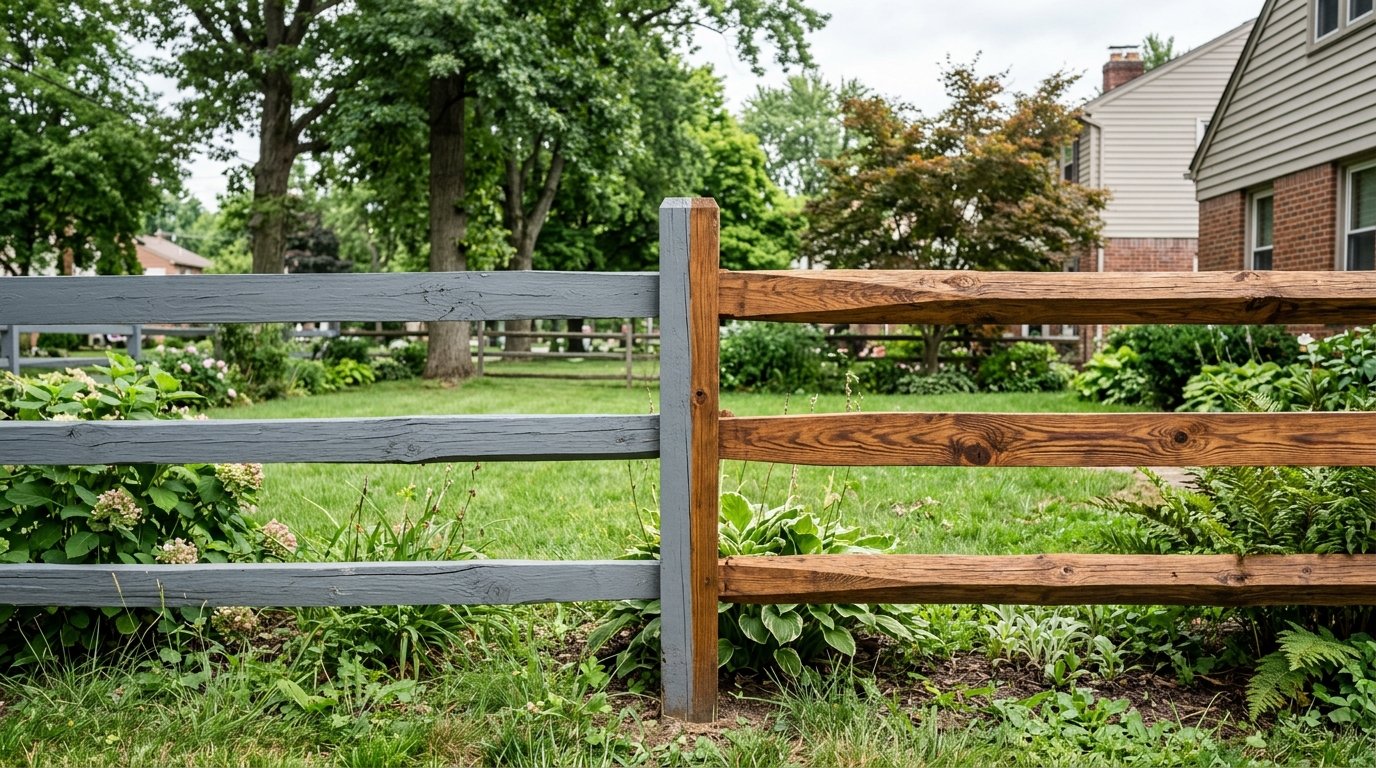
Paint and stain can both protect a wood fence, but they do not age the same way. Paint gives you an opaque, uniform finish and broad color freedom. Stain works more closely with the wood and can leave some or all of the grain visible, depending on the product.
For Cleveland homeowners comparing paint vs stain fence options, stain is often the more forgiving choice for exposed wood. Even Benjamin Moore recommends exterior stain rather than paint for wood fencing, although both systems can work when the fence is prepared correctly.
That does not mean stain automatically wins every project. Your fence’s age, wood species, current finish, desired color, maintenance plans, and exposure to Northeast Ohio weather should decide the finish.
Is It Better to Paint or Stain a Wood Fence?
For many wood fences, stain is the simpler long-term system. Paint makes more sense when full color coverage is the priority.
The biggest difference is how each finish behaves.
Paint creates an opaque coating over the surface. It can hide discoloration and produce a smooth, consistent color.
Stain can penetrate the wood or form a thinner pigmented coating, depending on the opacity and formula. Transparent and semi-transparent options keep more grain visible. Solid stain covers most of the grain while keeping some wood texture.
Sherwin-Williams notes that exterior paint can hold moisture more than stain in some applications, while stain allows more moisture movement through wood. Benjamin Moore also specifically recommends stain for wood fences.
If your main goal is protecting and refreshing an existing wood fence while keeping a natural look, Knapp Painting’s deck and fence staining service is the closest match.
Painted Fence vs. Stained Fence: What Is the Real Difference?
A painted fence vs stained fence comparison is easier when you stop thinking only about color.
Paint is more opaque. Once properly primed and coated, you see the paint color rather than the wood grain.
Stain gives you several levels of coverage.
Transparent or Translucent Stain
A transparent fence stain leaves the wood grain highly visible. This suits newer or attractive wood where the natural appearance is part of the design.
Semi-Transparent Stain
Semi-transparent stain adds stronger color while allowing most of the wood’s grain and texture to remain visible.
Benjamin Moore describes its semi-transparent Woodluxe products in much the same way: most of the grain remains visible while color is added.
Solid Color Stain
A solid color fence stain is much closer to paint in appearance.
It covers most visual imperfections while still allowing the wood’s texture to show. Modern solid stains also come in far more colors than many homeowners expect. Benjamin Moore’s current Woodluxe line, for example, offers solid stain in thousands of colors.
That makes solid stain an option worth considering when you like the clean appearance of paint but want a coating designed specifically around exterior wood.
Which Lasts Longer: Fence Paint or Stain?
There is no honest universal number.
Claims such as “paint lasts 3–5 years while stain lasts 2–4 years” look useful, but they ignore the product, wood, exposure, preparation, opacity, and maintenance.
Current manufacturer data shows why those blanket numbers can be misleading.
Sherwin-Williams advertises a five-year guarantee on some WoodScapes semi-transparent stains. BEHR’s current Premium semi-transparent product lists protection of up to eight years on fences and siding, while its solid waterproofing stain lists much longer coverage under its product warranty when properly applied.
Those are manufacturer claims, not promises that every Cleveland fence will reach the same lifespan.
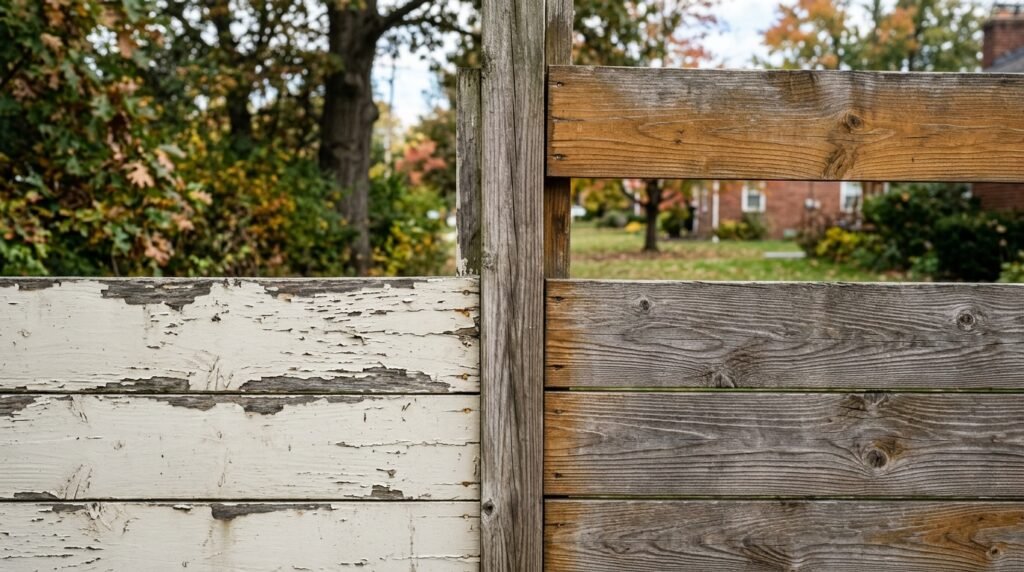
Paint can also last for years when the surface is dry, stable, properly primed, and maintained. The real difference often appears when the coating begins to age.
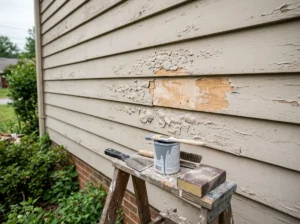
Paint may crack, flake, or peel when moisture or wood movement affects the film. Exterior wood expands and contracts as temperature and humidity change, and Sherwin-Williams identifies that movement as one cause of coating failure.
Stain often gives homeowners an easier maintenance path, especially with penetrating or lower-film products.
How Does Cleveland Weather Affect a Wood Fence?
Cleveland gives exterior wood a lot to deal with.
National Weather Service climate normals show precipitation throughout the year, summer highs into the 80s, and winter periods where normal daytime highs and nighttime lows sit on opposite sides of freezing. Cleveland’s January normal high is about 35.8°F, while its normal low is about 22.3°F.
That temperature pattern creates repeated opportunities for outdoor wood to move between freezing and thawing conditions. This is an inference from the climate normals, but it is one reason moisture management matters on exterior wood.
Northeast Ohio also receives lake-effect snow when cold air moves across Lake Erie, adding another source of winter moisture in affected areas.
Homeowners dealing with peeling, mildew, fading, or other exterior coating problems can also see our guide to common house paint problems in Cleveland for a wider look at how local weather affects finishes.
What About “Salt Damage” Near Lake Erie?
Lake Erie does not create ocean-style salt air.
It is a freshwater lake.
So describing Lakewood, Bay Village, Bratenahl, Eastlake, or other lakeshore communities as having salty marine air would be inaccurate.
There is one local salt issue worth thinking about: road deicing.
Ohio uses sodium chloride for winter road treatment, so fences close to heavily treated roads may receive road grime or salty splash from passing traffic and snow removal. ODOT maintains annual rock-salt contracts for winter operations and specifically recognizes deicing spray exposure in its infrastructure guidance.
That is different from coastal salt air.
For most backyard fences, rain, snow, ground moisture, shade, mildew, sunlight, and wood movement are more relevant concerns.
Which Finish Needs More Preparation?
Usually, paint is less forgiving of poor preparation.
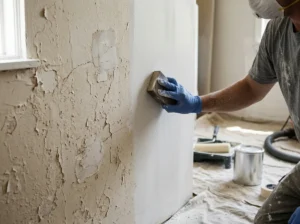
A painted wood fence commonly needs thorough cleaning, removal of loose coating, drying, sanding where needed, primer, and finish coats.
Sherwin-Williams’ current fence-painting procedure calls for a clean, fully dry surface and recommends exterior wood primer before painting. It also specifies two finish coats for new and bare wood in its example system.
Stain still needs proper preparation.
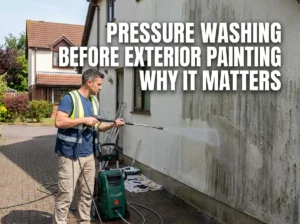
Dirty, gray, moldy, or previously coated wood cannot simply be covered with fresh stain. BEHR’s fence guidance calls for cleaning and, where needed, stripping old coatings before application.
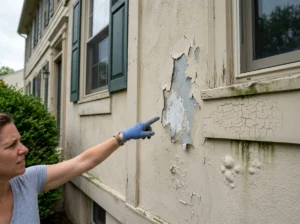
If your fence has an old failing finish, the preparation may decide whether painting or staining makes financial sense.
The same principle applies across exterior work. Our guide on how to properly prep an exterior before painting explains why cleaning and coating removal matter before a new finish goes on.
Is Paint or Stain Easier to Maintain?
Stain often has the advantage when future maintenance matters.
The exact workload depends on the product.
When paint begins peeling, repainting may require scraping, sanding, spot priming, and feathering old coating edges before the new coat can go on.
Some exterior stains are designed to reduce film build, which can lower the risk of cracking and peeling. Benjamin Moore describes its Woodluxe solid stain as minimizing film build and making recoating easier.
That can make stain attractive on long runs of privacy fencing where maintenance becomes a large job.
However, a transparent stain may need attention sooner than a more heavily pigmented system. More pigment generally changes both the appearance and the way the coating protects the wood.
Do not choose only by the first application.
Think about the second and third maintenance cycle too.
Does Paint Give You More Color Choices?
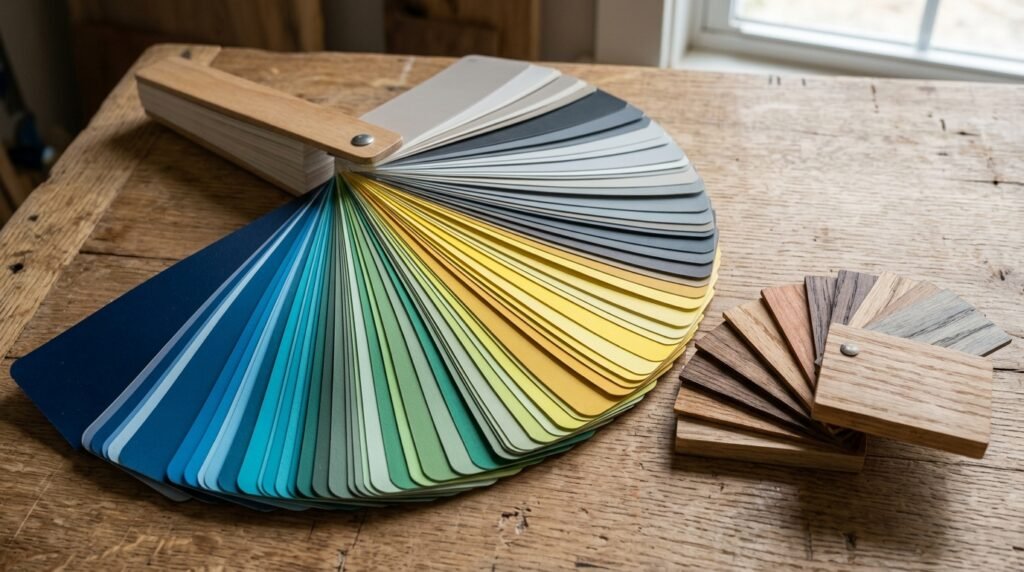
Traditionally, yes—but the gap is much smaller with modern solid stains.
Paint still gives homeowners great freedom when they want a specific opaque color, especially white, black, gray, green, or a shade coordinated with the home.
But solid stains are no longer limited to brown and cedar tones.
Sherwin-Williams offers solid and semi-transparent exterior wood stain colors, while Benjamin Moore’s Woodluxe solid line is available in thousands of colors.
If natural wood is the goal, stain wins easily.
If you want a fully opaque architectural look, compare exterior paint with solid stain before choosing.
What Is the Best Stain for a Wood Fence?
There is no single best stain for wood fence projects.
Start with how much wood grain you want visible.
Choose transparent or translucent stain when the natural grain is a major part of the look.
Choose semi-transparent when you want color without hiding most of the wood.
Choose solid stain when the fence has visual imperfections or you want an opaque-looking finish without automatically moving to paint.
Product lines worth comparing include Sherwin-Williams WoodScapes and Benjamin Moore Woodluxe. Both currently offer multiple exterior stain opacities suitable for wood surfaces.
BEHR also offers dedicated solid and semi-transparent exterior wood stains for fences.
The product should match the wood and the coating already on it.
What Is the Best Paint for a Wood Fence?
If you choose paint, use an exterior system approved for wood.
Sherwin-Williams currently recommends Exterior Latex Wood Primer followed by Emerald Exterior Acrylic Latex in its own wood-fence painting guide.
Benjamin Moore recommends appropriate exterior wood primer on bare wood and high-quality exterior paint when painting fences.
Do not skip straight to a topcoat because the can says “paint and primer.”
Bare wood, tannin-rich species, repairs, and old coatings can require different preparation.
Cedar and redwood in particular can contain tannins that may discolor a finish. Benjamin Moore specifically recommends stain-blocking exterior primer for tannin-rich woods such as cedar and redwood.
Cedar vs. Pressure-Treated Fence: Does Wood Type Matter?
Yes.
Cedar is often chosen because homeowners like its natural grain and color. A transparent or semi-transparent stain can keep those characteristics visible.
Pressure-treated pine is often chosen more for function and value. It can also be stained or painted, but new pressure-treated lumber needs to be dry enough for the selected coating before work begins.
Do not apply a finish simply because the fence was installed last week.
Sherwin-Williams notes that treated wood can be stained but should first be properly prepared, including identifying previous treatment where relevant.
Older fences are different again. Gray weathering, mildew, old paint, and previous stain can change what preparation is required.
Can You Paint Over a Stained Fence?
Yes, in many cases.
But can you paint over stained fence surfaces without preparation? Usually not.
Sherwin-Williams says stained wood can be painted, but the surface should first be cleaned, lightly sanded or deglossed, and prepared so the old stain does not interfere with the new paint. Oil-based and water-based stains may require different preparation.
You may also need primer, especially when moving from a dark stain to a light paint color or when tannins could bleed through.
The old finish needs to be identified before choosing the new system.
Can You Stain Over a Painted Fence?
This is usually more complicated.
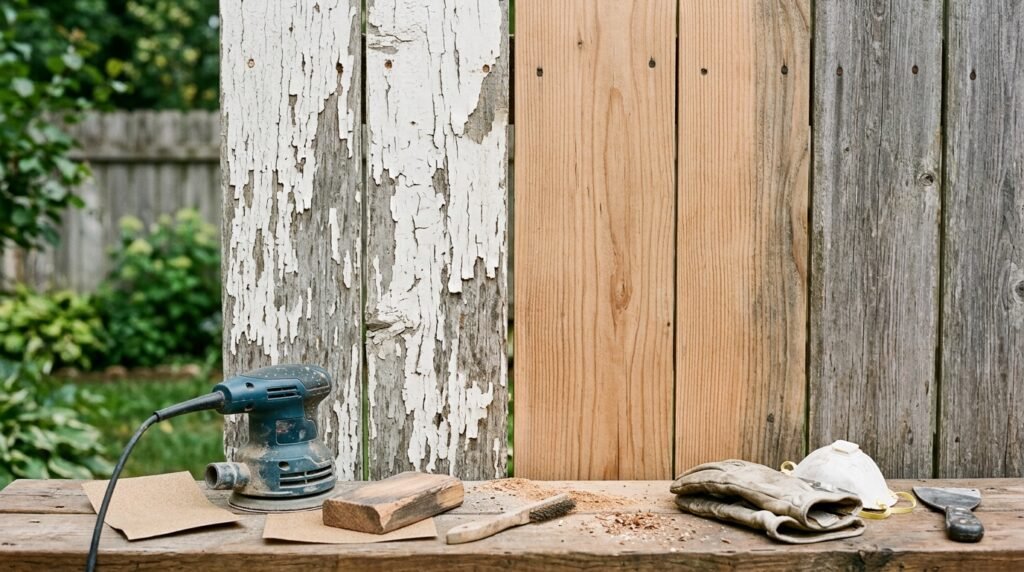
Traditional penetrating stain needs access to the wood. Existing paint blocks that penetration.
Changing a painted fence back to a transparent or semi-transparent wood appearance can require extensive coating removal.
Sherwin-Williams does note that certain solid-stain approaches may be possible over prepared painted surfaces, but that is very different from restoring the natural wood-grain appearance.
If the fence is already painted and in reasonable shape, repainting may therefore be the practical maintenance path.
What Is the Best Time to Paint or Stain a Fence in Ohio?
Dry wood and a suitable forecast matter more than the month.
Late spring, summer, and early fall generally provide more workable exterior-coating days around Cleveland than winter.
However, each product has its own temperature, moisture, and rain requirements.
Do not assume a hot July afternoon is automatically better than a mild September day. Direct sun can heat wood considerably, while humid or damp conditions can slow drying.
The weather-planning principles are similar to other exterior projects. Our guide to the best time to paint a house exterior in Cleveland covers temperature, rain, dew, and seasonal timing in more detail.
Do HOA Rules Decide Whether You Can Paint or Stain?
Sometimes—but do not assume the rules based only on the suburb.
It would be misleading to label Beachwood, Gates Mills, Hunting Valley, Shaker Heights, or University Heights as having one universal fence-color rule.
An HOA restriction normally belongs to the specific association or deed restrictions affecting the property, not every home in a city.
If your property is governed by an HOA, review its current architectural guidelines before changing:
- Fence color
- Finish
- Opacity
- Visible street-facing surfaces
- Fence design
- Replacement materials
Get approval where required before buying product.
A beautiful finish is not useful if the association requires you to change it.
Fence Stain Cost vs. Paint Cost in Cleveland
There is not enough reliable evidence to say that fence paint always costs $1–$2 per square foot while stain always costs $1–$3.
Preparation can completely reverse that comparison.
A current national HomeAdvisor guide published in June 2026 places professional fence painting or staining together at roughly $1–$3 per square foot, or about $3–$14 per linear foot, with substantial variation by fence type and condition. Those are national planning figures, not Knapp Painting’s Cleveland prices.
For fence painting cost Cleveland and fence staining cost Cleveland projects, the biggest variables are usually:
- Fence length and height
- One side or both sides
- Picket, privacy, or shadow-box design
- Existing coating
- Peeling or weathered wood
- Cleaning
- Sanding or stripping
- Repairs
- Primer
- Number of coats
- Paint or stain selected
- Gates and detailed areas
- Access around landscaping
A heavily peeling painted fence may cost more to prepare than a clean fence needing fresh stain.
That is why square-foot averages should be used for rough planning, not as a quote.
Paint vs. Stain Fence: Which Should Cleveland Homeowners Choose?
For most sound wood fences, stain is usually my first choice.
It works naturally with exterior wood, gives you several opacity levels, and can make future maintenance easier. Benjamin Moore’s own fence guidance also favors exterior stain for wood fencing.
Choose stain when:
- You want to see the wood grain
- The fence is cedar or attractive natural wood
- Easier future recoating matters
- You want transparent or semi-transparent color
- You like the look of solid stain
Choose paint when:
- You want a specific opaque color
- The fence is already painted
- You do not care about seeing the grain
- The existing coating system makes repainting the sensible option
And consider solid stain when you want the middle ground: strong color coverage without automatically moving to a traditional paint system.
For Cleveland fences already showing fading, weathering, mildew, or uneven coating, professional inspection is worth doing before selecting the finish. You can review Knapp Painting’s residential painting services to see how exterior wood work fits within the wider residential service range.
Frequently Asked Questions
Does fence stain last longer than paint?
Not always. Lifespan depends on the product, opacity, preparation, weather exposure, and wood condition. Some modern solid and semi-transparent stains carry lengthy manufacturer guarantees, so generic lifespan comparisons can be misleading.
Does stain peel like paint?
Some stains build less film and are specifically designed to reduce cracking and peeling, but product behavior varies. Solid stain behaves differently from a penetrating translucent stain.
Is solid stain better than paint for a fence?
It can be. Solid stain gives strong color coverage while keeping more wood texture visible. It is often worth comparing with paint before deciding.
Can you paint over an old stained fence?
Yes, after proper cleaning and preparation. Sanding or deglossing and primer may be needed depending on the existing stain and new paint.
Can you stain a pressure-treated fence?
Yes. The wood needs to be clean and ready to accept the stain. New pressure-treated wood should not be coated while it still holds too much moisture for the selected product.
Should I stain cedar or paint it?
Stain is often a good choice when you want to preserve cedar’s natural appearance. If you paint cedar, use a coating system that accounts for possible tannin bleed.
Does Lake Erie salt air damage Cleveland fences?
No ocean-style salt air comes from Lake Erie because it is freshwater. Fences beside roads can still receive winter deicing salt and road spray, which is a different issue.
How often should I inspect my fence finish?
Check it at least as part of your regular exterior maintenance. Look for fading, exposed wood, mildew, cracking, peeling, and water absorption rather than waiting for a fixed anniversary.
Choose the Finish Based on the Fence, Not a Generic Rule
The paint vs stain fence decision does not come down to one product lasting a certain number of years longer than another.
For many Cleveland wood fences, stain offers the better balance of appearance, wood-friendly performance, and manageable future maintenance. Paint still makes sense when homeowners want a fully opaque color or when an existing painted fence is already in good condition.
What matters most is starting with dry, sound wood and choosing a coating that matches the existing surface.
If your fence has turned gray, faded, lost its finish, or needs more prep than a quick weekend project, contact Knapp Painting for an assessment and estimate before deciding between paint and stain.