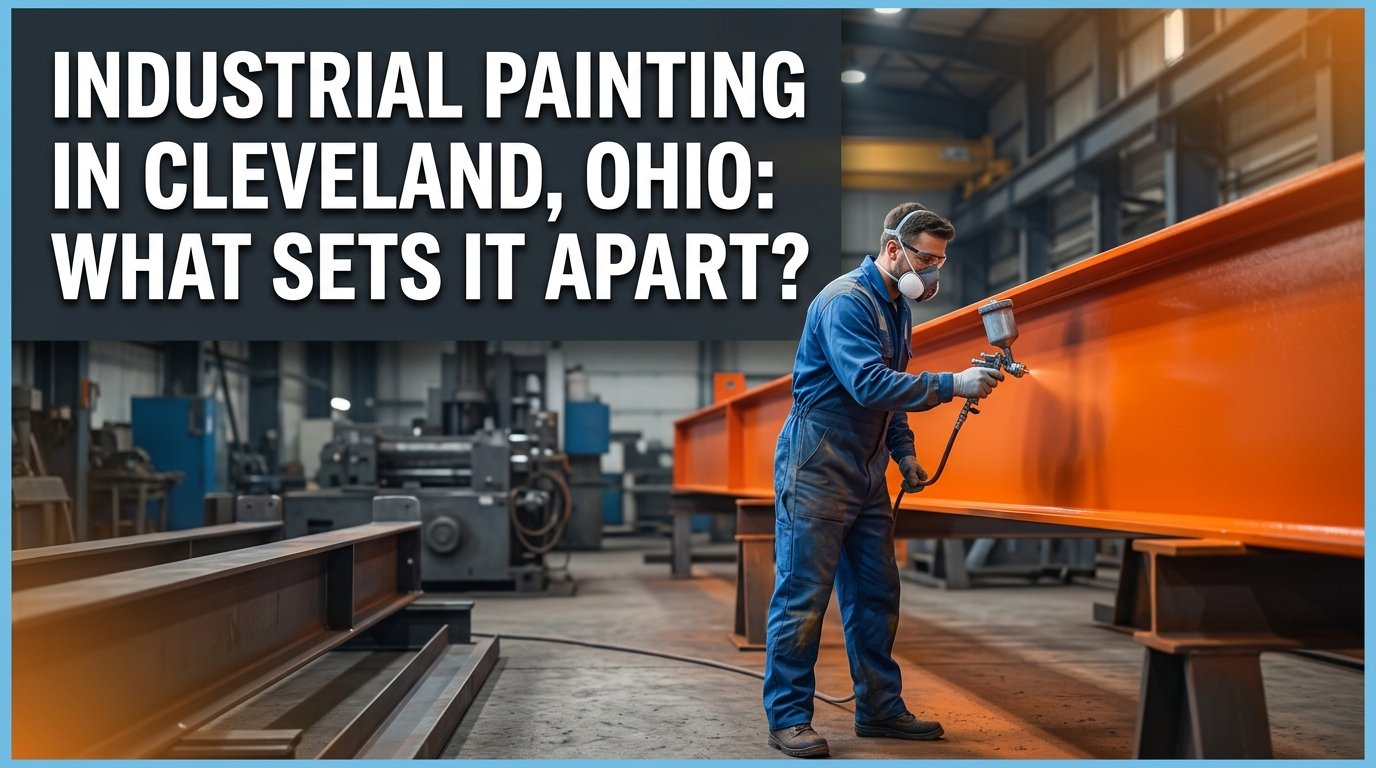
Your facility’s equipment is starting to show rust. The structural steel beams holding up your warehouse are getting surface corrosion. The floor coating is worn where forklifts run constantly. You’re wondering: Do we really need industrial painting? When should we do this? How much will it disrupt operations? How much is this going to cost?
If you’re managing a manufacturing facility, warehouse, or any industrial space in Cleveland, these are the right questions. Industrial painting isn’t optional cosmetic work. It’s maintenance that prevents costly equipment failure, keeps your facility safe, and protects your operational uptime.
This guide explains what industrial painting actually is, why it’s different from commercial painting, what Cleveland’s environment means for your facility, and how to plan it smartly without destroying your production schedule.
What Industrial Painting Actually Is (And Why It’s Not Regular Painting)
Industrial painting is protective coatings on factories, warehouses, heavy equipment, steel structures, and machinery. That’s the simple definition. But it’s misleading because it sounds simple. It’s not. Regular painting makes things look good. Industrial painting prevents your facility from falling apart.
Your factory’s steel beams are under constant stress. Temperature changes. Humidity (especially in Cleveland near the lake). Corrosion risk. Without protective coating, steel oxidizes. Rust spreads. Structural integrity gets compromised.
Your machinery needs coating because machines vibrate, heat up, and get exposed to chemicals, oils, coolants. Standard paint peels off in months. Industrial-grade coating stays put for years. Your warehouse floors take abuse. Forklifts. Chemical spills. Constant impact. Regular paint fails immediately. Industrial epoxy withstands heavy traffic.
That’s the difference. Industrial painting is protection against operational failure. It’s not about looks. It’s about keeping your facility running safely and efficiently.
Why Cleveland’s Environment Makes Industrial Painting Critical
Cleveland isn’t a gentle environment for industrial facilities. Lake proximity means constant moisture in the air. Humidity accelerates corrosion. Equipment that’s fine in Arizona rusts in months in Cleveland. Winter brings freeze-thaw cycles that stress metal. Steel contracts and expands. Coatings that aren’t designed for this crack and fail.
Cleveland’s industrial legacy means older facilities. Older equipment. Older structures. All of it needs protection against elements that have been attacking it for decades. Salt air affects metal. Wind carries moisture into buildings. Rain finds every crack and gap. Professional industrial painters in Cleveland understand this. They know Cleveland’s specific corrosion environment. They choose coatings and prep methods designed for this climate. They understand the urgency.
Facilities that try to get by with cheap or improper coatings fail faster here. Facilities that invest in proper industrial painting protect themselves long-term.
Industrial Painting vs Commercial Painting: The Actual Difference
People sometimes use “commercial” and “industrial” interchangeably. They shouldn’t.
Commercial painting: Office buildings, retail spaces, storefronts. Focus on appearance and professional environment. Paint for aesthetics.
Industrial painting: Factories, warehouses, heavy equipment, steel structures. Focus on protection and durability. Paint for survival.
The practical differences:
Commercial painters use standard paints. Acrylic latex. Looks good. Works for buildings.
Industrial painters use specialized coatings. Epoxy. Polyurethane. Amine-cured. Coal-tar. Each designed for specific environments. Some resist chemicals. Some resist extreme temperatures. Some resist corrosion specifically.
Commercial painters prep surfaces with cleaning and sanding. Industrial painters might use sandblasting, grinding, or chemical stripping to properly prep steel. Different surfaces need different prep. Commercial painters work around business hours to minimize disruption.
Industrial painters schedule work to minimize production downtime. Might work nights. Might work weekends. Might work in phases so equipment can keep operating. Commercial painters measure success by appearance. Industrial painters measure success by protection. How long before failure? How much maintenance does it prevent? Different worlds. Different expertise.
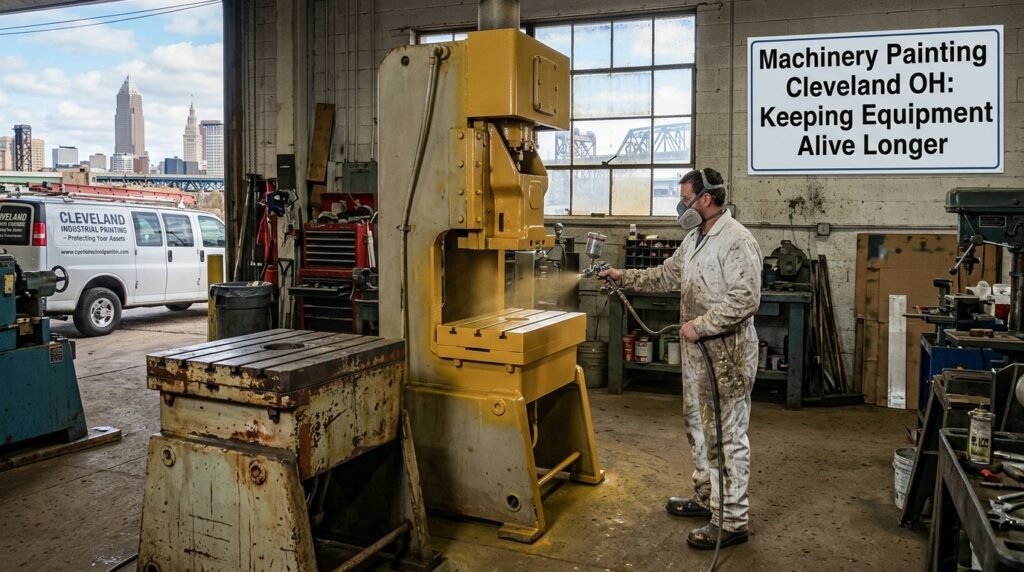
Machinery Painting Cleveland OH: Keeping Equipment Alive Longer
Machinery is expensive. Equipment failure costs money. Downtime costs money. Repairs cost money. Proper machinery coating extends equipment life significantly.
Why machinery needs specialized coating:
Vibration from operation stresses paint. Regular paint can’t handle constant movement. Heat from machinery operation affects paint adhesion. Industrial coatings handle temperature swings. Chemical exposure. Coolants, oils, solvents. These degrade standard paint. Industrial coatings resist them. Moisture in manufacturing environments. Humidity causes rust on bare metal. Coating prevents it.
Proper machinery painting reduces:
- Unscheduled equipment maintenance
- Emergency repairs
- Production downtime
- Equipment replacement costs
This isn’t cosmetic. This is operational protection.
Structural Steel Painting: Protecting Your Building’s Skeleton
Your facility’s steel beams, columns, and frames are the skeleton. If they fail, everything fails. Steel needs protection because exposed steel rusts. Rust weakens the metal. Weakened metal eventually fails.
What structural steel coating does:
- Seals the metal surface from moisture and oxygen. Rust needs both to start. Block them, rust stops.
- Extends the lifespan of steel by decades. A beam that would rust and weaken in 10 years, with proper coating, lasts 30+ years.
- Maintains building safety standards. Building codes require protected steel in many cases. Proper coating ensures compliance.
- Reduces maintenance costs. Coated steel needs minimal maintenance. Uncoated steel needs constant monitoring and repair.
Professional structural steel painting involves:
- Inspection of existing conditions. Is there existing rust? How bad? How much removal needed?
- Prep work. Removing loose rust and old coating. Getting down to clean metal or stable base.
- Priming. Creating foundation for final coat.
- Final coating. Multiple coats sometimes depending on environment.
This takes time and expertise. You’re not just slapping paint on. You’re protecting critical infrastructure.
Warehouse Painting Service: Safety and Efficiency
Warehouse painting isn’t just about looks. It’s about operation.
What warehouse painting includes:
- Floor coating. Usually epoxy. Handles forklift traffic, chemical spills, heavy impact. Lasts years instead of months.
- Safety line striping. Clear markings for traffic patterns, hazard zones, emergency exits. Critical for safety and compliance.
- Wall coating. Protects from impact and moisture. Makes cleaning easier. Improves visibility and safety.
- Ceiling painting. Improves lighting by reflecting light. Creates cleaner environment.
Why this matters:
- Durable floor coating reduces accidents. Slippery floors from spills or wear cause injuries. Proper coating prevents slipping.
- Clear line striping prevents accidents. Workers know where to go. Forklifts know traffic patterns.
- Clean walls and ceilings improve morale. Workers feel like the facility is maintained. Productivity often improves.
- Safety compliance. OSHA has standards. Proper warehouse painting helps meet them.
- A well-maintained warehouse runs better and safer. That’s worth the cost.
Timeline and Downtime: The Real Concern
Facility managers worry about downtime. Production stops while painting happens, you’re losing money.
Real timeline:
- Small machinery coating: 1-3 days. Can often be done overnight or weekends.
- Structural steel in a facility: Several days to weeks depending on size. Usually scheduled in phases to keep operations going.
- Warehouse floor coating: 1-7 days depending on size. Usually done when facility is closed or not using that area.
How professional industrial painters minimize disruption:
- Phased scheduling. Paint one section while others operate normally.
- Off-hours work. Nights, weekends, shifts when you’re not operating.
- Equipment relocation. Sometimes moving machinery temporarily to access areas needing coating.
- Clear planning. Know exactly when work happens, how long each phase takes, when disruption occurs.
- The key is planning ahead. Don’t surprise your facility with downtime. Plan it strategically. Professional industrial painters help you plan.
Cost: What Actually Affects Industrial Painting Price
Major factors:
- Surface type. Steel needs different prep than concrete. Machinery needs different approach than warehouse floors.
- Size of area. Bigger facility, more material, more labor, more cost.
- Prep work required. Is existing coating in good shape? Does it need removal? Does steel need sandblasting? Prep is often 50% of the cost and time.
- Coating material. Standard coating costs less. Specialized coating (chemical-resistant, fire-resistant) costs more. Choose based on your needs.
- Safety requirements. Working at height? Confined spaces? This affects cost.
- Timeline and disruption. Standard timeline is cheaper. Rush work or phased work to minimize downtime costs more.
Real numbers are hard without specifics, but:
- Small machinery project: $2,000-$5,000
- Warehouse floor coating: $5,000-$20,000+ depending on size
- Structural steel in facility: $10,000-$50,000+ depending on scope
Get detailed estimates. Know what’s included. Ask about materials, timeline, safety measures, and warranty.
Why Professional Industrial Painters Matter
You could hire general contractors. You could try to find cheaper options. But industrial painting has specific requirements.
Professional industrial painters:
- Know materials. Know which coating works for which environment. Know Cleveland’s corrosion challenges.
- Understand safety. Industrial work is hazardous. Proper crews follow strict safety protocols.
- Have equipment. Sandblasting equipment, spray rigs, scaffolding, safety equipment. You don’t.
- Understand timelines. Know how to minimize disruption while doing thorough work.
- Stand behind work. Warranty on materials and application. If coating fails early, they fix it.
- Cutting corners on industrial painting doesn’t save money. It costs money when coating fails in 2 years instead of lasting 10.
Frequently Asked Questions
What is industrial painting in Cleveland Ohio?
Industrial painting in Cleveland applies protective coatings to factories, warehouses, machinery, steel structures, and equipment. It focuses on protecting against corrosion, chemical damage, and wear not just appearance.
How is industrial painting different from commercial painting?
Commercial painting is for appearance in offices and retail. Industrial painting uses specialized coatings designed for extreme conditions, chemical exposure, vibration, and heavy use. Different expertise, different materials, different focus.
Why does Cleveland’s environment matter for industrial painting?
Cleveland’s lake proximity, humidity, freeze-thaw cycles, and salt air accelerate corrosion. Industrial coatings must be designed to handle these specific conditions. Generic coatings fail faster here.
What does machinery painting actually do?
It protects equipment from vibration, heat, chemicals, and moisture. Extends equipment life, reduces maintenance, prevents unexpected failures, and minimizes production downtime.
How much does industrial painting cost?
Depends on surface type, area size, prep work needed, and materials chosen. Small projects: $2,000-$5,000. Larger facilities: $10,000-$50,000+. Get detailed estimates to understand what’s included.
How do we minimize production downtime during painting?
Professional industrial painters schedule work in phases, work during off-hours, or move equipment temporarily. Planning ahead lets you schedule around production without emergency disruptions.
How do I choose industrial painters in Cleveland?
Look for experience with similar facilities, safety record, proper insurance, detailed estimates, and understanding of Cleveland’s environment. Ask about warranty. Check references from other facilities.
Bottom line: Industrial painting in Cleveland protects your facility, extends equipment life, reduces maintenance costs, and ensures safety compliance. It’s not optional maintenance for facilities that want long-term reliability. Professional industrial painters understand Cleveland’s harsh environment and know how to protect your investment properly. Plan ahead, hire professionals, protect your facility.