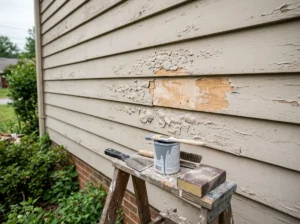
Your home’s paint is peeling. Not everywhere. Just some spots. Mostly on the north side where it stays shaded and wet.
You’re thinking: “Do I really need to repaint the whole house? Can’t I just wait until it’s worse? How much is this going to cost?“
These are the questions every homeowner asks. And they’re fair. Exterior painting is expensive. It’s not fun to think about spending that money.
But here’s what you need to know: If you wait until it’s really bad, the actual damage underneath and the cost to fix it will be way worse. This guide walks you through why exterior painting matters in Cleveland specifically, what’s actually involved, what it costs, and how to make the smart decision about timing.
Why Your Home’s Exterior Paint Actually Matters (Beyond Looks)
Most homeowners think paint is cosmetic. It’s just looks, right?
Wrong. Paint is your home’s first defense against weather.
Cleveland weather is rough on houses. Winter freeze-thaw cycles. Spring and fall rain. Summer humidity. Lake effect snow and moisture. Wind. Temperature swings that make materials expand and contract.
Your exterior paint is what stands between all that and your actual siding, wood trim, and structure.
Without good paint:
Water gets into small cracks and gaps. Sits behind the paint. Finds its way into wood. Causes rot. Causes structural damage. Causes expensive problems.
UV rays fade and degrade surfaces. Plastic trim becomes brittle. Wood dries out and cracks. Colors fade to gray and blotchy.
Mold and mildew grow in damp areas because there’s no protective barrier.
Salt air (especially near the lake) eats into paint and corrodes metal.
With good paint:
You’ve got protection. Water bounces off instead of soaking in. UV damage slows down. Mold has nowhere to grow. Your siding and structure stay intact longer.
Paint is maintenance. It’s the cheap way to prevent expensive damage.
Cleveland Weather Makes Exterior Painting Different
If you lived in Arizona, you’d paint every 10-12 years.
You live in Cleveland. It’s different.
Cleveland’s challenges:
Winter freeze-thaw cycles. Water gets into tiny cracks in paint. Freezes. Expands. Cracks the paint more. Thaws. Water gets deeper. Next winter, worse. This cycle repeats until the paint completely fails.
Humidity and moisture. Lake proximity means constant moisture in the air. Paint that can’t handle humidity fails faster.
Salt and magnesium chloride from road treatment. Corrodes metal. Eats paint.
Strong spring and fall storms. Wind damage. Rain getting into crevices.
Summer sun bounces off the lake and hits your house harder if you’re near the lake. UV damage accelerates.
Professional exterior painters in Cleveland understand this. They know paint that works in Texas won’t work here. They know timing matters. They know prep has to handle moisture.
Real Signs Your Home Actually Needs Exterior Painting
Most homeowners wait until paint is actively peeling in large areas. By then, water damage is already happening behind the paint.
Better to catch it earlier.
What to actually look for:
Fading or discoloration. Paint looks tired, not glossy. Blotchy. Like it’s been five years since the last paint job. Probably has been. Paint’s done protecting.
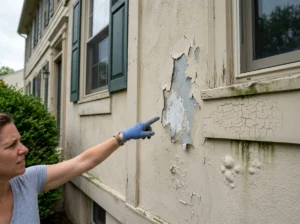
Peeling or bubbling. Moisture got under the paint. It’s starting to fail. This spreads. Today it’s one small bubble. Six months from now, it’s a section.
Exposed wood or siding. Paint wore completely away. Now bare wood is exposed to weather. This deteriorates fast.
Cracks in paint. Small cracks let water in. Small problem becomes big problem.
Gaps in caulk. Around windows, doors, where trim meets siding. If caulk is cracked or missing, water gets in during rain. Sits behind the paint.
Mold or mildew spots. Green or dark spots, especially on north-facing areas or under roof overhangs. Means moisture is trapped. Paint’s not providing protection.
Soft or damaged wood. Touch your trim. Does it feel spongy? Is it splitting? Paint failed, water got in, wood’s rotting.
If you see these, it’s time. Not “eventually.” Time.
What Actually Happens When You Hire an Exterior Painter
People think: clean house, paint house, done.
Real process is more involved. That’s why it matters.
Inspection:
Painter looks at everything. Current paint condition. Underlying damage. Water issues. Problem areas. Understands what they’re working with.
Pressure washing:
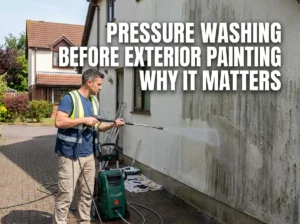
Gets dirt, mold, algae, loose paint off. Not just for appearance. Loose paint needs to come off before new paint goes on. Mold prevents paint adhesion.
Scraping:
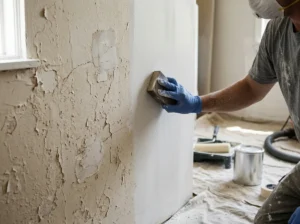
Removes peeling or loose paint. This is tedious. Takes time. But you can’t paint over loose paint.
Sanding:
Rough spots need smoothing. Bare wood needs sanding so paint adheres.
Caulking:
Gaps around windows, doors, trim filled and sealed. Stops water from getting in.
Priming:
Bare spots get primer. Creates base for paint to stick to. Some painters skip this to save time. Good painters don’t.
Painting:
Usually two coats. First coat. Drying time. Second coat. This is the visible part everyone sees, but it’s only maybe 20% of the actual work.
All together, this takes several days to a week depending on house size and condition.
This is why you hire professionals. They know the process. They do it right. They don’t rush and skip steps.
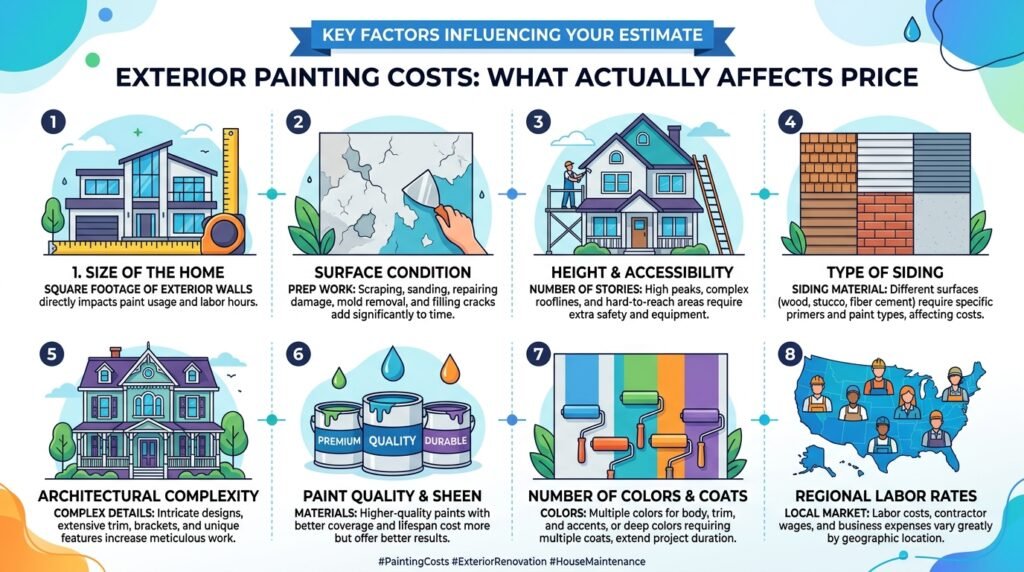
Exterior Painting Costs: What Actually Affects Price
People ask: “How much does this cost?”
Real answer: It depends on a bunch of stuff.
House size: Bigger house = more square footage = more paint = more labor = more cost. Two-story homes cost more than single-story because they need scaffolding or lifts for safety.
Condition: A house with mostly sound paint costs less than one with peeling paint everywhere requiring scraping. Damage underneath requires repair before painting.
Siding type: Wood costs more to prep than vinyl. Stucco has different requirements. Each material needs different approach.
Paint quality: Budget paint costs less but fails faster in Cleveland weather. Quality paint holds up longer. Better investment.
Trim and detail: How much trim? How complex? Intricate detail work takes longer.
Access: House on a hill harder to paint than flat lot. That affects cost.
Real numbers:
Small single-story house: $1,500-$3,000
Average two-story: $3,000-$6,000
Larger or more complex: $6,000+
Get written estimates from multiple painters. You want itemized quotes that show what’s included (prep, primer, paint, caulk, etc.).
Paint Selection for Cleveland’s Weather
Not all paint is equal.
You need paint designed for cold, humidity, and moisture resistance. Paint that handles freeze-thaw cycles without cracking.
Good exterior paint for Cleveland:
Has mildew resistance built-in. Handles moisture.
Resists UV damage. Won’t fade as fast.
Flexible. Expands and contracts with temperature swings without cracking.
Quality primer underneath. Not all primers are the same.
Professional painters know which brands perform in Cleveland conditions. They don’t use whatever’s on sale.
Cheap paint might seem like savings upfront. But if it fails in 3 years instead of 7, you’ve spent more on labor twice.
Timing: When to Schedule Exterior Painting in Cleveland
Best time: Late May through September. Temperatures are stable. Paint cures properly.
Why timing matters: Paint needs the right temperature to cure correctly. Too cold (below 50°F usually), paint won’t adhere properly. Too hot and extreme, different issues.
Cleveland consideration: Spring rains. Don’t want to paint and have rain wash off wet paint. Painters know this. They watch forecasts.
Plan ahead: Don’t wait until August when every painter is booked. Spring planning helps you get scheduled when you want.
DIY vs Hiring a Professional: Be Honest With Yourself
DIY exterior painting is tempting. “I can save money.”
Can you? Maybe. Will you do it right? Probably not.
Why professionals are worth it:
Safety. Working at height on ladders or scaffolding. Professionals have equipment and training. You don’t.
Proper prep. Takes time and knowledge. You’ll probably skip steps.
Technique. Even paint application. Straight lines. No drips. Takes experience.
Paint selection. Knowing what works in Cleveland. Professionals know.
Speed. They do it in a week. You do it in a month of weekends.
If you still want to DIY:
Only appropriate for single-story homes with good access. Single story reachable from ground.
Budget extra time. Takes longer than you think.
Get quality materials. Don’t cheap out on paint or tools.
Do the prep properly. This is where amateurs fail.
Long-Term Thinking: Is This Investment Worth It?
Exterior painting costs money. But think long-term.
Option A: Ignore peeling paint. Skip professional painting.
Result: Water damage. Rot. Wood replacement. Structural repair. Cost: $5,000-$15,000+ in a few years.
Option B: Paint now before damage happens.
Cost: $3,000-$6,000. Prevents bigger damage. Extends siding life by years. Protects your investment.
Math is obvious. Paint now or pay way more later.
Frequently Asked Questions
How often should I repaint my home’s exterior in Cleveland?
Most homes need repainting every 5-7 years in Cleveland due to weather stress. Well-maintained homes with good paint might stretch to 7-10 years. Regular inspections help you know when it’s time.
What does professional exterior painting actually include?
Inspection, pressure washing, scraping loose paint, sanding, caulking, priming, and painting (usually two coats). Quality painters do proper prep work. That’s the difference between paint that lasts and paint that fails in a few years.
How long does an exterior painting project take?
Most projects take 5-10 days depending on house size and condition. Weather can extend this. Painters schedule around forecast.
Can exterior painting really prevent damage?
Yes. Paint protects siding and wood from moisture and UV damage. Proper paint application with good prep extends siding life and prevents water damage.
Why is professional exterior painting worth the cost?
You’re paying for experience, proper technique, safety, and durability. DIY mistakes cost more when you have to repaint. Professionals do it right the first time.
Should I paint right now or can I wait?
If you see peeling paint, faded color, or cracked caulk, don’t wait. Water damage spreads. Earlier you paint, less damage underneath. Waiting usually costs more.
How do I choose an exterior painter in Cleveland?
Get multiple estimates. Check references and reviews. Ask about Cleveland experience. Confirm they’re licensed and insured. Choose someone who explains the process, not just gives a price.
Bottom line: Exterior painting in Cleveland is maintenance that prevents expensive damage. Weather here is harsh on houses. Professional exterior painters understand Cleveland’s specific challenges and know how to protect your home for years. Paint now before damage happens. It’s cheaper than repairing water damage and rot later.