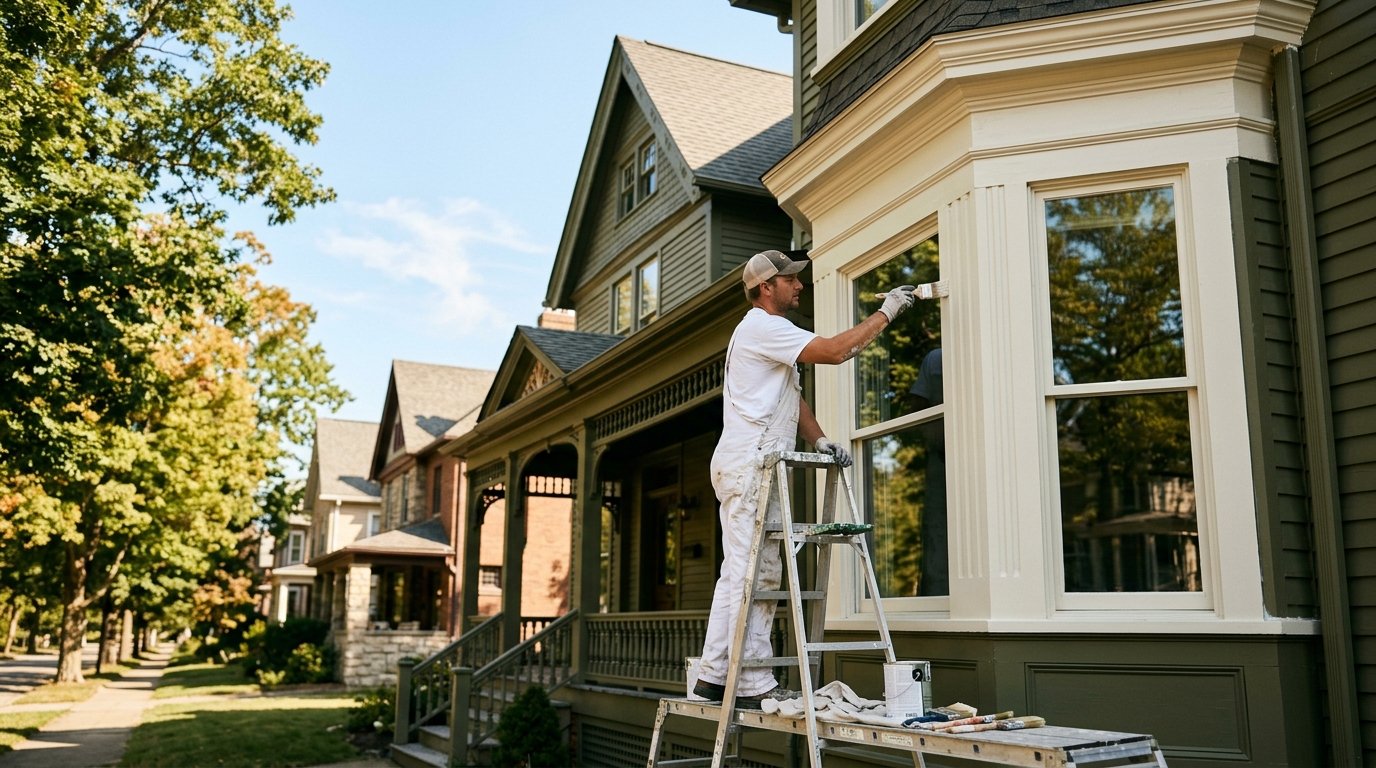
Trim gives your home shape, color, and a finished look. It also takes heavy weather damage around windows, doors, and roof edges.
This guide explains painting exterior trim on older Cleveland homes. You’ll learn about repairs, metal trim, paint sheen, color, and cost.
Good trim work starts before the first paint can opens. The painter must find soft wood, failed caulk, and loose paint first. Knapp Painting helps Cleveland homeowners plan trim repairs and painting around the actual condition of the wood, metal, and surrounding surfaces.
Why Does Exterior Trim Painting Matter on Older Homes?
Why does trim often show damage first?
Why this matters is that trim sits around many open joints. Rain can reach window edges, doors, roof lines, and corner boards. Cleveland gets rain through the year and snow during winter. Those wet seasons can expose weak caulk and bare wood.
Why can small trim problems spread?
Benefits are clear when you repair weak spots early. One open joint can let water reach wood behind the paint. Wet wood may swell, split, or turn soft over time. A small repair can prevent a much larger wall project.
Why does painted trim change the whole house?
Important because trim helps frame siding, brick, doors, and windows. Clean lines can make an older home feel cared for. Worn trim can make sound siding look old and dull. Good color choices can also keep historic details easy to see.
Which Parts Count as Exterior Trim?
What areas should a painter include?
Exterior trim includes window frames, door frames, corner boards, and roof edges. It can also include porch posts, rails, shutters, and decorative details. Your quote should name every painted area clearly.
What does fascia and soffit painting cover?
Fascia boards run along the roof edge and often support gutters. Soffits sit under the roof overhang and may contain vents. Both areas can show stains when gutters or roof parts leak. Fascia and soffit painting should begin after those leaks get fixed.
Why does window trim painting need extra care?
Windows contain many seams where wood, glass, siding, and caulk meet. Failed paint can expose wood near moving parts. Window trim painting needs careful prep that won’t seal needed gaps.
How Should Old Wood Trim Be Prepared?
How should loose paint be removed?
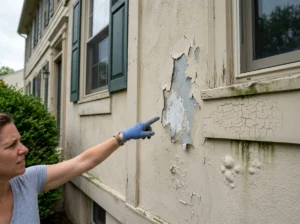
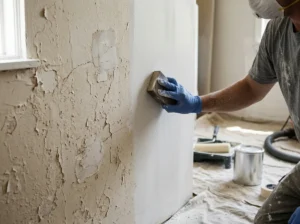
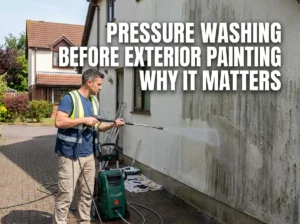
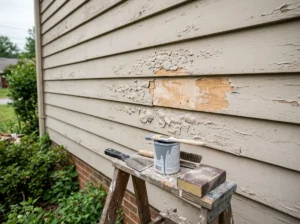
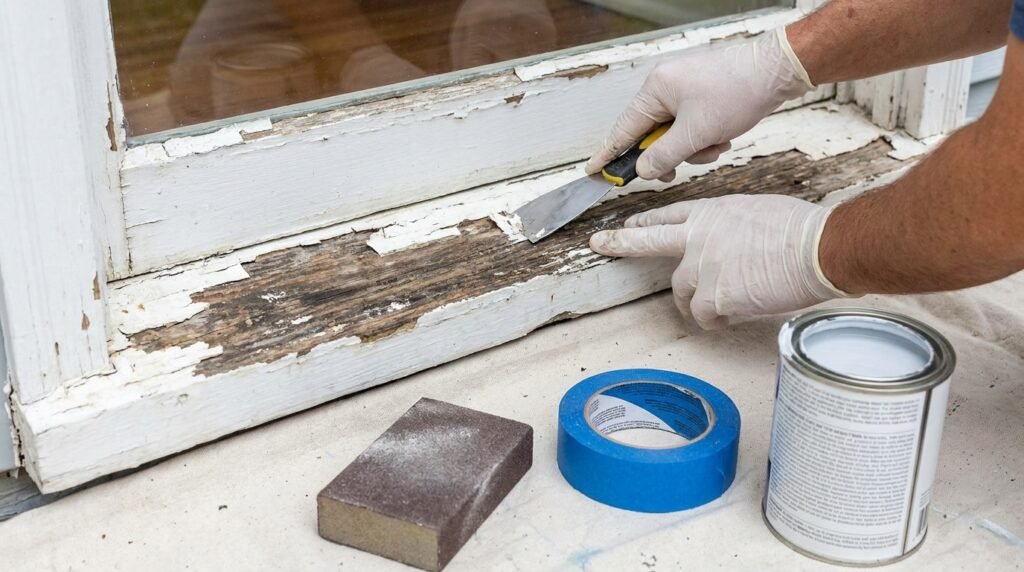
Workers should wash dirty trim before judging the old coating. Loose paint needs scraping until the remaining edge feels firm. Rough edges may need sanding so they won’t show through the finish. Sherwin-Williams advises cleaning, scraping, and sanding failed exterior coatings before repainting.
When does bare wood need primer?
Bare wood needs primer before the finish coats go on. Primer helps seal the grain and gives paint a steady base. Stained areas may need a primer that blocks marks from coming through. The painter should match the primer with the wood and finish paint.
How should gaps and failed caulk be repaired?
Old caulk should come out when it has split or pulled away. New exterior caulk can close narrow joints around sound trim. Large gaps may need wood repairs before painting old wood trim begins.
When should rotten trim be replaced?
Soft, crumbling, or deeply split wood should not receive another paint coat. Small damaged sections may allow a limited repair. Long weak areas often need full board replacement. Painting old wood trim works only when the remaining wood stays firm.
Can You Paint Wood, Aluminum, and Brick-Area Trim?
What does exterior wood painting require?
Wood needs cleaning, scraping, sanding, repairs, and primer where bare. The surface must also stay dry before coating begins. Exterior wood painting can fail when water enters from behind the board. A painter should check gutters, flashing, and nearby joints first.
Can aluminum trim be repainted?
Yes, many sound metal surfaces can take a new coating. Painting aluminum trim starts with removing dirt, chalk, oil, and loose paint. Bare spots may need a metal primer that works with the finish coat. Surface prep matters more than whether the crew sprays or brushes.
How should trim around brick be handled?
Brick can hold dirt and moisture near painted wood or metal. The painter should check mortar and joints first. Careful masking must protect rough brick from drips and spray.
When is painting aluminum trim a poor choice?
Paint won’t fix crushed metal, open seams, or deep corrosion. Loose trim may also let water reach wood behind it. Repair or replacement should happen before coating damaged areas. Sound metal with faded color can often be repainted well.
Which Paint Finish and Color Work Best?
Which sheen should you use on exterior trim?
Satin, low-lustre, and soft-gloss finishes are common trim choices. They add some shine and are easier to wipe than flat paint. Higher shine can also show dents, brush marks, and rough repairs. Benjamin Moore describes low lustre as lightly reflective and satin as a flexible finish choice.
Should trim match the siding color?
Matching colors can make a small home feel calm and simple. Strong contrast can bring out windows and roof lines. Test each color beside brick, roofing, and siding.
Can dark trim work on an older home?
Dark trim can look sharp around light siding or brick. It may also show dust and rough repairs sooner. A large sample shows the real effect in daylight.
How Much Does Exterior Trim Painting Cost?
What is a useful planning range?
Current national guides place exterior trim painting cost near $1 to $4 dollars per linear foot. A full trim project may range from about $1,000 to $2,500 dollars. These numbers are planning ranges, not fixed Cleveland prices.
Which details can raise the cost?
Rot repair, heavy scraping, tall walls, and detailed trim add working time. Many windows, shutters, colors, and narrow spaces can also raise the price. Angi lists soffit and fascia work near $2.50 to $6 dollars per linear foot.
What should the quote include?
The quote should list cleaning, scraping, sanding, caulk, primer, and coats. It should name windows, doors, fascia, soffits, shutters, and repairs. Ask whether masking and cleanup are included.
Should You Paint Trim Yourself or Hire a Painter?
What should you know before you paint trim outside house surfaces?
A low porch rail or ground-level door may suit careful DIY work. The wood should stay firm and need only light preparation. Hidden rot can still turn a small job into repairs.
When does professional work make more sense?
Professional help makes sense on tall windows, roof edges, and steep ground. Heavy scraping and rotten boards also need more skill. A trained crew can protect brick, roofing, glass, and nearby siding.
How should you choose a Cleveland painter?
Ask for photos of trim work on homes with similar materials. The estimate should explain prep, repairs, paint, coats, and weather plans. A clear plan matters more than a fast promise. For projects involving trim, siding, fascia, soffits, and other exterior surfaces, explore our exterior painting services in Cleveland.
You can also review our guide to painting older Cleveland homes. It explains how trim work connects with siding, plaster, brick, and repairs.
What Do Cleveland Homeowners Ask About Exterior Trim?
What is the best paint for exterior wood trim?
A quality exterior acrylic paint often works well over proper primer. The label should approve the product for wood and outdoor use. Your painter should match it with the current coating and wood condition.
How much does exterior trim painting cost?
A broad guide is $1 to $4 dollars per linear foot. Repairs, height, and detailed shapes can raise that amount. A home visit gives the most useful Cleveland price.
Is painting aluminum trim better than replacing it?
Painting can work when the metal stays firm and well attached. Replacement makes more sense for crushed, loose, or deeply corroded pieces. The painter should check what sits behind the damaged trim.
How often does exterior trim need repainting?
There isn’t one schedule for every Cleveland home. Sun, shade, moisture, paint, and prep all change the timing. Check trim each spring for open joints, peeling, and bare wood.
How should I choose trim colors?
Compare samples with siding, brick, roofing, and doors. Look at them during morning and afternoon light. Choose contrast only when it supports the home’s main details.
When should I hire someone for painting exterior trim?
Hire help when the work involves height, rot, heavy scraping, or many windows. Professional tools can also protect nearby brick, glass, and roofing. A written scope should explain each repair before paint starts.
Strong exterior trim painting starts with sound wood, clean metal, and dry joints. The finish should protect the details instead of hiding damage. Careful prep can help an older Cleveland home look sharper for years.