A new exterior paint job doesn’t always remain smooth and even. Homeowners notice loose paint flakes, rising bubbles, cracks, and fading paint with odd discoloration a few weeks or months after the work is finished. Seeing a paint problem so soon after the job can be frustrating, especially when everything looked fine when the painting was completed.
These common exterior paint problems can happen for different reasons. Some only require a minor adjustment in the coating, while others may be connected to moisture or damage in the material underneath. Homeowners dealing with recurring exterior issues may benefit from professional exterior house painting that begins with proper surface evaluation.
Why Exterior Paint Starts Showing Problems After Painting
House exterior paint problems rarely have a single cause. Rain soaks the walls, summer sun bakes them, and Cleveland’s freeze and thaw swings make wood and siding swell and shrink. Paint that cannot flex with that movement eventually splits or lets go. The condition of the old finish, the weather on painting day, and the time each coat had to dry all play a part, which is why a defect can appear months after the crew has left.
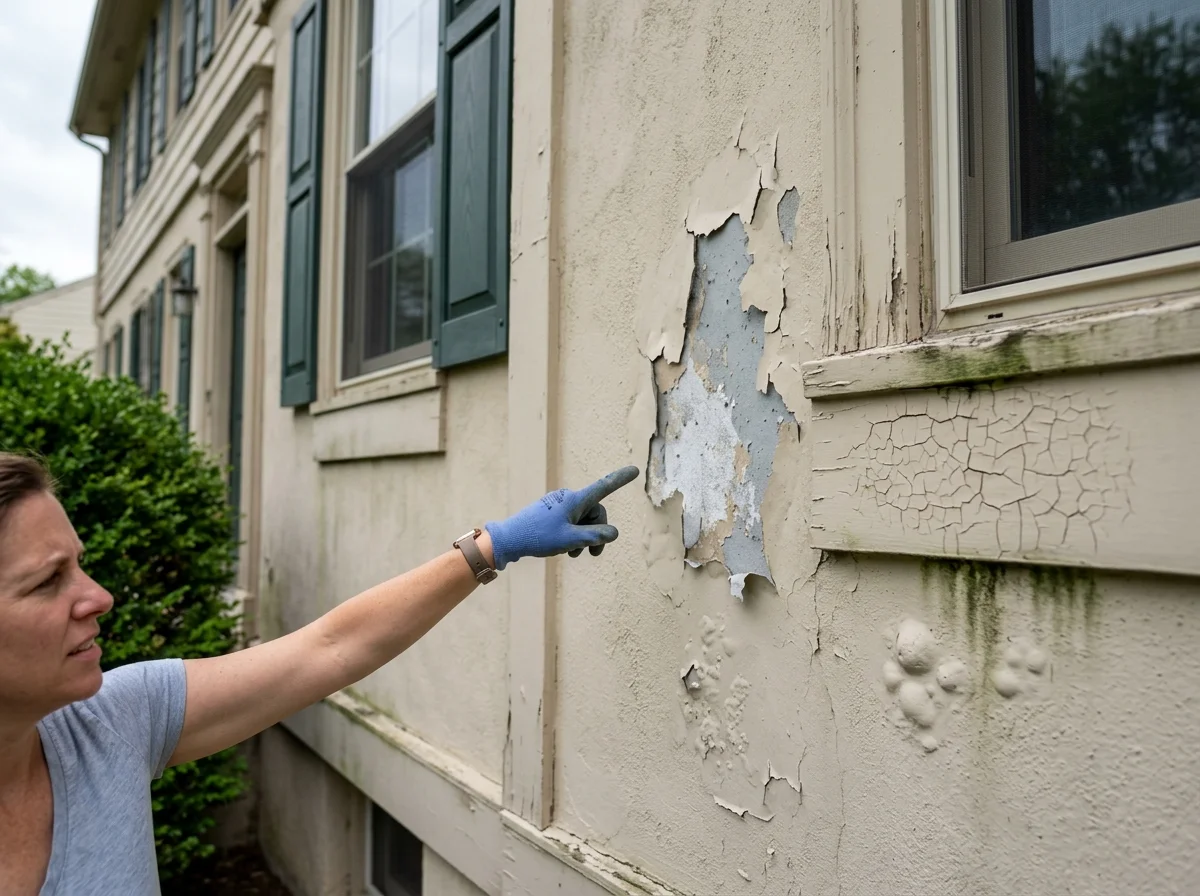
Exterior Paint Peeling and Flaking Can Signal Coating Failure
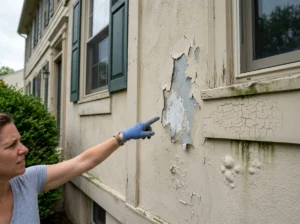
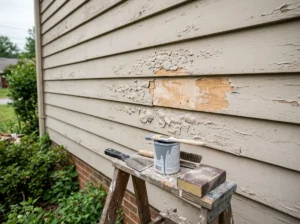
Peeling looks like strips or curled sheets pulling off the wall. Flaking is the smaller version, where the film breaks into chips. Both are paint film failures: the coating has lost its grip.
Flip a chip over. Bare wood or siding on the back points to weak paint bonding with the surface. Old paint stuck to it means the break happened between layers, often because the earlier coat was already loose. Damp wood, a glossy old finish, and the wrong primer can all cause poor paint adhesion, and surface preparation issues are one possible factor.
Exterior Paint Blistering and Bubbling Create Raised Areas
Blisters are dome-shaped pockets, from pea-sized to coin-sized, that rise off the wall and may feel soft or crackle when pressed. Exterior paint bubbling is the same problem in its early stage.
Unlike peeling, a blister stays anchored at the edges while something pushes it up from beneath, often water vapor escaping from wood. Heat can do it too. Paint applied to a hot, sun-baked wall may skin over and trap solvent below, and a second coat applied too soon has the same effect.
Exterior Paint Cracking, Wrinkling, and Sagging Look Different
Each of these three has its own reason.
Cracking
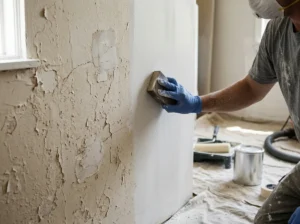
Hairline cracks in a web pattern are called crazing. Deeper splits along the grain or at joints point to surface cracking in the wood or siding. This is why surface preparation is an important part of correcting exterior paint problems before a new coating is applied.
Wrinkling
Wrinkled paint looks like rippled skin. The top layer dried before the paint beneath it, usually because the coat was heavy or went on in cold, damp weather with insufficient drying time.
Sagging
Sags are runs that slid down before the paint set. Too much paint in one pass is the usual reason, and they show most on trim and lap siding.
Fading, Chalking, and Discoloration Can Develop Gradually
Some exterior paint fading is normal. Sunlight breaks down the pigments and binders in every coating, and deep colors show it sooner. Exterior paint chalking is the next stage. Drag a dry hand across the wall, and if powder and color come off on your palm, the binder at the surface is wearing away.
Chalk is not dirt. Dirt and mildew rinse off with water and a soft brush, while chalk returns until the coating is renewed. Exterior paint discoloration in streaks or dark spots usually comes from mildew, water runs, or tannins bleeding from cedar.
Moisture Can Turn a Paint Defect Into a Larger Exterior Problem
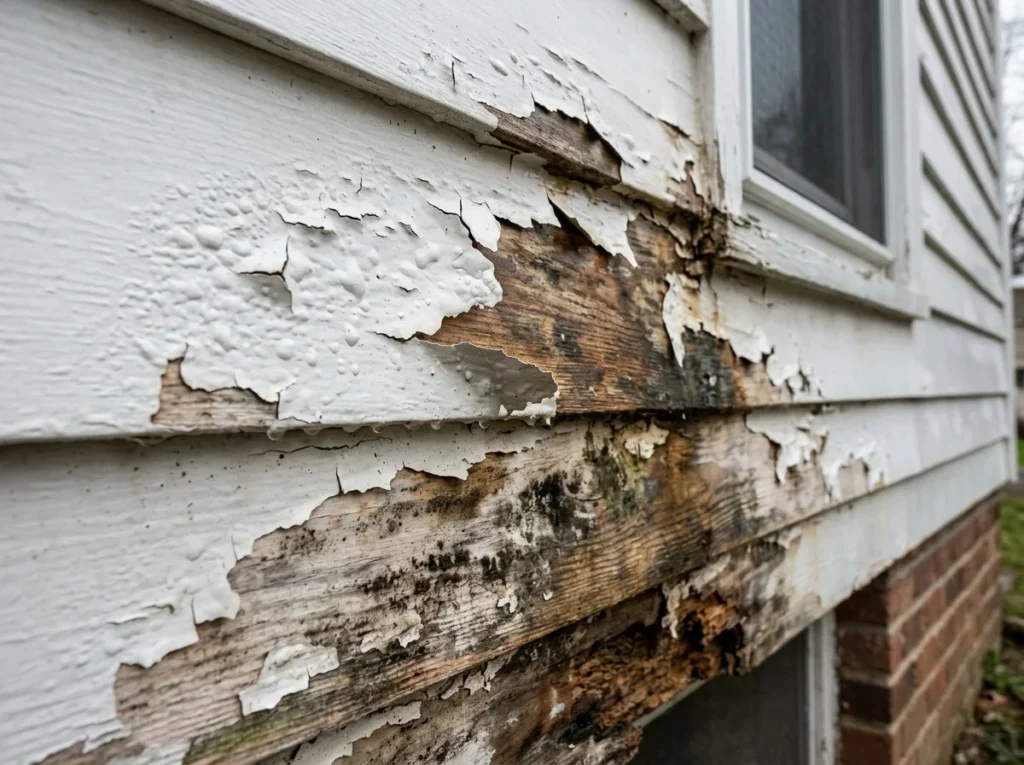
If the same defects keep coming back, look for water first. A cracked caulk joint, a gutter that spills onto the wall, missing flashing, or shrubs crowded against the siding can keep the wood behind the paint damp. Paint won’t fix soft wood, worn siding, or an open seam, so fresh coats over them peel or stain again, sometimes within a season. That is why exterior repainting problems so often repeat. The paint gets redone, but the leak stays.
Dark staining under windows and paint separating from exterior walls near the base are the usual signs. Exterior paint water damage tends to look minor at first. Left alone, moisture damage goes deeper with each wet season, and the exterior surface deterioration gets harder to reverse.
| Treat the Cause, Not Only the SpotA peeling patch is only the part you can see. The paint may be reacting to a leaking gutter, failed caulking, or an older coating that never held. Repainting the patch without tracing the cause usually brings back the same defect in the same spot. Before buying touch-up paint, find out what is happening behind it. |
An Uneven Exterior Paint Finish May Point to More Than Color
A wall that looks patchy or shinier in places is rarely just a color mismatch. Thin paint coverage lets the old color or a repair show through. Incorrect primer selection leaves blotches over bare wood and stains, and product compatibility matters because different paints or sheens can read differently in daylight. A coat brushed over one that was still soft can lift or dull. Low-quality paint is the reason for weak hiding, though application usually matters as much as the can.
A Quick Guide to Common Exterior Paint Defects
| Paint Problem | What Homeowners Notice | What It May Indicate |
| Peeling or flaking | Strips or chips lifting off | Weak bonding, moisture, failing older coat |
| Blistering or bubbling | Raised, soft, or hollow pockets | Trapped moisture or heat |
| Cracking | Hairline web or open splits | Aged or thick paint, surface movement |
| Wrinkling | Rippled texture | Heavy coat that dried unevenly |
| Sagging | Drips and runs | Too much paint in one pass |
| Chalking | Powder on your hand | Sun exposure, aging binder |
| Fading or discoloration | Dull color, dark streaks | Sunlight, mildew, water, wood stains |
| Uneven finish | Patchy coverage, mixed sheen | Thin coats, primer mismatch |
When an Exterior Paint Problem Needs More Than a Touch-Up
Most common exterior painting issues fall into two groups. A localized defect stays put: a blistered patch under a window, a run on a shutter, or a few chips by a downspout. Scraping, fixing the cause, and spot painting usually handle this kind of exterior paint damage.
Widespread coating failure looks different. Peeling on several walls, cracking across whole sides, or chalk everywhere you touch suggests the paint has reached the end of its life. Patching leaves a mismatched house that needs work again soon. Exterior paint restoration or a full repaint, after damaged wood and caulking are repaired, is usually the better path.
What Homeowners Should Do When Exterior Paint Starts Failing
Exterior painting problems feel urgent, but a few calm checks tell you more than a rushed touch-up.
- Photograph the problem and note which side of the house it is on.
- Check gutters and caulk lines for water.
- Press suspect wood with a screwdriver tip to find soft spots.
- Try the hand test for chalking.
- Hold off on repainting until the source is repaired.
- Walk the house each spring and fall as routine paint maintenance.
If the job is recent, call the painter who did it. A professional painting contractor in Cleveland can also assess whether the existing coating needs localized repair or a more complete repaint.
Frequently Asked Questions
Why does exterior paint peel after painting?
Usually the paint never bonded well, or the coating beneath it was already failing. Moisture, glossy old finishes, and the wrong primer are common reasons.
Why does exterior paint bubble or blister?
Trapped moisture or heat pushes the film up from below. Painting a hot wall or recoating too soon can cause the same thing.
Why does exterior paint crack?
Aging, a coat applied too thick, and repeated temperature swings are the usual causes. Movement in wood or siding can split paint at joints.
What does “chalking” mean?
The binder at the surface is breaking down from sun and weather. It is normal aging and a sign the coating is wearing out.
Do I need to repaint the whole house?
Not always. An isolated defect can often be repaired locally, but failure across several walls usually calls for repainting.
When is professional paint repair appropriate?
When the problem keeps returning, spreads, or involves soft wood, water damage, or large areas of failing paint. Exterior paint repair at that stage should start with the cause, not just the finish.
Final Thoughts on Common Exterior Paint Problems
Every paint defect has its own cause, and what you see is often just a symptom. Work out which defect you have and how far it has spread before choosing between a spot repair and repainting. Recurring or widespread exterior paint failure deserves closer attention sooner rather than later, because small problems rarely stay small once water is involved.
Knapp Painting LLC is a locally owned, licensed, and insured painting contractor based in Cleveland, OH. It handles residential painting, as well as commercial and industrial work. The company serves Cleveland and nearby communities using premium paints and careful surface preparation.
If your exterior paint is peeling or fading, Knapp Painting LLC can look at what is happening and recommend a fix that fits. That may mean paint repair or exterior repainting with proper surface preparation for a durable finish. Contact us for a free estimate.