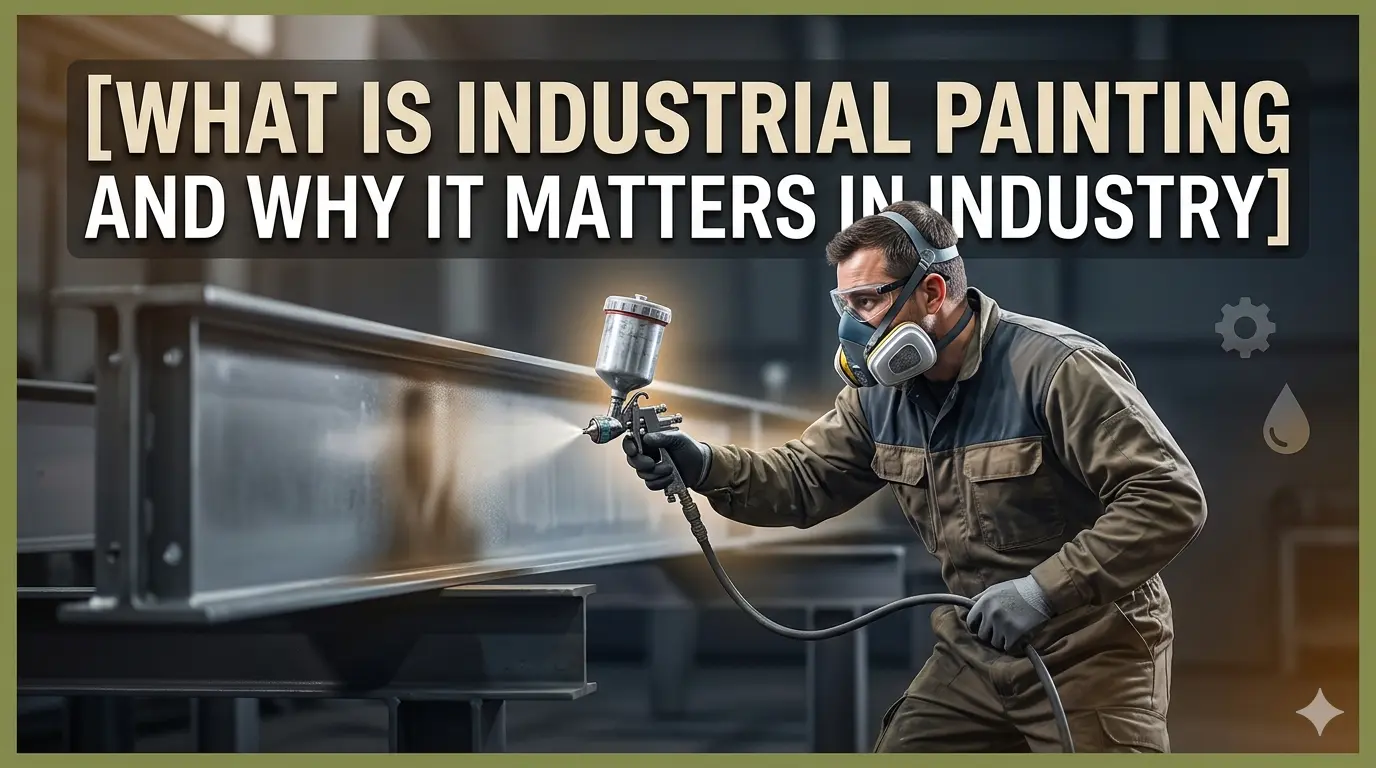
Industrial buildings and equipment face tough conditions every day. Heat, water, chemicals, dust, and heavy use can damage surfaces fast. Without the right paint and protective coatings, machines can rust, buildings can wear out, and companies can spend more money on repairs.
That is why industrial painting plays an important role in many industries. It does more than improve appearance. It protects equipment, increases safety, and helps businesses avoid costly damage. If you want to understand what is industrial painting, this guide explains everything in simple terms.
What Is Industrial Painting?
Industrial painting means applying special paints and coatings to industrial buildings, machines, and equipment. These coatings protect surfaces from damage caused by harsh working conditions.
An industrial painter uses strong coatings that resist:
- Rust and corrosion
- Water and moisture
- Chemicals
- Heat and sunlight
- Scratches and wear
Factories, warehouses, plants, pipelines, storage tanks, and large metal structures often need industrial painting services.
Why Industrial Painting Matters
Industrial painting helps businesses protect their property and equipment. Without proper coatings, surfaces can break down quickly.
Protects Against Rust
Metal surfaces can rust when they contact water and air. Rust weakens equipment and structures over time. Industrial coatings create a barrier that protects metal from corrosion.
Helps Equipment Last Longer
Industrial machines cost a lot of money. Protective coatings help companies keep equipment in good condition for many years.
Improves Workplace Safety
Damaged paint, rust, and weak surfaces can create safety risks. Industrial painting helps keep buildings and work areas safer for employees.
Saves Money
Regular maintenance and protective coatings reduce repair costs and prevent expensive replacements.
Types of Industrial Painting Services
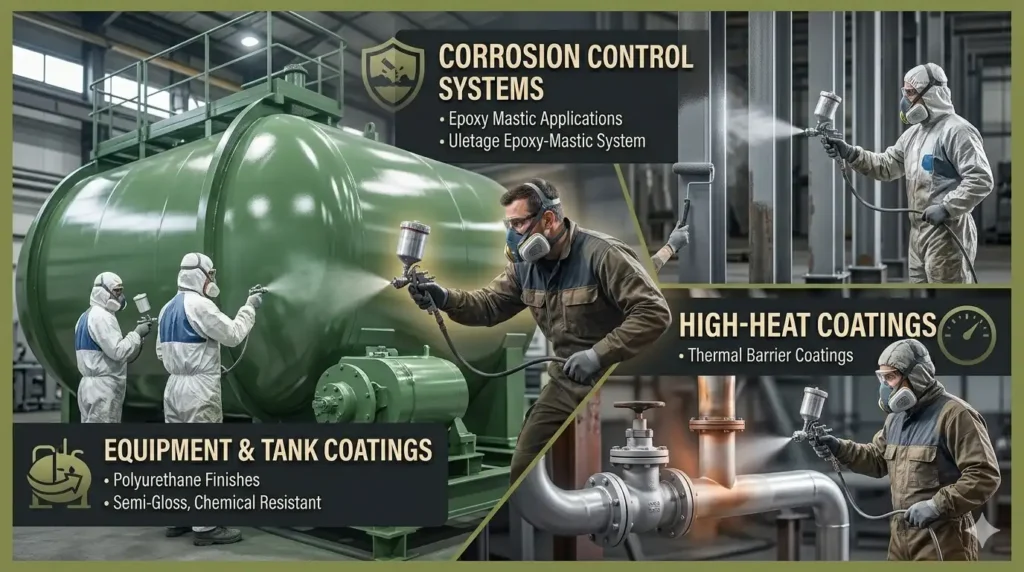
Different industries need different types of coatings and painting services.
Protective Coatings
These coatings protect surfaces from moisture, chemicals, and harsh weather.
Epoxy Coatings
Epoxy coatings work well on floors and machinery because they resist chemicals and heavy traffic.
Fire-Resistant Coatings
Some industries use special coatings that slow down fire and improve safety.
Tank and Pipeline Coatings
Pipelines and storage tanks need coatings that prevent leaks and corrosion.
Industrial Spray Applications
Many contractors use industrial spray paint because it covers large areas quickly and evenly.
Why Surface Preparation Is Important
Good surface preparation helps paint last longer. If painters apply coatings on dirty or damaged surfaces, the paint may peel or fail early.
Professional surface preparation may include:
- Sandblasting
- Pressure washing
- Rust removal
- Grinding
- Priming
A skilled industrial painter knows how to prepare surfaces correctly before applying coatings.
Industries That Use Industrial Painting
Many industries depend on industrial painting to protect buildings and equipment.
Manufacturing Plants
Factories use protective coatings on machines, floors, and metal structures.
Oil and Gas Industry
Pipelines and tanks face moisture and chemicals every day. Protective coatings help prevent corrosion and damage.
Food Processing Facilities
Food plants need coatings that resist water, bacteria, and frequent cleaning.
Warehouses
Warehouse floors and structures need durable coatings that handle heavy equipment and traffic.
Transportation and Infrastructure
Bridges, rail systems, and shipping facilities use industrial coatings to fight weather damage and rust.
Modern Changes in the Paint Industry
The paint industry continues to improve coating technology. Modern industrial coatings now last longer and protect surfaces better than older products.
Eco-Friendly Coatings
Many companies now use low-VOC coatings that reduce harmful chemicals and improve air quality.
Stronger Protective Systems
New coatings resist heat, chemicals, and damage better than before.
Smart Coatings
Some advanced coatings can help detect corrosion before major damage happens.
Industrial Painting vs Commercial Painting
Industrial painting and commercial painting are different services.
Commercial painting focuses mostly on appearance in offices, stores, and public buildings.
Industrial painting focuses on:
- Protection
- Durability
- Corrosion resistance
- Safety
- Long-term performance
Industrial projects usually require special training, equipment, and safety procedures.
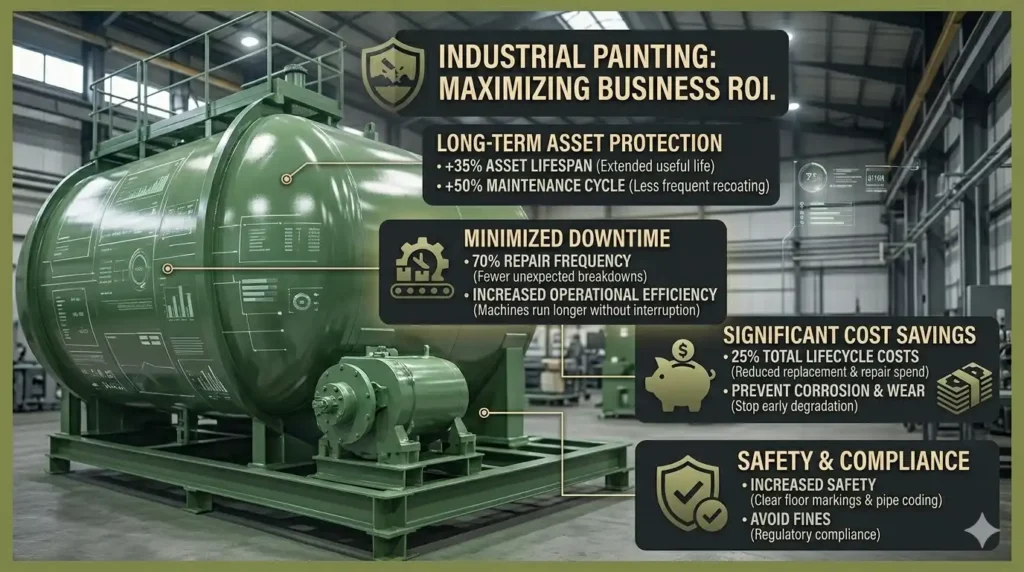
How Industrial Painting Saves Businesses Money
Some business owners delay painting projects because they want to avoid upfront costs. However, proper coatings help save money over time.
Reduces Repair Costs
Protective coatings prevent damage that leads to expensive repairs.
Prevents Downtime
Equipment failures can stop production and hurt business operations. Industrial painting helps prevent these problems.
Extends Equipment Life
Coatings help machines and structures last longer, reducing replacement costs.
Improves Energy Efficiency
Some coatings reflect heat and help lower cooling costs in large facilities.
Removing Old Industrial Paint
Before painters apply new coatings, they often remove old or damaged paint first. Professionals use safe methods and the right industrial paint remover techniques for each project.
Common paint removal methods include:
- Abrasive blasting
- Chemical stripping
- Sanding
- Heat removal
Proper paint removal helps new coatings stick better and last longer.
Safety in Industrial Painting
Industrial painting projects often involve dangerous conditions. Workers may deal with heights, chemicals, or enclosed spaces.
Professional painting teams use safety equipment such as:
- Respirators
- Safety harnesses
- Ventilation systems
- Protective clothing
Experienced contractors follow safety rules to protect workers and the environment.
How to Choose the Right Industrial Painting Contractor
Choosing the right contractor can improve project quality and help coatings last longer.
Look for a company that offers:
- Industrial painting experience
- Licensed and insured services
- Proper safety training
- Strong customer reviews
- Surface preparation expertise
Professional contractors also help businesses choose the right coatings for their specific needs.
Industrial Painting and Facility Appearance
Industrial painting also helps buildings look clean and professional. A well-maintained facility creates a better image for employees, customers, and visitors.
Even old industrial revolution paintings often showed factories and machines as symbols of growth and progress. Today, clean and protected facilities still reflect professionalism and success.
Why Professional Industrial Painting Matters
Industrial painting requires skill, planning, and the right materials. Poor-quality work can lead to peeling paint, rust, and expensive repairs.
Professional painters know how to:
- Prepare surfaces correctly
- Choose the right coatings
- Follow safety standards
- Apply coatings properly
This experience helps businesses protect their buildings and equipment for the long term.
Get Professional Industrial Painting Services
If you want to protect your facility, equipment, or industrial property, professional painting services can help. Strong coatings improve safety, reduce maintenance costs, and extend the life of your investment.
At Knapp Painting, businesses can find reliable industrial and commercial painting solutions designed for long-lasting protection and performance. Their experienced team delivers high-quality results that help facilities stay safe, clean, and durable.
FAQs
What is industrial painting?
Industrial painting means applying protective coatings to buildings, equipment, and industrial surfaces to prevent damage and corrosion.
Why is industrial painting important?
Industrial painting protects surfaces, improves safety, reduces repairs, and helps equipment last longer.
What does an industrial painter do?
An industrial painter prepares surfaces and applies special coatings that protect equipment and buildings in harsh environments.
Where is industrial painting used?
Factories, warehouses, pipelines, bridges, oil plants, and food processing facilities often use industrial painting services.
How long do industrial coatings last?
The lifespan depends on the coating type and environment, but professional coatings can last for many years with proper maintenance.