Choosing a painter isn’t just about finding someone who can apply paint neatly. The type of property, surface condition, project size, and schedule can all change how the work should be handled.
That is especially true in Lakewood, Ohio, where you can find everything from older homes with plaster walls and original wood trim to busy storefronts, offices, restaurants, and multi-unit properties. A residential painting project often requires careful detail and protection of the home, while commercial work usually involves larger areas, more equipment, and tighter scheduling.
Understanding the distinction between commercial and residential painting allows you to compare contractors, estimates, materials, and schedules without supposing that every painting project follows the same steps.
What Makes the Difference Important?
At first glance, painting a house and painting a business could seem comparable. Painting, professional work, cleanup, and preparation are all necessary for both. The circumstances surrounding the job are different.
A house must continue to be secure and comfortable for its occupants. It is necessary to take into account things like flooring, furniture, pets, personal items, and daily routines. A company’s priorities vary. While the renovation is in progress, workers, clients, deliveries, renters, and regular business hours could all need to continue.
The contractor’s experience matters for the same reason. A painter who regularly handles residential interiors may be excellent at detailed trim and plaster repairs but may not have the crew or equipment for a large commercial building. The reverse can also be true.
What Is Different About Residential Painting?

Residential painting tends to place more emphasis on detail, surface preparation, and protecting the home during the project.
A typical Lakewood home may have walls, ceilings, doors, cabinets, trim, stairways, and other finished surfaces that need different levels of preparation. Older properties can require even more attention. Plaster walls may have cracks or previous repairs, while original woodwork can have years of accumulated paint and wear.
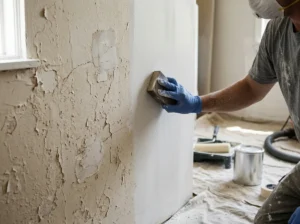
Simply putting a fresh coat over these problems does not necessarily produce a durable finish. Painters may need to repair cracks, remove loose paint, sand rough areas, fill small holes, and prime exposed surfaces before applying the finish coats.
The size of the home is only one part of the cost. Two houses with similar square footage can have very different painting requirements if one needs extensive repairs or detailed trim work.
Residential projects also require careful protection. Professional painters should take reasonable steps to protect floors, furniture, fixtures, and other areas that are not being painted.
What Is Different About Commercial Painting?
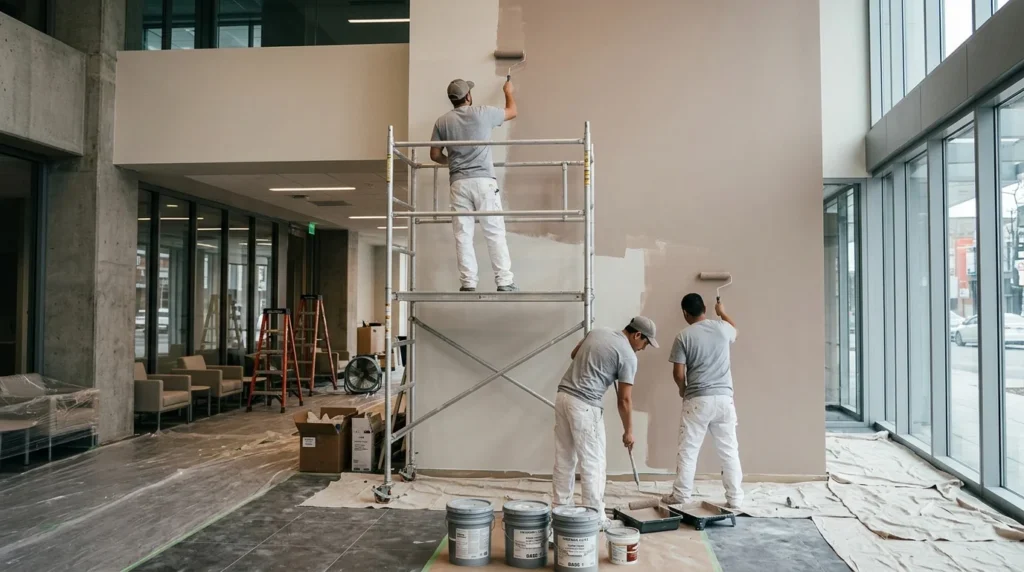
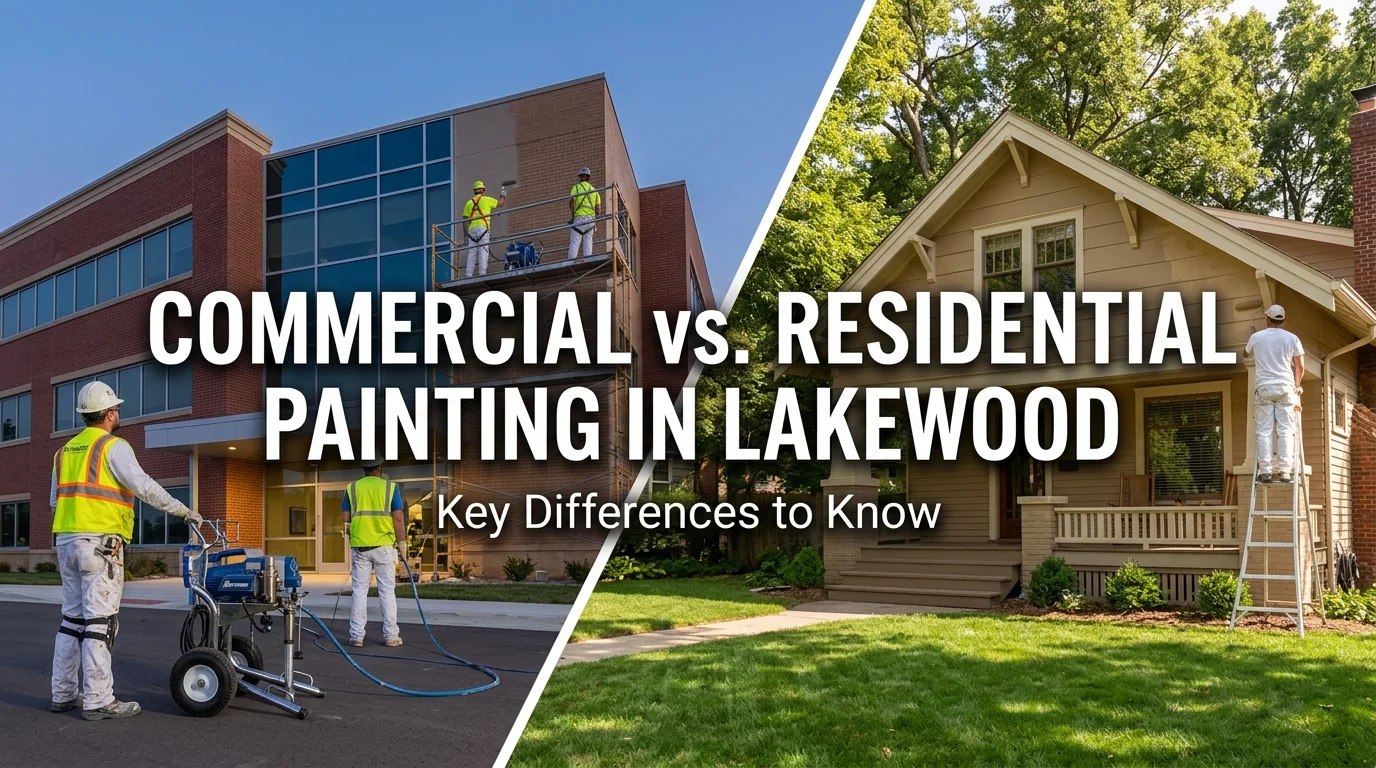
Commercial painting is usually more focused on scale, efficiency, durability, and minimizing disruption.
An office, restaurant, retail store, or apartment building can have substantially more surface area than a typical home. High ceilings, stairwells, large entrances, exterior walls, and difficult-to-reach areas may require equipment that is rarely needed for a standard residential project.
Additionally, commercial properties undergo varying degrees of wear. A private bedroom requires a different level of durability than a hallway that is utilized by hundreds of people every day. An office, restaurant, retail store, or apartment building can have substantially more surface area than a typical home, particularly when commercial interior painting is involved.
Another significant distinction is scheduling. Painters may be required by businesses to work on the weekends, in the evenings, or during scheduled closures. Bigger projects can also be split up into portions so that one part of the building can be used while another being painted.
How Does Surface Preparation Change?
Preparation is one of the most important parts of any painting project, regardless of property type.
For a residential interior, preparation may involve cleaning the walls, repairing cracks, sanding rough areas, filling holes, and caulking gaps around trim. Older Lakewood homes may need additional care because plaster, woodwork, and older coatings can behave differently from modern drywall.
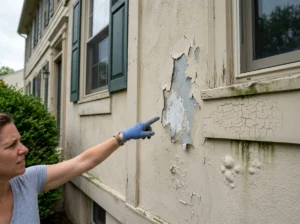
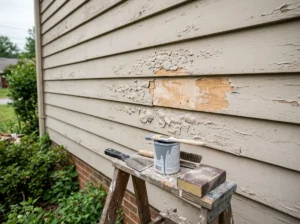
Exterior painting requires its own preparation. Loose or peeling paint needs to be addressed before new paint is applied. Wood may need repair, while siding or other exterior surfaces may require thorough cleaning.
Commercial preparation can cover much larger areas. Depending on the property, contractors may need to pressure wash surfaces, remove rust, repair concrete, clean heavily soiled areas, or apply primer across large sections.
Good preparation is rarely the most visible part of a painting project, but it has a major effect on how the finished coating looks and how long it lasts.
Are Different Paints Used for Homes and Businesses?
There isn’t a single paint that works for all homes and businesses. Surface, location, traffic volume, exposure, and anticipated durability all influence the optimal product.
Comfort, cleanliness, and attractiveness are frequently prioritized in residential interiors. Depending on the space and surface, homeowners can select a variety of sheens.
Commercial spaces frequently prioritize durability. Coatings that can withstand frequent cleaning and increased use may be required in busy hallways, dining establishments, workplaces, and common areas.
Exterior paint also needs to handle local weather. Lakewood properties experience moisture, temperature changes, wind, and winter conditions, all of which can affect exterior surfaces over time. The product needs to be suitable for both the material and the level of exposure.
A good contractor should be able to explain why a particular paint or primer is appropriate instead of simply recommending the most expensive option.
How Do Crew Size and Equipment Differ?
Most residential projects can be completed by a relatively small crew using standard ladders, rollers, brushes, sanders, and other hand tools. A smaller team can often move carefully from room to room while maintaining protection around the home.
Commercial projects may require larger crews and specialized equipment. Depending on the building, painters might need scaffolding, lifts, commercial sprayers, or other access equipment.
Crew size should match the project rather than simply being as large as possible. A small home interior may not benefit from a large crew, while a commercial property with a tight deadline may need several painters working at the same time.
How Do Residential and Commercial Painting Prices Compare?
The number of rooms, surface quality, ceiling height, trim, repairs, and amount of coats all frequently have an impact on residential painting prices. Even in cases when the overall area is quite small, detailed woodwork or damaged plaster might entail a substantial amount of labor.
Commercial estimates often start with the overall square footage and then account for access, surface preparation, equipment, labor, specialty coatings, and scheduling.
Due to the larger properties and potential need for more manpower or equipment, commercial painting typically has higher overall expenses. However, the cost per square foot can occasionally be lower because broad, open surfaces are easier to paint than specialized domestic interiors.
The simplest method to compare estimates is to consider what each contractor has included. If crucial preparation or maintenance are neglected, a cheaper price might not be a better deal.
How Does Scheduling Affect Each Type of Project?
Residential painting is generally planned around the people who live in the home. A contractor may work through one room at a time so that the rest of the house remains usable.
Commercial painting has to consider business operations. A store, restaurant, or office may not be able to stop operating for several days to allow painters to work.
For that reason, commercial contractors often use phased schedules, evening work, or weekend work. The goal is not always to finish the entire building as quickly as possible. It is to complete the work efficiently while limiting disruption.
Weather also matters for exterior projects. Cold temperatures, rain, excessive humidity, and other unfavorable conditions can affect application and drying. In Lakewood, exterior painting is generally easier to plan during suitable periods of warmer, stable weather.
What Should You Look for in a Lakewood Painting Contractor?
The most important qualification is relevant experience.
If you own an older Lakewood home, ask whether the contractor has experience with plaster, original wood trim, older siding, and similar surfaces. If you own a business, ask about previous commercial projects that are comparable in size and complexity.
Pay attention to the estimate as well. A professional proposal should explain the basic preparation, materials, number of coats, areas being painted, and expected timeline. You should not have to guess what is included.
It is also important to verify appropriate insurance before work begins. For certain exterior alterations or other building work, property owners should also check whether local requirements apply to their specific project.
Frequently Asked Questions
What is the main difference between commercial and residential painting?
Residential painting generally focuses on homes, detailed preparation, protection, and minimizing disruption for the household. Commercial painting usually involves larger spaces, specialized equipment, durable coatings, and schedules designed around business operations.
Does commercial painting always cost more?
Not always on a per-square-foot basis. Commercial projects generally cost more overall because they cover larger areas and may require more labor and equipment. Large open spaces can sometimes be less expensive per square foot than detailed residential work.
Can a residential painter handle a small business?
Yes, some can. The important question is whether the contractor has experience with the property’s size, access, schedule, and specific requirements. A small office may not need the same resources as a large commercial building.
How long does a painting project take?
A straightforward residential project may take several days, while a larger home or commercial property can take considerably longer. Preparation, surface condition, crew size, access, weather, and working hours all affect the schedule.
Final Thoughts
The difference between commercial and residential painting in Lakewood, Ohio goes well beyond the size of the property.
Residential work usually requires careful preparation, attention to architectural details, and respect for the routines of the people living in the home. Commercial work places more emphasis on efficiency, durability, equipment, safety, and keeping the property operational.
Lakewood’s older buildings and changing weather conditions can add another layer to either type of project. That makes proper preparation and relevant local experience especially important.
Rather than choosing a contractor based only on price, look at the scope of work, preparation methods, materials, experience, insurance, and proposed timeline. When those details match the needs of your property, you are in a much better position to get a finish that looks good and holds up over time.