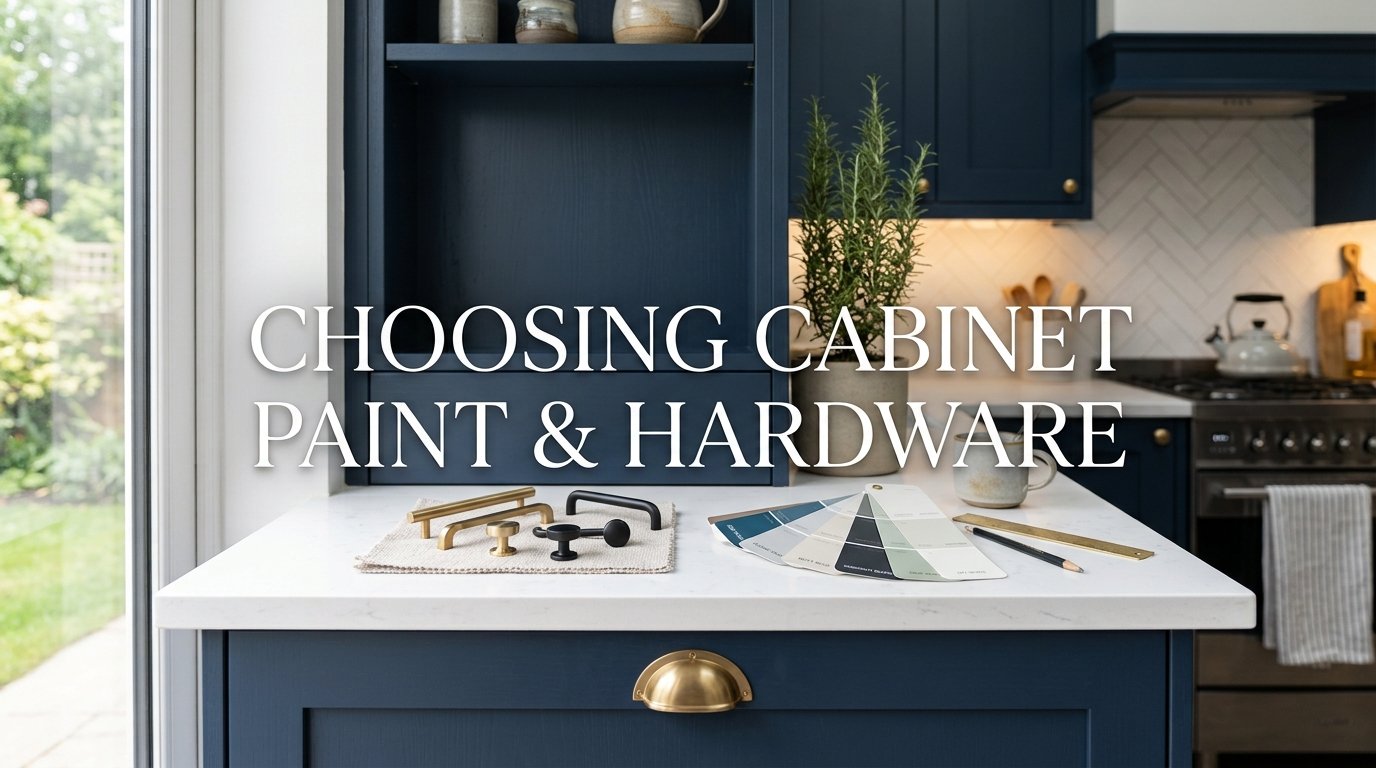
Painting your cabinets can change the whole look of your kitchen. It may make an older room feel brighter, cleaner, and more current. Yet choosing the color is not always easy. A shade that looks great on a small paint card may feel too dark, too yellow, or too cool once it covers every cabinet door.
Learning how to choose cabinet paint colors starts with the room you already have. Your counters, floor, walls, lighting, and hardware all affect the final look. You also need to think about the size of the kitchen and how much natural light it gets. This guide will help you compare cabinet paint colors, finishes, and hardware without making the room feel busy or mismatched.
What Should You Check Before Choosing a Cabinet Color?
Start by looking at the parts of the kitchen that will stay. Your countertops, backsplash, floor, appliances, and large pieces of furniture may not change during the project. The cabinet color should work with those fixed items instead of fighting them. Place paint samples next to each surface so you can see the full room, not just one cabinet door.
You should also check the condition of the cabinets. Paint can update a sound cabinet, but it cannot repair a loose door, deep water damage, or a weak surface. Small dents and worn areas may be repaired before painting. Larger damage may need more work. Homeowners who are unsure whether to paint or restore the wood can review the differences between cabinet painting and cabinet refinishing.
How Does Light Change Cabinet Paint Colors?
Light can make the same color look different from one kitchen to another. A color may seem warm and soft in bright daylight. Under cool ceiling lights, it may look gray or blue. A room with little natural light may make dark colors feel much heavier than expected. This is why a small paint card is not enough for a final choice.
Paint a few large samples and place them on more than one cabinet area. Check them in the morning, afternoon, and evening. Look at them with the main lights on and off. Cleveland homes may also feel brighter in summer and much dimmer during gray winter days. The color should still look good when the room has less sunlight. Testing first can prevent an expensive color change later.
Which Cabinet Colors Work With Your Countertops?
Your countertop is one of the largest fixed surfaces in the kitchen. It may have warm brown, cream, gold, gray, black, or blue tones. The cabinet color does not need to match every mark in the stone. It should connect with one or two main tones so the room feels planned.
Warm counters often work well with cream, soft beige, warm white, muted green, or deep brown. Cool gray and white counters may pair well with crisp white, charcoal, navy, or blue-gray. Busy stone patterns often look better with simple cabinet paint colors. When both the counters and cabinets have strong patterns or bold colors, the room may feel crowded. Use samples beside the full counter before making a choice.
What Are the Best Cabinet Paint Colors for a Timeless Look?
The best cabinet paint colors are not always the newest trend. A useful color should fit the home, work with the room, and still feel right after several years. Soft white, cream, warm gray, greige, muted green, navy, and charcoal are common choices because they can work with many styles.
White and cream can make a kitchen feel clean and bright. Warm gray and greige add more depth while staying neutral. Green can bring a calm, natural look. Navy and charcoal can feel rich and modern when the room has enough light. Before following any list of kitchen cabinet color ideas, think about the age of the home, the floor, and the amount of light. A color that fits the room often lasts longer than a short trend.
Should You Choose Light or Dark Cabinets?
Light cabinets can help a small or dark kitchen feel more open. White, cream, pale beige, and light gray reflect more light than deep colors. They may also make it easier to change wall paint, hardware, and decor later. However, very bright white can feel sharp in a room with warm floors or yellow lighting.
Dark cabinets can add depth and create a strong focal point. Navy, deep green, charcoal, and dark brown may work well in larger kitchens or rooms with good daylight. They can also make a kitchen feel more formal. Dark colors may show dust, fingerprints, and small marks more clearly. Balance them with lighter counters, walls, or backsplash tile so the room does not feel closed in.
Which Cabinet Colors Work in a Small Kitchen?
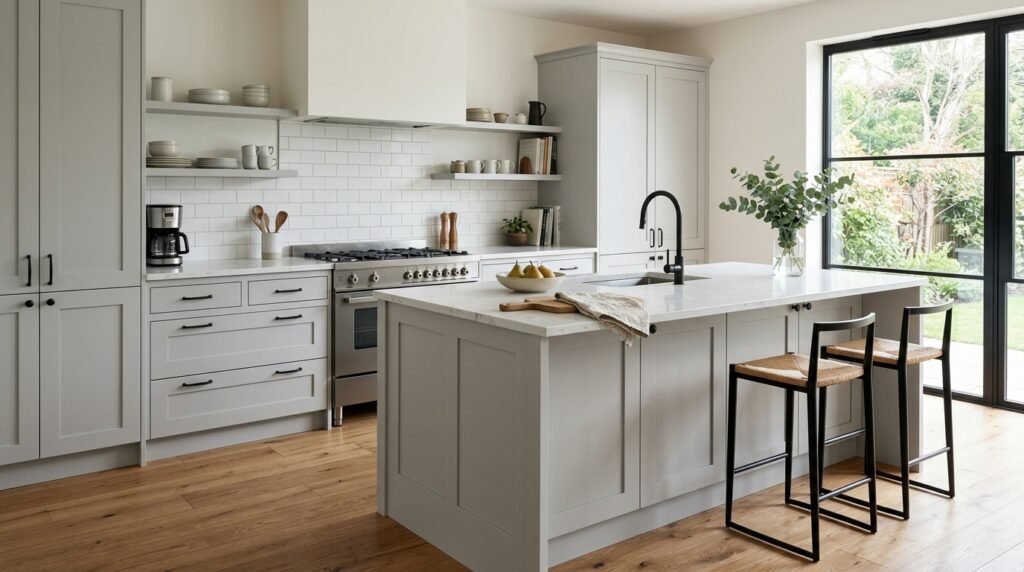
The best cabinet colors for small kitchens often reflect light and keep strong visual lines to a minimum. Soft white, pale greige, light taupe, and gentle gray can help the cabinets blend into the room. Using a similar color on the walls may also make the space feel less divided.
A small kitchen can still use dark color. Try it on the lower cabinets, the island, or one short cabinet wall. Keep the upper cabinets light so the room stays open. Glass doors, simple hardware, and clear counters can also reduce visual clutter. The goal is not to make every surface white. It is to create enough balance so the cabinets do not feel too heavy for the room.
When Do Two-Tone Cabinets Work Best?
Two tone kitchen cabinets can add interest without using one bold color across the whole room. A common plan is to use a darker color on the lower cabinets or island and a lighter shade on the upper cabinets. This gives the room contrast while keeping the upper area bright.
The two colors should share a clear link. They may have the same warm or cool base, or one may connect to the countertop or floor. For example, warm white upper cabinets may work with muted green lower cabinets and warm stone counters. Avoid choosing two strong colors that compete with a busy backsplash. A two-tone plan works best when one color leads and the other supports it.
How Should Cabinet Colors Match the Walls and Floor?
Cabinets do not need to match the walls, but the colors should feel related. A warm cabinet color may look out of place beside a very cool wall color. The same issue can happen when cool gray cabinets sit over a strongly orange wood floor. Look at the color base, not just the name on the paint card.
When learning how to choose paint color for kitchen cabinets, bring samples close to the wall and floor at the same time. A simple room may use light cabinets with slightly darker walls. A kitchen with bold cabinets may need a soft neutral wall. If the floor has a strong wood grain or tile pattern, keep the cabinet color calmer. This creates contrast without making every surface compete for attention.
What Paint Finish Is Best for Cabinets?
The best paint finish for cabinets should be smooth, easy to clean, and strong enough for daily use. Cabinet doors are touched often. They may also face steam, grease, spills, and cleaning products. This makes the finish more important than it would be on a low-use bedroom wall.
Satin and semi-gloss are common cabinet paint finishes because they can be cleaned more easily than many flat finishes. Satin has a softer shine and can hide small surface flaws better. Semi-gloss reflects more light and may show more bumps, brush marks, or dents. The exact choice should depend on the cabinet condition, the product being used, and the look you want. The surface must also be cleaned, repaired, sanded, and primed as needed before the finish is applied.
Can Matte Paint Be Used on Cabinets?
Matte cabinets can create a soft and modern look. They work well with simple doors, natural wood, stone counters, and low-shine hardware. A matte finish may also hide small surface flaws better than a shiny coating. Still, not every matte wall paint is made for cabinets.
Cabinets need a coating that can handle touch, moisture, and regular cleaning. Use a cabinet-rated product instead of choosing only by sheen. Ask how the finish should be cleaned and how long it needs to cure before normal use. A very flat surface may mark more easily in a busy family kitchen. The right product can give a low-shine look without giving up the strength needed for daily use.
How Should You Choose Cabinet Hardware?
Learning how to choose cabinet hardware begins with the cabinet style and the way the room is used. Simple bar pulls can give flat doors a modern look. Round knobs may suit a classic or cottage kitchen. Cup pulls often work well on drawers and traditional cabinets. The size should fit the door or drawer without feeling too small or too heavy.
You should also think about comfort. Open and close the sample hardware before buying a full set. Sharp edges, very small knobs, or shallow pulls may be hard to use each day. Large drawers may need longer pulls or two smaller handles. If you are replacing old hardware, check the existing screw holes. A new size may require filling and drilling before the cabinets are painted.
Which Hardware Finishes Work With Light Cabinets?
Light cabinets give you many hardware choices. Black hardware can create sharp contrast on white or cream doors. Brass and gold tones can add warmth. Nickel and chrome may create a cleaner, cooler look. Bronze can work well in older kitchens with warm wood floors or traditional trim.
The best cabinet hardware finishes should also connect with other metal in the room. Check the faucet, light fixtures, appliance handles, and nearby door hardware. They do not need to match exactly, but the mix should look planned. A kitchen with several unrelated metal colors can feel busy. Choose one main finish and use a second only where it adds a clear design reason.
Can You Mix Metal Finishes in One Kitchen?
Yes, you can mix metal finishes, but use a simple plan. Choose one main metal for most cabinet pulls and knobs. Use a second finish on lights, the faucet, or a feature piece. Two finishes are often easier to balance than three or four.
Try to repeat each finish more than once. One gold light in a room filled with black metal may look like a mistake. Gold lights paired with a gold faucet and black cabinet hardware can feel more planned. Also watch the color base. Warm brass may work better with cream or green cabinets, while chrome may fit cool white or blue-gray cabinets. Samples can help you see whether the mix feels balanced.
What Should Cleveland Homeowners Consider?
Seasonal light can affect cabinet painting in Cleveland homes. A color chosen on a bright summer day may look deeper during a cloudy winter week. Test cabinet samples under the actual kitchen lights and during different times of day. Older Cleveland homes may also have warm wood floors, plaster walls, detailed trim, or smaller kitchens that affect the best color choice.
The current cabinet surface matters too. Older doors may have grease, worn finish, chips, or past paint layers. These issues should be handled before a new color is applied. Homeowners planning a large cabinet color change in Cleveland should ask how the doors will be cleaned, repaired, sanded, primed, and coated. Good prep helps the final color look smoother and more even.
When Should You Hire a Cabinet Painter?
A homeowner may handle a small sample or simple hardware change. A full cabinet project is more involved. Doors and drawer fronts may need to be removed, labeled, cleaned, sanded, repaired, primed, painted, cured, and installed again. The kitchen also needs protection from dust and overspray.
Professional help may be useful when the cabinets have damage, a dark existing finish, detailed doors, or an old coating that may affect bonding. It can also help when you want a smooth spray finish or custom cabinet finishes in Cleveland. Knapp Painting offers professional cabinet painting services and custom cabinet finish options for homeowners who want to update sound cabinets without replacing the full kitchen.
Frequently Asked Questions
What Cabinet Color Is Easiest to Match?
Warm white, soft gray, greige, and cream often work with many counters and floors. The best choice still depends on the room’s fixed surfaces and lighting. Test samples beside the counter, floor, wall, and backsplash before choosing.
Are White Cabinets Still a Good Choice?
White cabinets can still work well because they make a kitchen feel clean and bright. Choose a white that fits the room. A warm white may suit wood floors, while a cooler white may work better with gray or blue stone.
Should the Island Match the Cabinets?
The island can match the main cabinets or use a second color. A different island color works best when it connects with the counters, floor, hardware, or another part of the room. It should feel planned rather than random.
What Color Hardware Works With Green Cabinets?
Brass, bronze, black, and nickel can all work with green cabinets. The best finish depends on whether the green is warm, cool, light, or dark. Compare hardware samples beside the actual cabinet color.
Can Painted Cabinets Be Refinished Later?
It may be possible, but the condition, cabinet material, and old coating will affect the work. Removing paint to show natural wood can take a great deal of sanding or stripping. Review the difference between painting and refinishing before choosing the first update.
How Long Should Cabinet Paint Cure?
Cure time depends on the product, temperature, humidity, and number of coats. A surface may feel dry before it is ready for hard use. Follow the product instructions and the painter’s care plan before cleaning or placing heavy items against the finish.
Choose a Color That Fits the Whole Kitchen
The right cabinet color should work with more than a trend. It should fit the counters, walls, floor, lighting, hardware, and style of the home. Take time to compare large samples and view them throughout the day. A color that looks right in the full room is more useful than one that only looks good on a small card.
Knowing how to choose cabinet paint colors can also help you avoid costly changes. Start with the parts of the kitchen that will stay. Build a simple color plan, choose a finish made for cabinet use, and add hardware that supports the look. With careful planning, painted kitchen cabinets can give an older kitchen a fresh style without replacing every cabinet.