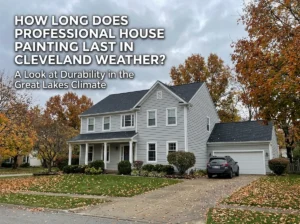
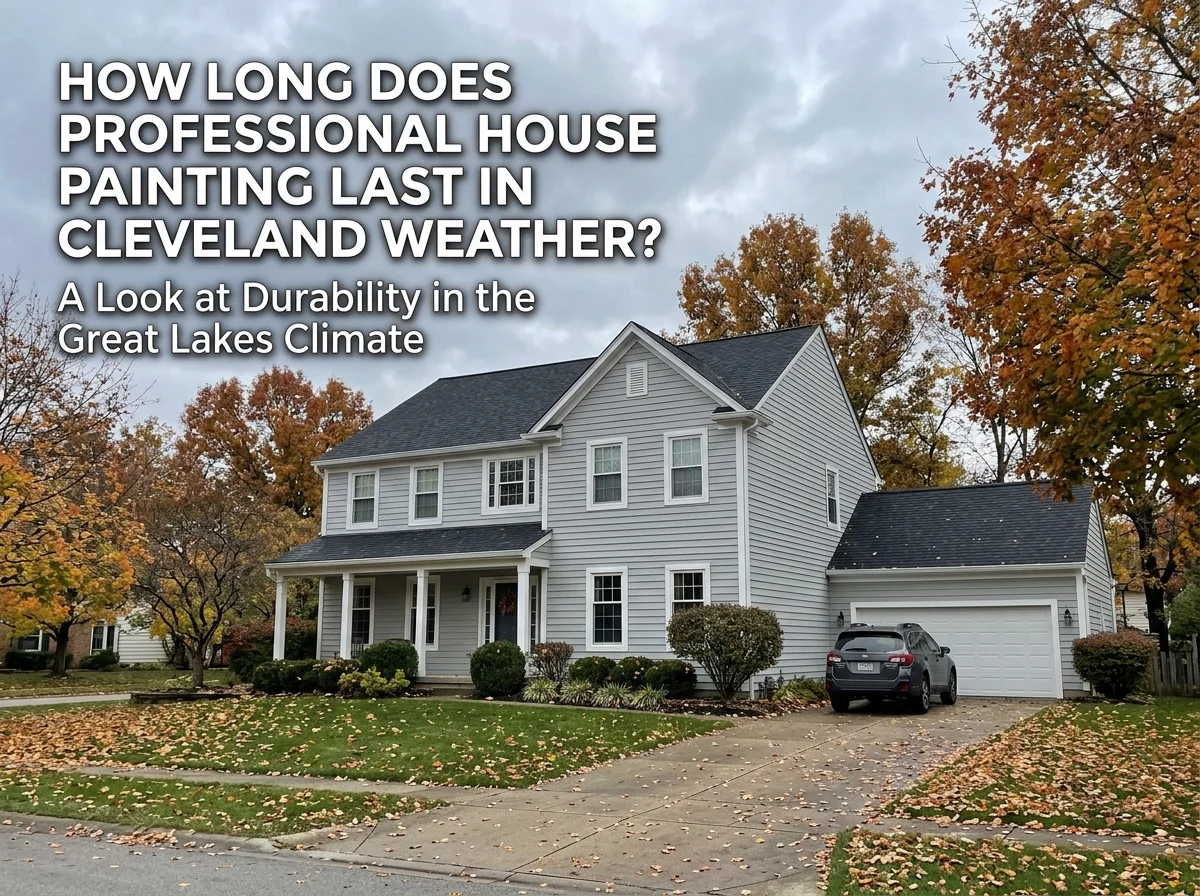
You pull into the driveway after a long winter, and something looks off. Maybe the color’s duller than you remember, or there’s a hairline crack running along the trim by the garage. Either way, you start wondering about exterior paint lifespan and whether that paint job from a few years back is already on its way out. The condition of the existing coating and the quality of the original exterior house painting both play a role in how long it holds up.
Most professionally painted exteriors hold up around 7 to 10 years. That’s a reasonable number, but it isn’t a promise stamped on your specific house. Prep work, the paint itself, how much sun and moisture the walls take on, and the upkeep the home gets afterward all push that figure up or down.
Cleveland doesn’t make this easy. Cold winters, humid summers, and weather that swings back and forth more than people expect all wear on a painted surface over time. Most of the warning signs show up early, long before anything looks like a real problem, if you know where to look.
What Actually Determines How Long Paint Lasts
Same paint, same weather, two totally different outcomes. One house looks great after ten years. The neighbor’s, painted the same season, is peeling by year four.
A lot of that comes down to what’s underneath. Wood, fiber cement, and vinyl don’t hold up the same way, and they don’t ask for the same upkeep. Even the layout of a house plays a part, since one wall can end up seeing a lot more wear than another just based on where it sits.
There’s also the honest truth that some of it comes down to what was going on with the house before the painters ever showed up. A wall in rough shape starting out isn’t going to perform the same as one that was solid to begin with.
Bottom line, 7 to 10 years is a fair number to go in expecting, not something guaranteed. Some houses need attention well before that. Others go longer, depending on how everything else lines up.
Why Cleveland’s Weather Is Hard on Paint
Cleveland’s changing weather can wear exterior paint down over time, especially where moisture, freezing temperatures, and direct sunlight expose existing weaknesses in the surface.
Moisture Finds the Weak Spots
Rain and snow aren’t the real problem on their own. Paint applied properly handles normal weather fine. What actually causes damage is water finding its way in through something already broken. A crack. An open joint. Rotted wood. Caulk pulled away from the surface. Over time, that moisture can contribute to exterior paint peeling and other coating failures.
Freeze-Thaw Makes Existing Damage Worse
Once that happens, Cleveland’s winters make it worse. Water trapped in a gap freezes, expands, then thaws and contracts again. Do that enough times over a season, and you’re stressing a spot that was already weak. Trim, corners, and joints tend to show damage first for this reason, since there are more seams up there for water to work into compared to the flat middle of a wall.
Summer Sun Wears Paint Down
Summer wears things down too, just more quietly. Walls facing direct afternoon sun fade and break down faster than shaded ones. Give it a few years and one side of the house will often look visibly different from another, even though both got painted the same day.
What Shortens the Life of Exterior Paint, and What Helps
Nobody’s paint job fails because of one mistake. It’s usually a stack of small things, and it helps to see them side by side.
| Can Shorten Paint Life | Can Help Extend It |
| Painting over dirt, mildew, or loose material | Cleaning the surface first |
| Leaving damaged wood or siding unrepaired | Repairing damaged areas before painting |
| Skipping primer where it’s needed | Priming bare or repaired spots |
| Painting in unsuitable weather | Following the coating’s application requirements |
| Ignoring deteriorated caulk | Maintaining joints and seams |
| Letting water repeatedly hit the exterior | Keeping gutters and downspouts clear |
None of this guarantees a specific number of years. It gives the paint a fair shot instead of setting it up to fail early. Different paint products also come with different requirements around temperature, humidity, drying time, and recoat windows, so a job done right accounts for the specific product being used rather than treating every can the same.
Signs the Paint Is Starting to Give Out
You don’t need half the house peeling before it’s worth a look. Most of the time, something small shows up first, and that’s your chance to deal with it before it spreads.
- Chalky residue. A powdery film on your hand after touching the wall means the coating’s weathering.
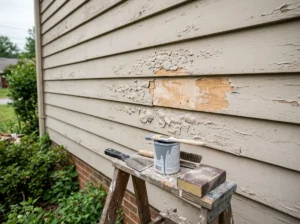
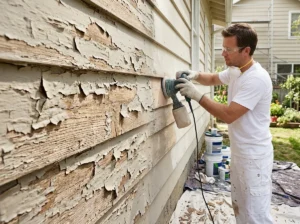
- Cracking or peeling. The coating has stopped holding together, and there’s usually a reason behind it.
- Blistering or bubbling. Often a sign of moisture trapped underneath, or the paint just didn’t stick well to begin with. More widespread exterior paint blistering can indicate that the coating or the surface underneath needs attention before repainting.
- Cracked or missing caulk. Leaves joints and seams more open to water.
- Exposed wood. No paint left to protect it, which means moisture damage isn’t far behind if it’s not handled.
- Noticeable fading. Mostly cosmetic, but a sign the coating’s been taking a beating from the sun.
Fading on its own isn’t a big deal. Peeling, blistering, failed caulk, and bare wood are the ones worth acting on, especially with another Cleveland winter coming.
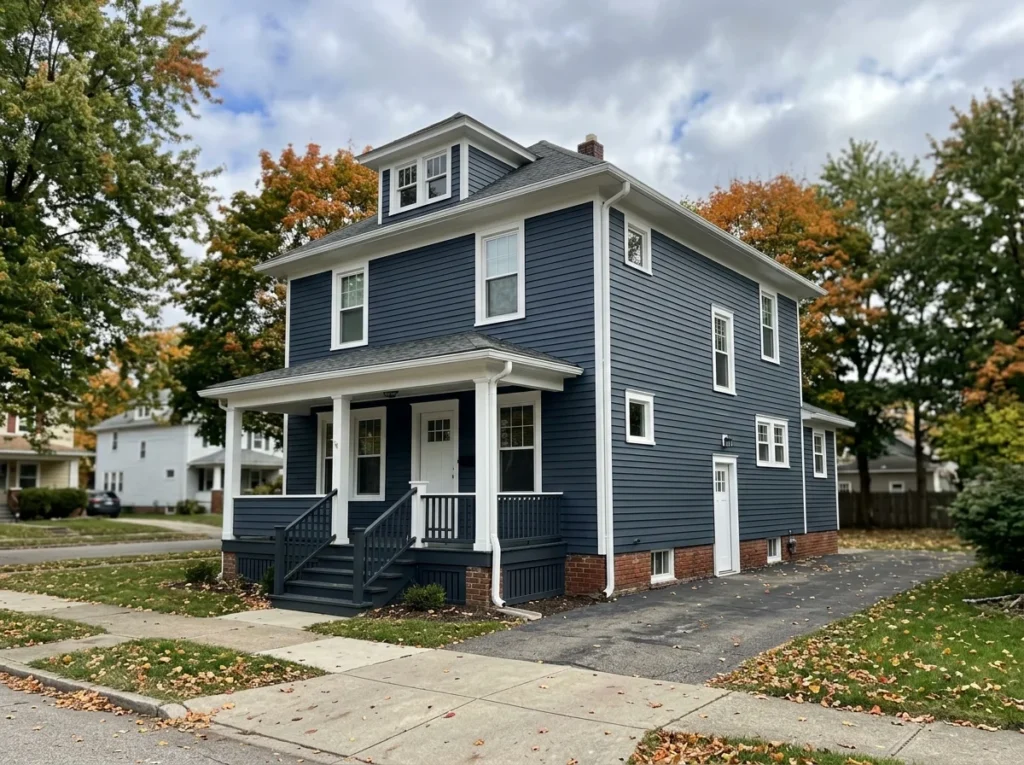
When to Actually Schedule the Work
There’s no perfect week on the calendar for every job. Late spring through early fall usually gives Cleveland more workable stretches than winter, but the calendar only tells part of the story. What matters more is the actual weather during application and while the paint dries.
That means checking daytime and overnight temperatures, whether rain’s in the forecast, humidity, surface moisture, and the specific product’s requirements. Sherwin-Williams, for example, generally recommends staying away from exterior painting below 50°F or above 90°F, though other products carry their own limits. The surface itself can also run hotter or colder than the surrounding air, especially sitting in direct sun.
That’s a big part of why winter painting is tricky to pull off reliably. A mild, dry afternoon doesn’t mean the temperature will hold steady long enough for the coating to cure the way it needs to.
Keeping the Paint Job Going
A fresh coat of paint isn’t a set-it-and-forget-it situation. A little upkeep goes a long way.
- Wash the exterior occasionally to clear off dirt and grime, using a method that fits the surface.
- Check the caulk around the trim once or twice a year, and reseal anything cracked, shrunk, or pulled loose.
- Keep gutters and downspouts clear, so water isn’t sheeting down the siding every time it rains.
- Keep plants and shrubs off the house, since trapped moisture back there is hard to spot and slow to dry.
- Deal with small failures early, like a peeling patch or crack, but figure out why it happened before painting over it. Proper exterior paint preparation also means addressing damaged areas before a new coating is applied.
Frequently Asked Questions
Does paint that still looks fine mean it’s still doing its job?
Not always. It can look okay from the driveway while chalking, small cracks, or failing caulk are already underway up close. Worth a closer look at the trim and joints every so often.
Do most homeowners wait until the paint completely fails before repainting?
Not really. A lot of repaints happen because someone wants a new color, is getting ready to sell, or just doesn’t like how faded things look. The old coat doesn’t need to be failing for that decision to make sense.
Can painting happen during a Cleveland winter?
Interior painting happens year-round, but exterior painting is paused during Cleveland winters. Paint requires consistent temperatures above 35°F–50°F and dry conditions to cure, so exterior projects are generally scheduled between late spring and early autumn.
Is it better to touch up a peeling spot or repaint the whole wall?
If it’s a small, isolated area and the surrounding paint is still solid, a touch-up can work, as long as whatever caused the peeling gets fixed too. Widespread peeling or chalking usually calls for a full repaint.
Does the paint color make a difference in how long it lasts?
Somewhat. Darker colors soak up more heat, especially on sun-facing walls, though the pigments and coating technology used matter just as much. Color is one piece of a bigger picture.
Final Thoughts
Not every Cleveland house wears out at the same pace, and that’s really the point of everything above. A wall that stays shaded or a job with solid prep behind it can go the distance. One that took shortcuts or sits in direct sun most of the day usually starts showing it sooner. The best move is catching the small stuff early. A hairline crack in the caulk or a bit of peeling near the trim is easy to fix now. Let it sit through another winter, and it turns into a bigger job.
Knapp Painting LLC handles exterior painting for homeowners across Cleveland, OH, including surface prep, repairs, and caulking, with real attention to the condition of the house before any paint goes on. If your exterior’s looking a little rough and you’re not sure whether it needs a patch job or a full repaint, call +1 567-274-2211 and get a straight answer on what it actually needs.