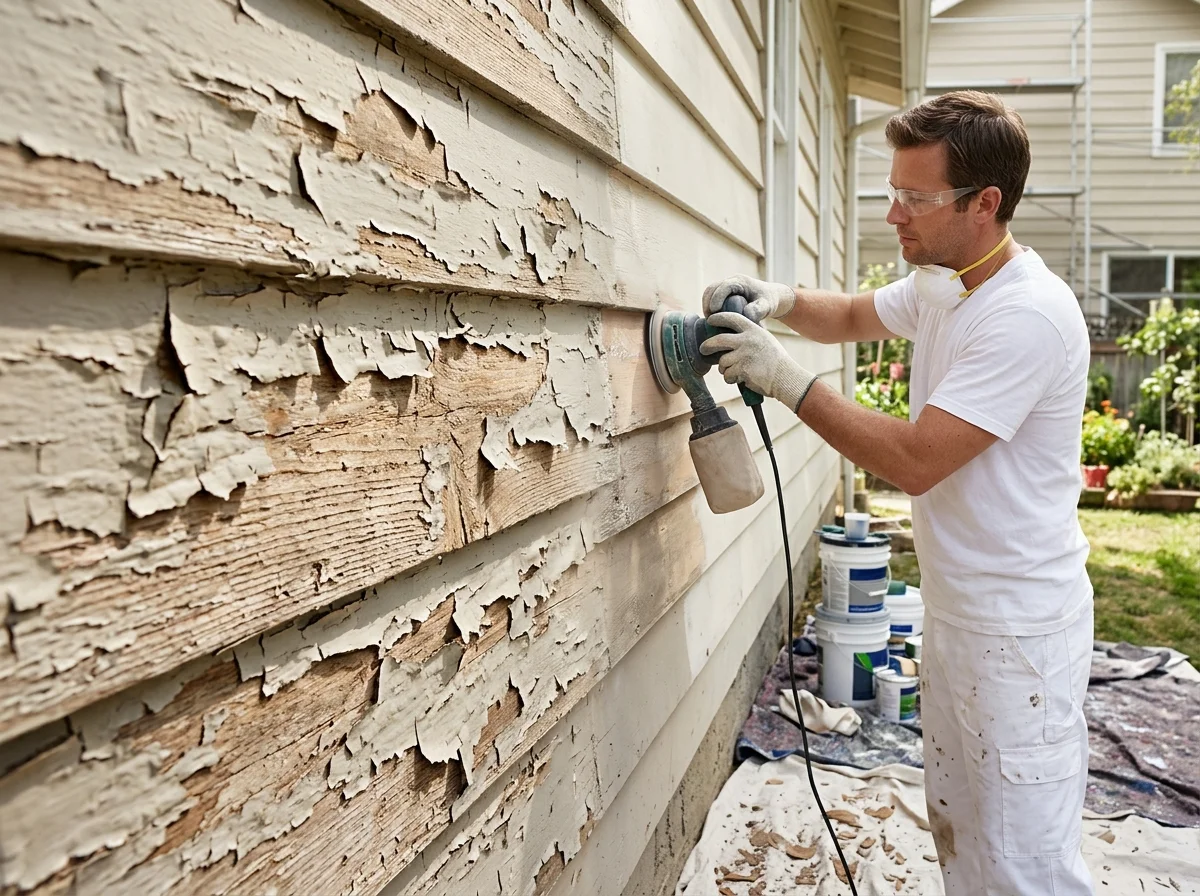
Exterior paint peeling comes down to one basic reason. The paint has lost its grip on whatever is underneath. Either something worked its way in between the coating and the siding, or the surface was never in shape to take paint to begin with.
Peeling looks alarming, but it rarely means the house itself is in trouble. What it does mean is that somebody needs to figure out the cause before another gallon gets opened. Below is a look at what actually drives paint failure, how painters track it down, what a proper repair involves, and what keeps it from coming back.
What Peeling Paint Is Actually Telling You About the Surface
Exterior paint is a thin, flexible skin stretched over your siding. It works only as long as it stays stuck. Moisture, dust, or an old glossy finish can weaken that bond in places you’d never notice, and the separation usually starts well before anything shows. By the time a board is visibly curling, the failure has been in progress for a while.
Pay attention to the shape of the damage. It narrows things down more than people expect.
| What You See | What It Usually Points To |
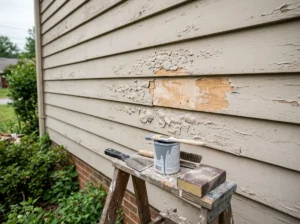
| Paint flaking off in thin chips | Old finish worn past its life, weather exposure |
| Blistered paint with bubbles under the film | Trapped moisture or paint applied to a hot surface |
| Cracked paint in a fine web | Aged coating that has lost its flexibility |
| Large sheets lifting away | Poor surface preparation or paint over a dirty wall |
| Peeling down to bare wood | Water reaching the substrate from behind |
Most houses show a mix of these rather than just one. Mixed patterns generally mean there’s more than one thing going on, and any repair has to account for all of it.
The Real Causes of Peeling Exterior Paint on Cleveland Homes
Moisture Finding a Way In
Water is the usual culprit, and it almost never shows up where you’d expect. Cracked caulk around a window lets it in. So does tired flashing above a door or a gutter joint that’s pulled apart. Once water is in the wood, it moves outward, and paint can’t resist pressure from behind. It lifts away in sheets instead of chipping. The same thing happens in reverse when a bathroom with weak ventilation pushes vapor through the wall cavity.
Winters here add another layer. Wood siding takes on water through late fall, freezes, then thaws when the temperature swings back up. Cleveland homeowners get that cycle repeated many times between December and March. All that small movement breaks the paint film loose long before the coating has actually worn out.
Preparation That Never Happened
Paint sticks to whatever it lands on. Land it on chalky residue from an old coating or on a summer’s worth of pollen and road grime, and that’s what it bonds to. The paint itself holds fine. The dirt underneath doesn’t. Failure like this often turns up within a season or two, which is a pretty reliable sign the wall never got cleaned properly.
Rushed prep shows up in other ways too. A glossy or previously painted surface needs sanding so the next coat has something to bite into. Weathered or bare wood usually calls for a primer suited to that substrate. Proper surface preparation is an important part of professional residential painting because the new coating needs a clean, stable surface to bond with. Skip either one and the job can fail years ahead of schedule.
The Wrong Paint on the Wrong Wall
Product choice matters, though not quite the way people assume. Cheap paint doesn’t automatically fail, and expensive paint doesn’t automatically last. What matters more is whether the coating suits the surface and the exposure. Interior paint used outside won’t survive Ohio sun and freeze cycles. Some coatings also don’t bond well over what’s already on the wall, and that compatibility problem shows up as flaking even when the prep was reasonable.
Conditions during application count as well. Paint applied to a wall that’s baking in direct sun can skin over before it properly grabs hold. And where heavy coats have been stacked up over decades, the buildup becomes a stiff shell that can’t move with the wood behind it. Stiff paint cracks first. Peeling follows.
Can You Just Paint Over Peeling Exterior Paint?
Not if you want it to hold. New paint bonds to the layer directly beneath it, so coating over loose material just adds weight to something that’s already giving up. The patch looks fine through the summer. Come spring, the peeling has usually spread past where it started.
There’s a less obvious cost too. Covering the damage covers the water source along with it. If a downspout is dumping against that wall or flashing is failing above it, the wood keeps soaking while a fresh coat traps the moisture in. The repair you end up doing later is almost always bigger than the one you skipped.
| Avoid This Mistake: Scraping off only the loose flakes and painting over the rest leaves a hard ridge where old paint meets bare wood. Water collects along that ridge, and within a year the peeling picks up again on the same line. |
How Professional Painters Diagnose Exterior Paint Failure
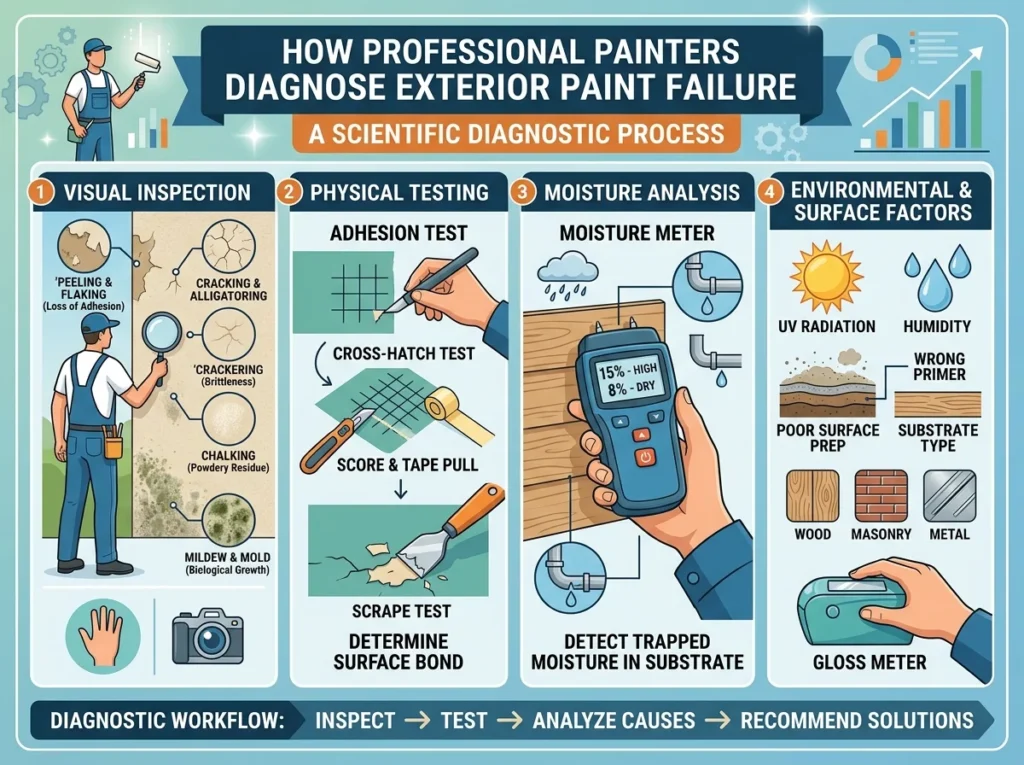
Location tells a painter a lot before anyone touches the wall. Where the peeling appears can offer an early clue about what is happening behind the coating. Peeling under a window may point to failed caulk or worn glazing. Damage on one gable end can suggest heavier exposure to sun and wind. Paint lifting a foot or so above grade may trace back to splashback or a slope directing water toward the house.
Checking for Moisture
Confirming moisture takes more than eyeballing the damage. A painter runs a moisture meter across the affected boards to see whether the wood is holding water. Gutters and downspouts also need to be inspected because a blocked section can quietly soak a wall for years. Soft or darkened wood provides another clue. Identifying the source of moisture is especially important before exterior painting begin, since a new coating cannot compensate for an unresolved water problem.
Testing the Surrounding Paint
The next question is how far the failure has spread. Painters test the paint next to the damaged area by working a blade under an edge or pressing tape against the film to see if it releases. If the surrounding coating holds firm, a spot repair may be enough. If it lets go across several test areas, more of the surface needs to be removed before repainting.
| Test Result | What It May Mean |
| The surrounding coating holds firm. | A spot repair may be enough. |
| Nearby paint releases. | The weak bond may extend beyond the visible damage. |
| Paint releases across several areas. | More extensive coating removal may be needed. |
The Professional Exterior Paint Repair Process, Step by Step
- Fixing the water problem first. Caulk, flashing, gutters, and rotted boards get dealt with before prep starts. Coating over an active leak wastes the job no matter how good the paint is.
- Cleaning the surface properly. Chalk, mildew, and grime have to go, or the new paint bonds to them instead of the siding. Washing handles this on many exteriors, but the pressure has to match the material. Old wood siding and softer substrates can be damaged by aggressive washing, and forcing water behind boards creates the exact problem you’re trying to fix. Everything then needs to dry out completely.
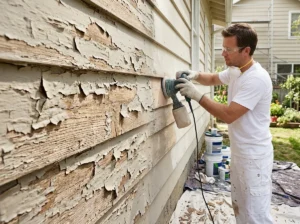
- Removing the failed coating. Anything loose comes off. Crews work outward from the visible damage until they hit paint that genuinely holds, and that boundary is usually farther out than homeowners expect.
- Sanding the edges smooth. Sanding feathers the hard line where old paint meets bare wood. Leave that ridge in place, and it telegraphs right through the finish coats, visible from the sidewalk.
- Priming the exposed areas. Bare wood gets primer matched to the substrate and to whatever topcoat is going over it. Primer gives the finish something to bond to, but it isn’t a fix on its own. It only performs if the surface beneath it is clean, dry, and sound.
- Applying the finish coats. Two thinner coats of exterior-grade paint outlast one heavy one. Crews also watch the forecast, since temperature and humidity affect how the film cures.
| Pro Tip: Ask a contractor how they plan to handle the edges where old paint meets bare wood. Mention of feathering and priming means the repair will blend in. A vague answer usually means it won’t. |
When Peeling Paint Points to a Bigger Exterior Problem
Sometimes peeling is just age catching up with a coating that did its job. Other times it’s a signal that water has been working behind the wall for a long time. Before assuming it’s cosmetic, take a walk around the house and look for these:
- Wood that feels soft or spongy when you press on it
- Dark staining spreading below a window or a siding joint
- Paint peeling in the same spot where a previous repair was done
- A musty smell or damp drywall on the matching interior wall
- Siding boards that have cupped, buckled, or pulled away
Find two or more, and it’s worth getting the wall inspected before anyone repaints. Paint protects a surface. It won’t hold back water that’s already inside.
Keeping Exterior Paint From Peeling Again
One slow lap around the house each spring catches most trouble while it’s still cheap to fix. Look at the caulk lines around windows and doors. Check the cut ends of trim boards, since that’s where water gets in first. Give the north side extra attention. It stays shaded and damp, and mildew tends to show up there before anywhere else.
Drainage does more for your paint than any product on a shelf. Gutters need to stay clear so water actually reaches the downspouts. Downspouts should discharge well away from the foundation. Shrubs crowded against the siding hold moisture and slow down drying after every rain, so keep them trimmed back.
A gentle wash every year or two clears the buildup that quietly undermines adhesion. Small touch-ups on trim, doors, and sills can buy several more years before a full repaint makes sense. As for how long a coating lasts, that depends on the substrate, the exposure, and how carefully the surface was prepped last time.
Frequently Asked Questions
How long should exterior paint last in Northeast Ohio?
There’s no single number worth quoting. Sun-beaten and weather-exposed walls need attention sooner than sheltered ones, and preparation affects lifespan more than the brand on the can.
Is peeling paint on an older house a concern?
Houses built before 1978 may have lead-based coatings in the lower layers. Testing before scraping or sanding is the sensible route, and it’s worth raising with any contractor you hire.
Can peeling paint be repaired in just one spot?
Sometimes. It hinges on whether the surrounding paint still holds and whether the moisture source has been corrected. A crew will test the adjacent area before committing to a spot repair.
What time of year is best for this work?
Late spring through early fall generally gives the most reliable conditions in Cleveland, when surfaces stay dry and temperatures hold steadier.
Talk to a Cleveland Exterior Painting Team That Fixes the Cause
Knapp Painting LLC is a licensed and insured painting company working with homeowners across Cleveland, OH. Our approach to peeling paint is simple enough. Find where the moisture is coming from, deal with it, prep the surface the way that substrate requires, and never coat over a film that’s already failing.
If paint is lifting somewhere on your house and you’re not sure why, have someone look at it before another winter. Call +1 567-274-2211 to set up an exterior assessment. We’ll walk the house with you, show you what we find, and explain what the repair involves before any work begins.