That smooth, silver-colored propane tank of yours in the backyard appears as an old, rusty scrap heap. It is an eyesore that needs a makeover and honestly speaking, you are not the only one to be staring at the screen, wondering, There has to be a better way.
What if I told you a simple paint job could add years to its life, fend off killer corrosion, and make your yard pop like never before?
Stop scrolling! You, a DIY homeowner who is sick of having an ugly tank that spoils the ambiance of your patio and who is also a business owner who requires something that is compliant and looks like it should be, is the person who is going to use this guide as a secret weapon.
We will empty all the best propane tank paints, step-by-step foolproofs, killer color ideas, and safety hacks that a pro uses. Ready to turn “ugh” into “wow”? Let us paint that tank like a man and save you thousands in replacements.
Why Paint Your Propane Tank?
Your propane tank is kept outside all year round, struggling against sun, rain and rust. New paint is also a shield in the form of armor, protecting it against the UV rays that lighten and deteriorate the metal. It prevents corrosion as well, which may culminate in leakages or expensive replacement.
Plus, think about curb appeal. An uncontaminated, painted propane tank will enhance your property, and it is not a fortune. It is a basic DIY job that can be added as worth to the house, particularly when selling a house.
The Role of Paint in Protecting Propane and LP Tanks
Special LP tank paint is a hard coating against moisture and salt air. Normal paint peels off, but the ones around propane tanks are like glue.
Safety, Compliance, and Aesthetics in Tank Painting
New paint will make sure that your tank is up to local standards. It is also crisp and makes your yard or business premises more welcoming.
Overview of Propane Tank Paint Options Available Today
There are options for high-gloss finishes as well as rust prevention formulas. Some brands such as Van Sickle propane tank paint are leaders in terms of strength.
What Makes Propane Tank Paint Special?
All the paints are not created equal. Propane tank paint can withstand hot weather, pressure and chemicals within the tank. It is more flexible to increase in size with the heat and it is also thicker.
This is also a paint that does not fade due to continuous exposure to the sun. Regular house paint? It foams and peels quickly in an oven.
What Makes Propane Tank Paint Different from Regular Paint
It is designed to be used with pressure steel tanks. None of the fumes is volatile enough to ignite around gas lines.
How Paint Protects Against UV Damage and Corrosion
The formula has UV blockers that reflect sunlight. Anti-corrosion agents combat rust internally.
Key Factors to Consider When Choosing LP Tank Paint
Find weather-resistant, fast-drying, and code-approved colors such as white.
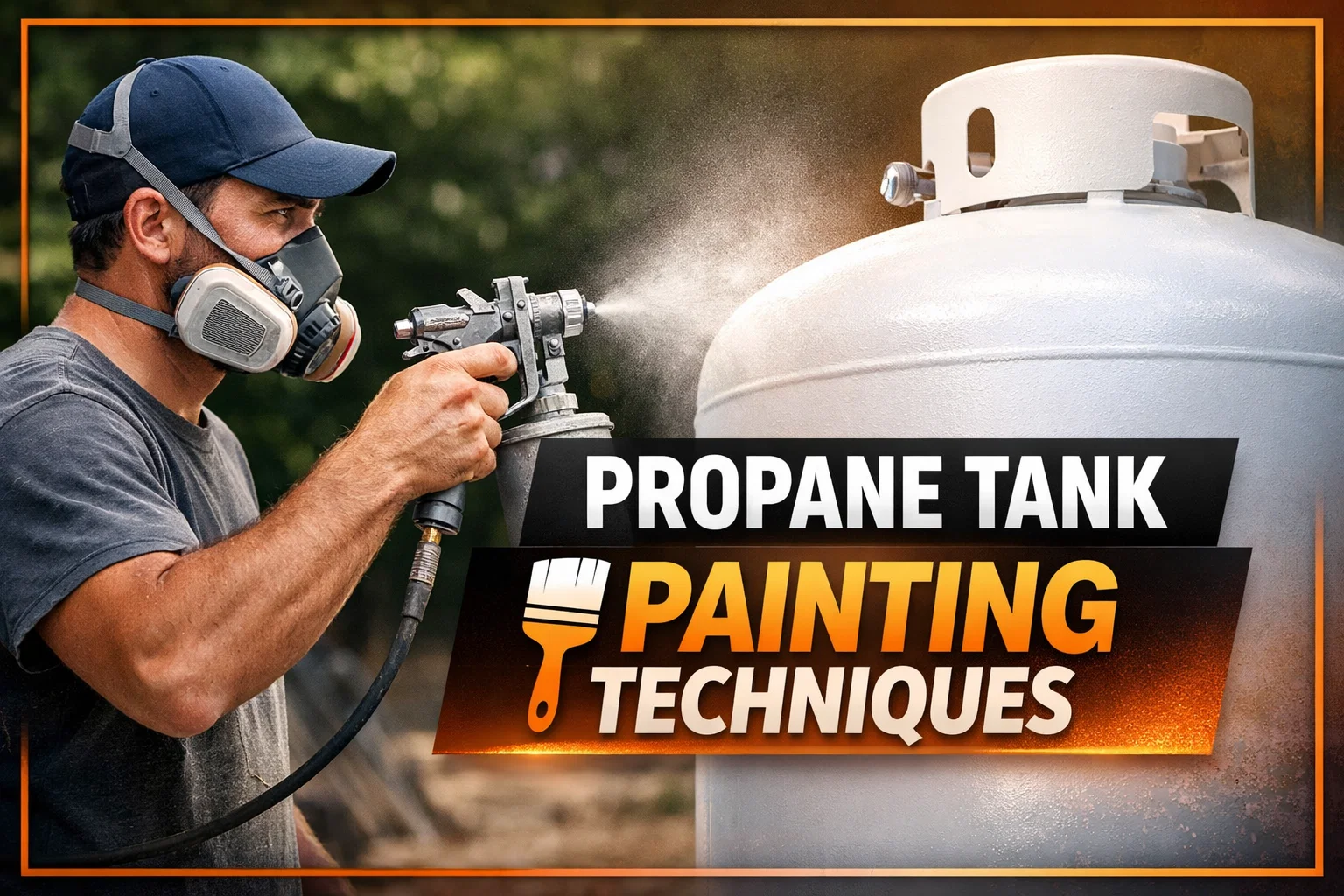
Propane Tank Painting Techniques: Your Step-by-Step Guide
Here is the core of it all practical methods of getting the appearance of a propane tank to look like a painting pro. We will divide it into easy steps, and hints on how not to get headaches. Anticipate that this part will prepare you with all that it takes to have a perfect job.
First, be safe: To be on the safe side, switch off the gas mains and allow the tank to cool off, when required. Check with your propane supplier whether it is empty or not. Do not paint a complete tank, vapors and fumes of paint are fatal.
Step 1: Inspect and Clean the Tank Surface
Start with a good look-over. Test the presence of dents or any leaks or deep rust. Dirty, greasy and bird droppings should be removed using a stiff brush and soapy water. Wipe under lots of water and allow to dry. Peeling under paint is caused by moisture.
Pro tip: Use a power washer, in case you have one. It blasts away grime fast. Wear gloves and goggles; wear tanks are usually greasy.
Step 2: Remove Rust, Oil, and Old Paint Layers
Rust is the enemy. Lightly sandblast or wire brush where the rust is taking place until it turns out to be shiny metal. On heavy rust, a rust converter gel is required a neutralize the rust by a chemical process.
Grease with Wipe down using acetone or paint thinner. Old paint, Using 80-120 grit paper. This forms a tooth on which new layers can hold on.
Real talk: Skipping this? Your new paint does not last for months. There was a single tank which, following one winter, had bubbles all over due to comparative laziness in preparation.
Step 3: Apply Primer for Better Paint Adhesion
Take a zinc-rich or epoxy primer that is used on metal tanks. Blend and apply thin layers with a brush or spray. Coat the entire tank, two coats in case rusty.
Allow to dry for 4-6 hours. Primer ensures the protection of the surface and prevents corrosion in the future. There are no compromises on paint ideas for the propane tank that should last.
Step 4: Use the Right Propane Tank Paint Type and Technique
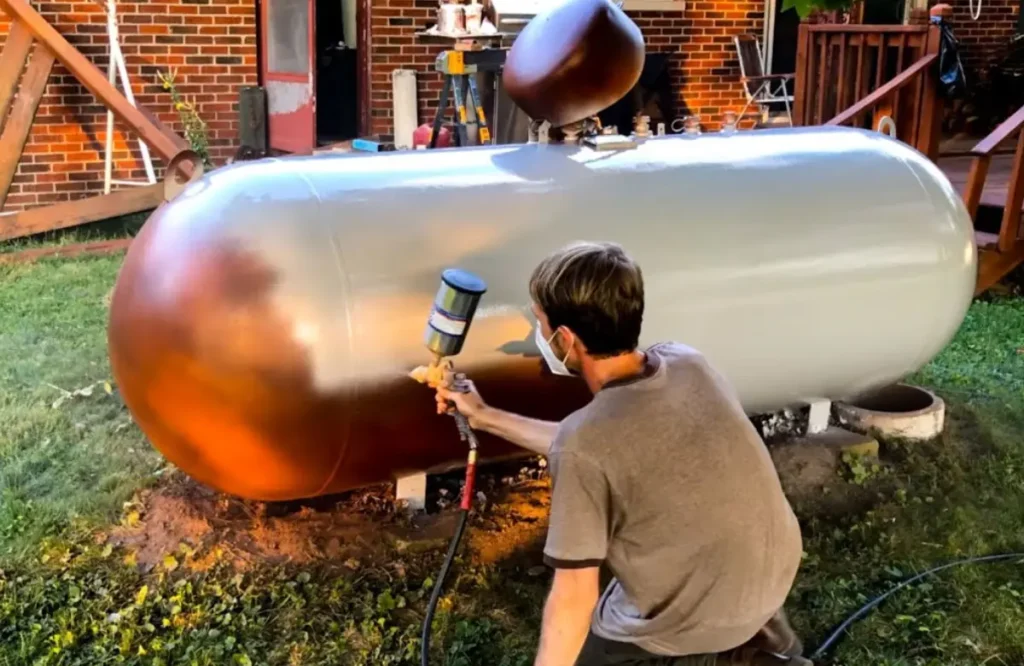
Van Sickle propane tank paints come in aerosol cans or brush-on variation, either of which is recommended. Shake cans 1-2 minutes. Light is applied in even strokes at a distance of 10-12 inches, 50% overlaps eliminate runs.
Edges or small tank brush: Use a 2-inch nylon brush to make smooth strokes. One thick coat is beaten by two or three thin ones. Painting in the shadow; the sun passes too soon.
Colors are important: Use light colors for tank, such as white, in order to reflect the heat. Dark colours take it in, straining the tank.
Technique twist: In case of custom-painted propane tanks, strip or logo areas are masked after they have been primed. Clean lines are achieved using painter’s tape.
Step 5: Allow Proper Drying and Curing for Long-Lasting Results
Patience pays off. Dry in 1-2 hours; however, it cures in 7 days. Cover it up during this period, not in rain or dew.
Examination with finger, press, no impression? It’s set. The toughening of the paint against scratches and weather is done by curing.
Bonus Techniques for Pros:
- Forklift or Dolly Procedure: When dealing with large tanks, lift up on a dolly so that you can paint underneath.
- Spray Booth Arrangement: A garage that is ventilated by fans-overspray cuts.
- Two-Tone Ideas: Prime Paint base white, and add silver to the paint to give it a modern appearance. Safe and eye-catching.
- Examples from the field: One of my farmers painted the accents of his LP tanks with red on white, using zinc primer, which allowed the structure to go five years without rusting. Homeowners are fond of stenciling house numbers quickly to identify the houses.
- It would cost less than what it would cost to paint a water tank: Water tanks require anti-algae paints, whereas gas-safe formulas are required on propane. Underground propane tanks? Paintings, Skip coats you will paint over.
Errors do occur; however, these measures correct the majority. Money spent on good propane tank paint and your tank will be ten years old.
Tips and Strategies for Perfect Propane Tank Painting
Nail your project with these battle-tested tips. They save time, money, and frustration.
- Gear Up Right: Respirator mask, coveralls, drop cloths. Spray in open air.
- Weather Hacks: Paint in hot days, when the humidity is low, more than 50°F. No wind to blow dust.
- Color Strategies: White product cool; aluminum strategy shiny industry. Avoid black, it traps heat.
- Amateur vs. Pro: Can you paint a propane tank? Yes, if small and empty. Big ones? Hire certified painters.
- Maintenance Trick: Adding the extra gloss, wax the finish once each year.
Safety Musts:
- Ventilate well, no sparks nearby.
- Ground the tank to avoid static.
- Follow NFPA 58 codes for colors.
Propane Tank Paint Ideas and Color Guidelines
Fire-safe propane tank paint ideas. White is the monarch in terms of reflecting heat but brings in flourish.
- Striped patterns for farms.
- Camo for hunters’ cabins.
- Business signs-fade-proof paint on top of vinyl.
Colours of tanks influence temp: Light colours remain 20°F colder. See local regulations; there are ones that prohibit non-silver.
Conclusion
There you have it, a full roadmap to mastering propane tank painting techniques. From picking the right propane tank paint and prepping like a pro to smart color choices and safety steps, you’ve got everything to transform that rusty eyesore into a protected, good-looking asset. Done right, it shields against rust and UV damage, keeps your tank compliant with codes, and even helps it run cooler for better efficiency.
Ready for a pro finish? Visit Knapp Painting for expert propane tank services today.
FAQ’s
Yes, but only when empty and depressurized. Use approved propane tank paint for safety.
Not always, light colors like white are best for heat control and often required by code.
Specialized LP tank paint or Van Sickle propane tank paint. Avoid regular spray paint.
Absolutely, dark tank colors absorb heat; light ones reflect it for better efficiency.
It’s a top durable, code-approved paint. Yes, resists fading and rust like a champ.
Water tanks use anti-fungal paints; propane needs pressure-safe, UV-resistant formulas.